Our journey & why we love welcoming guests to Kionslieu Farm in the beautiful Isle of Man
A welcoming haven
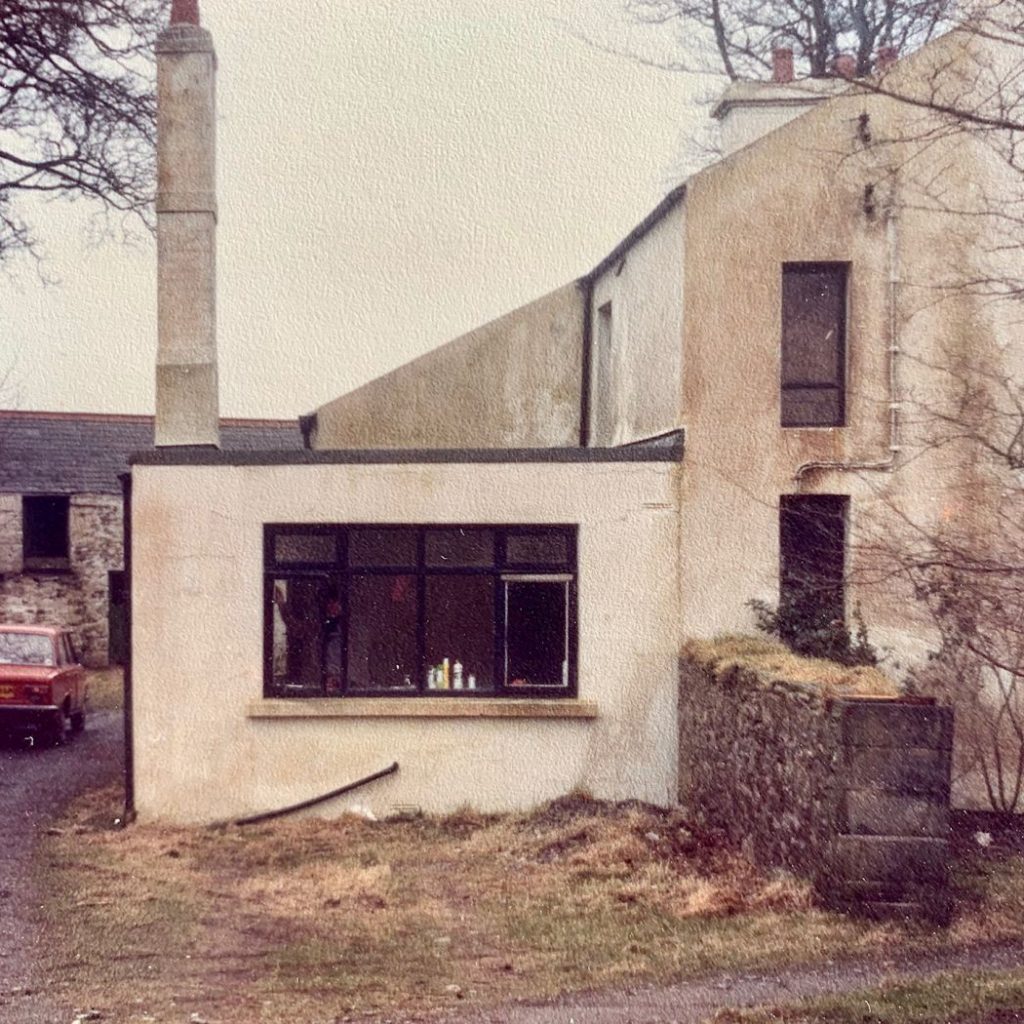
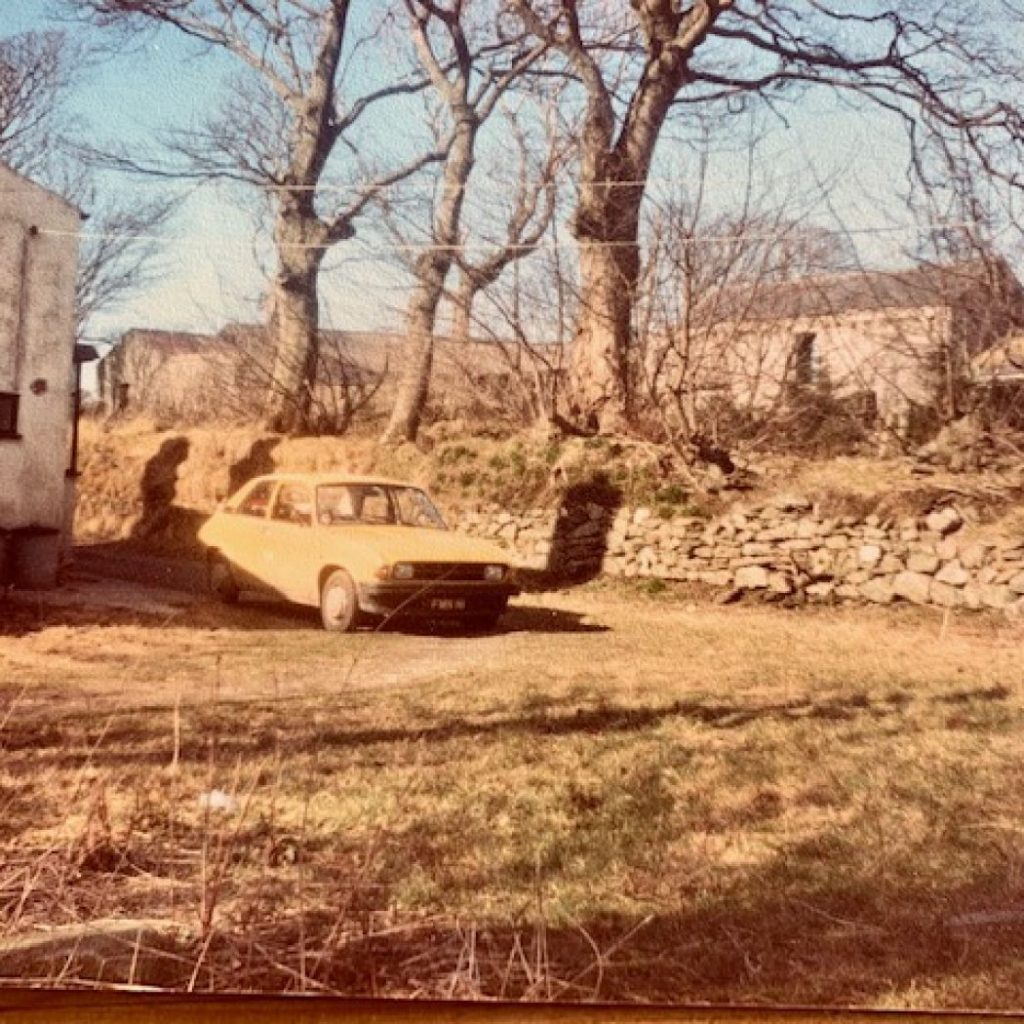
Nestled in the tranquil slopes of the Isle of Man, Kionslieu is more than just a picturesque retreat; it is a labour of love, a story of transformation, and a welcoming haven for those seeking an escape from the hustle and bustle of everyday life. My husband Tony and I have lived on this beautiful island all our lives, and our journey at Kionslieu began in 1985 when we took a leap of faith and moved to this run down property, which despite it’s condition always had a warm and welcoming feeling to it.
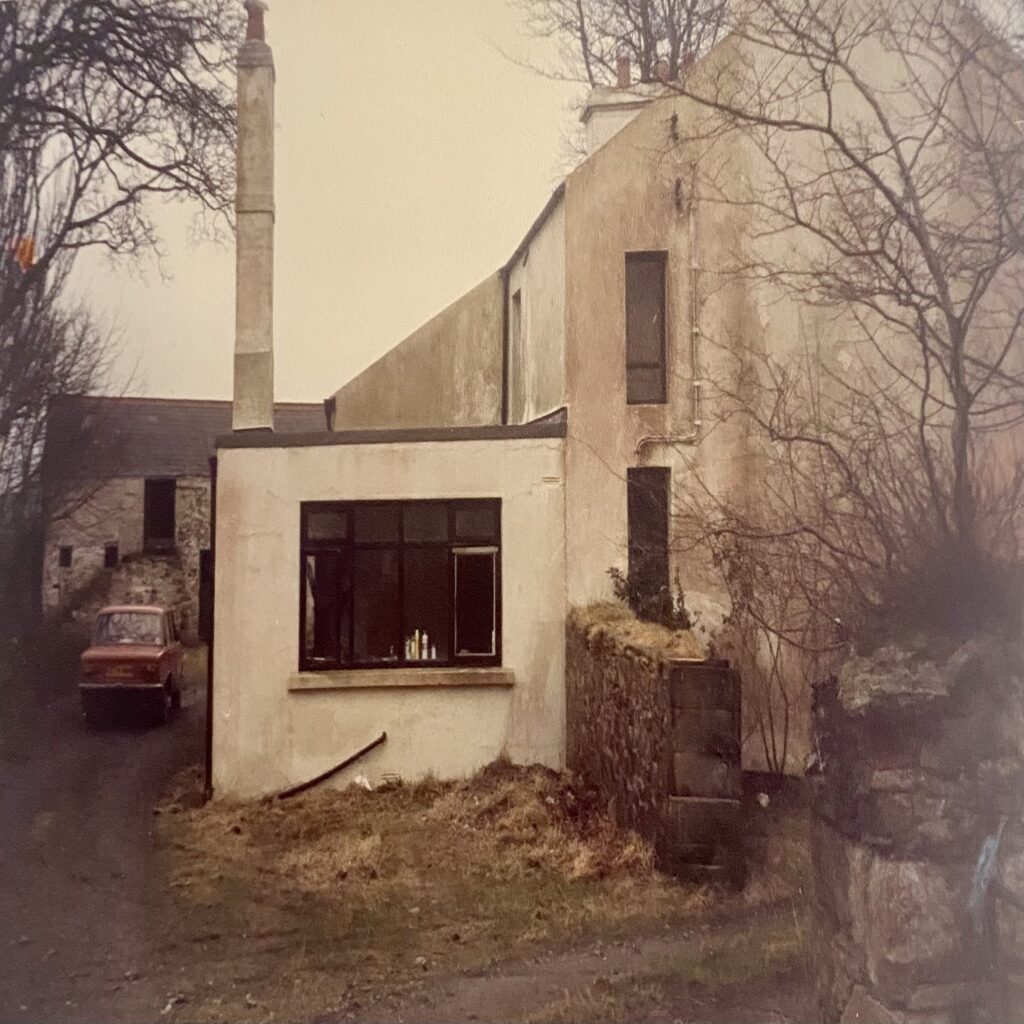
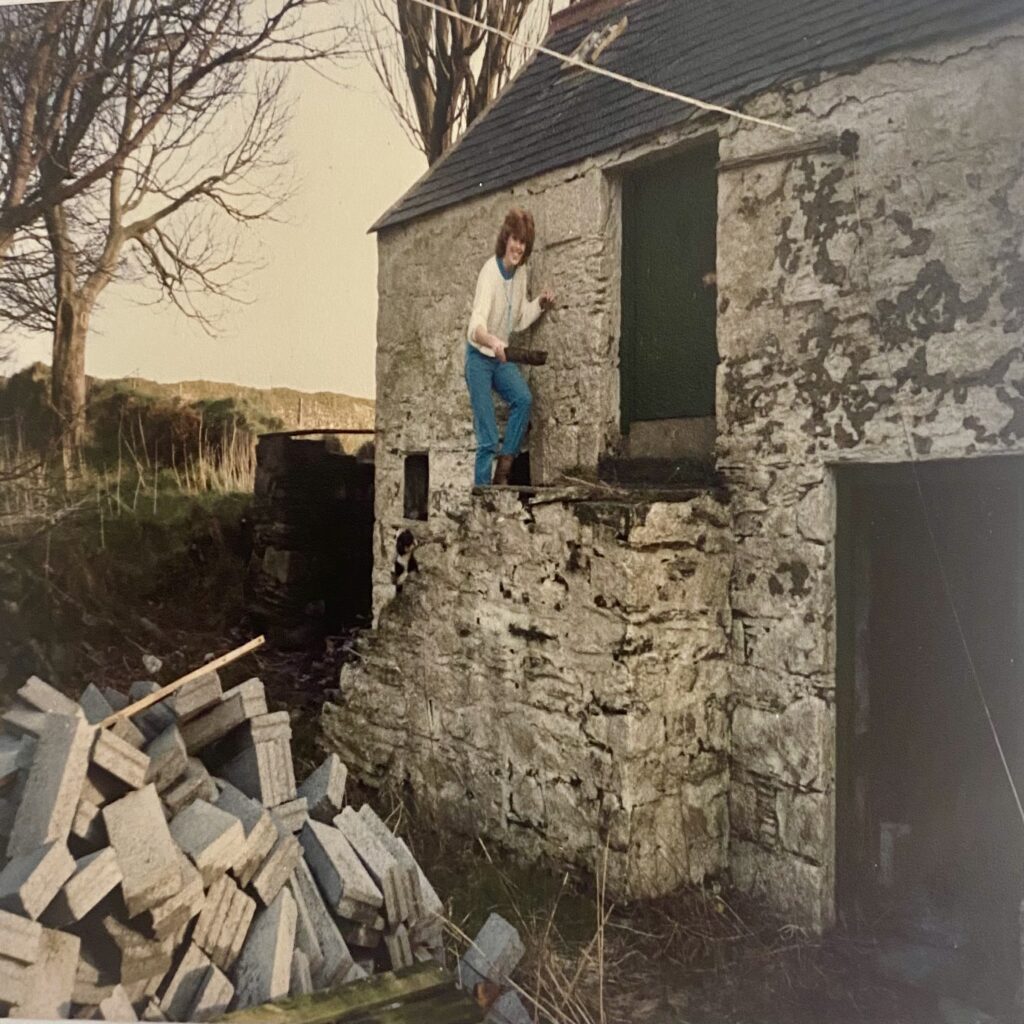
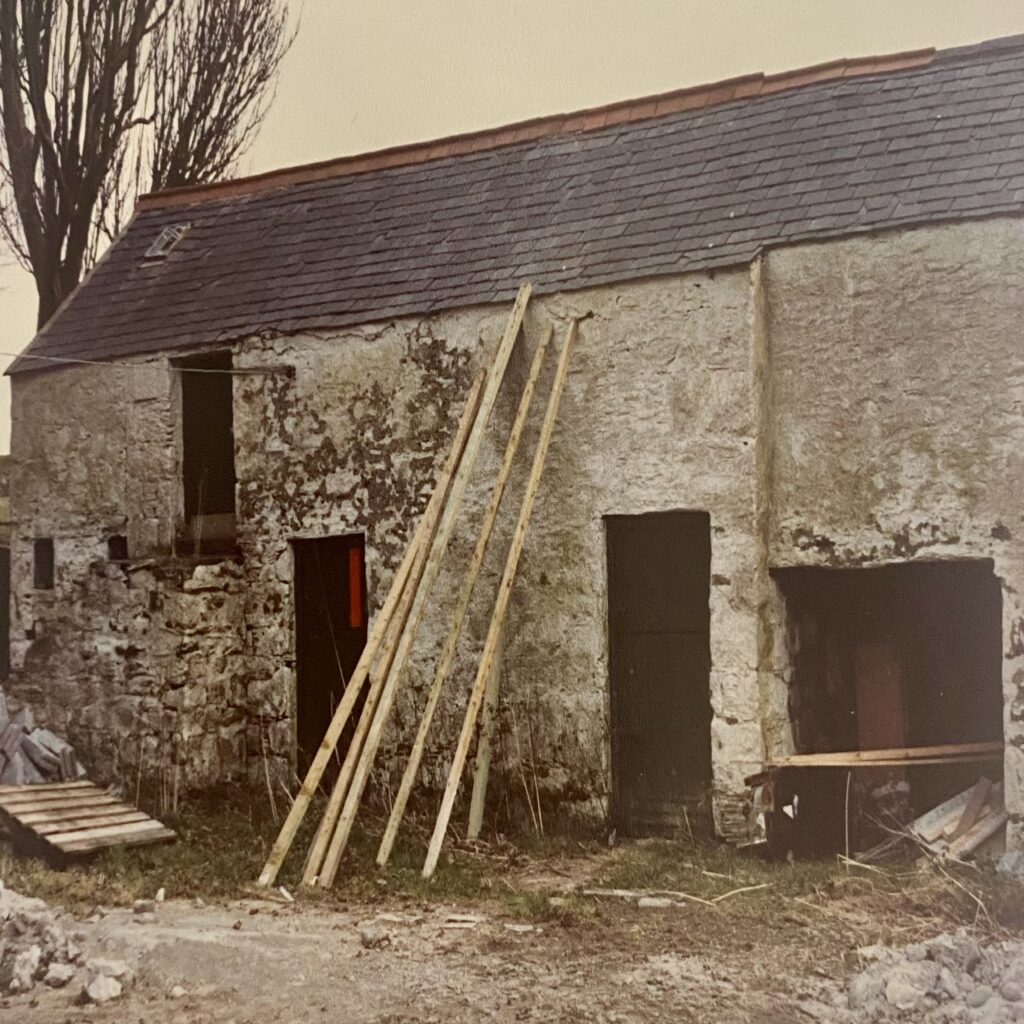
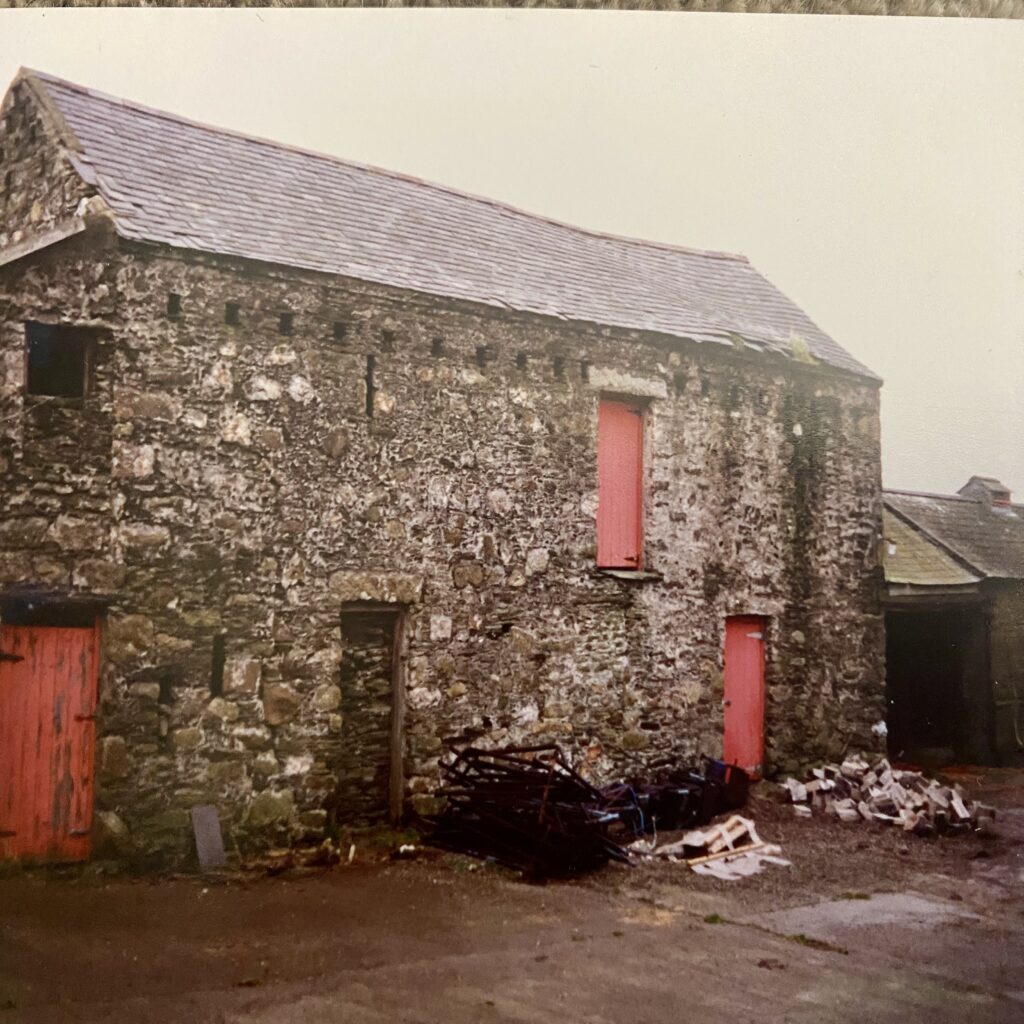
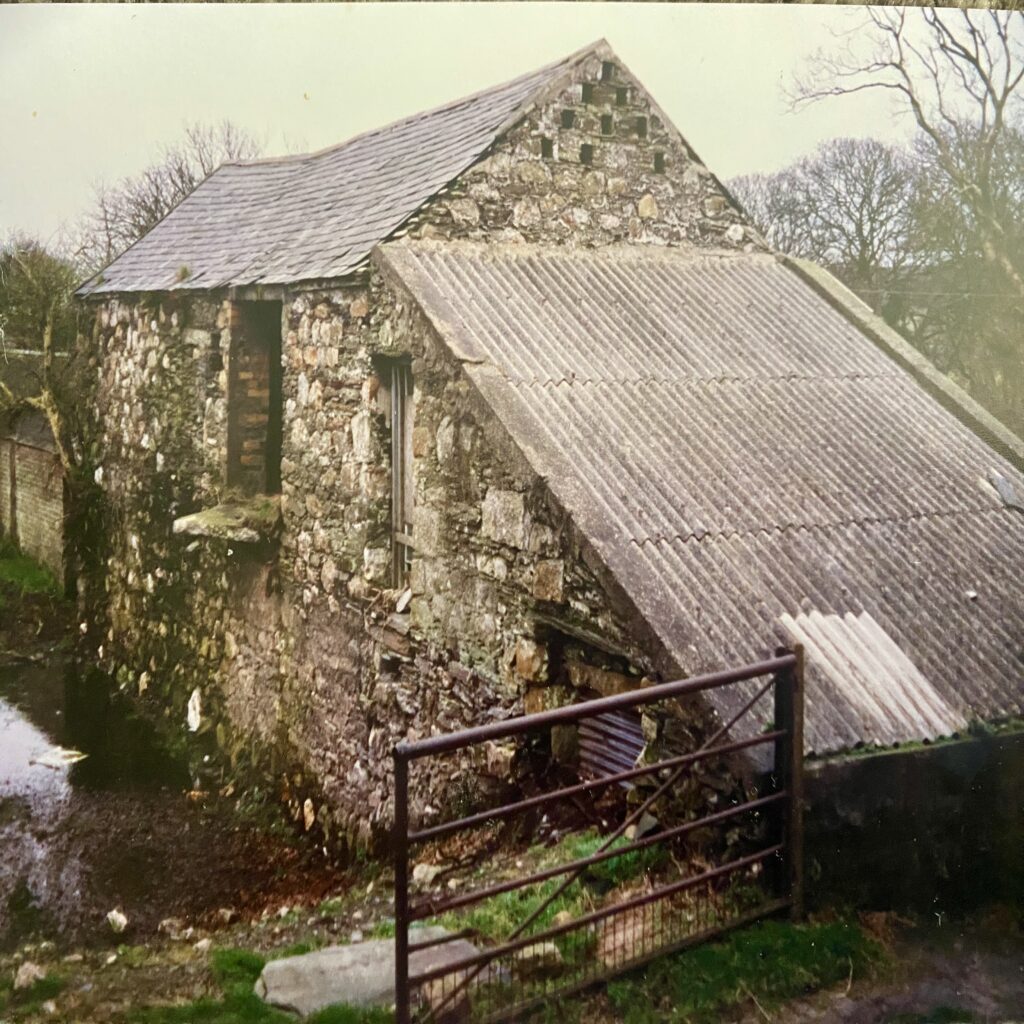
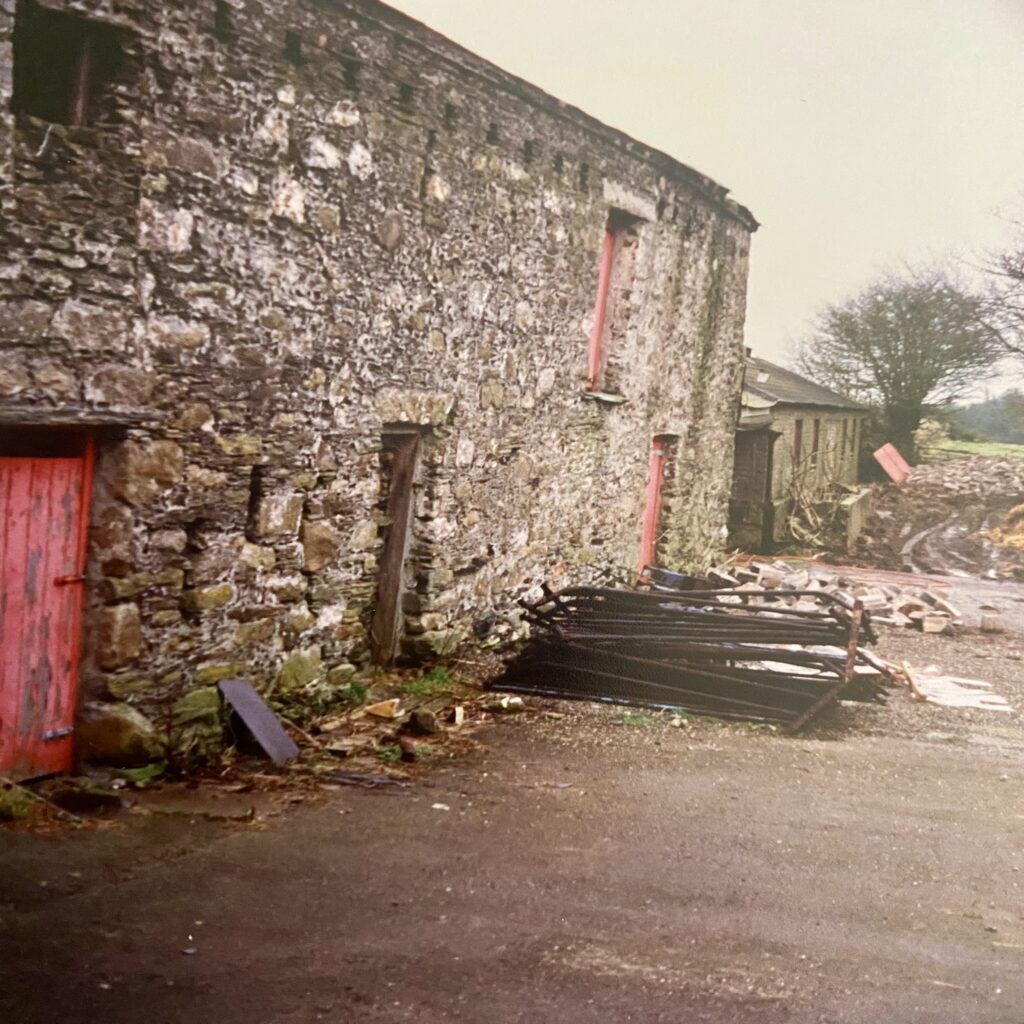
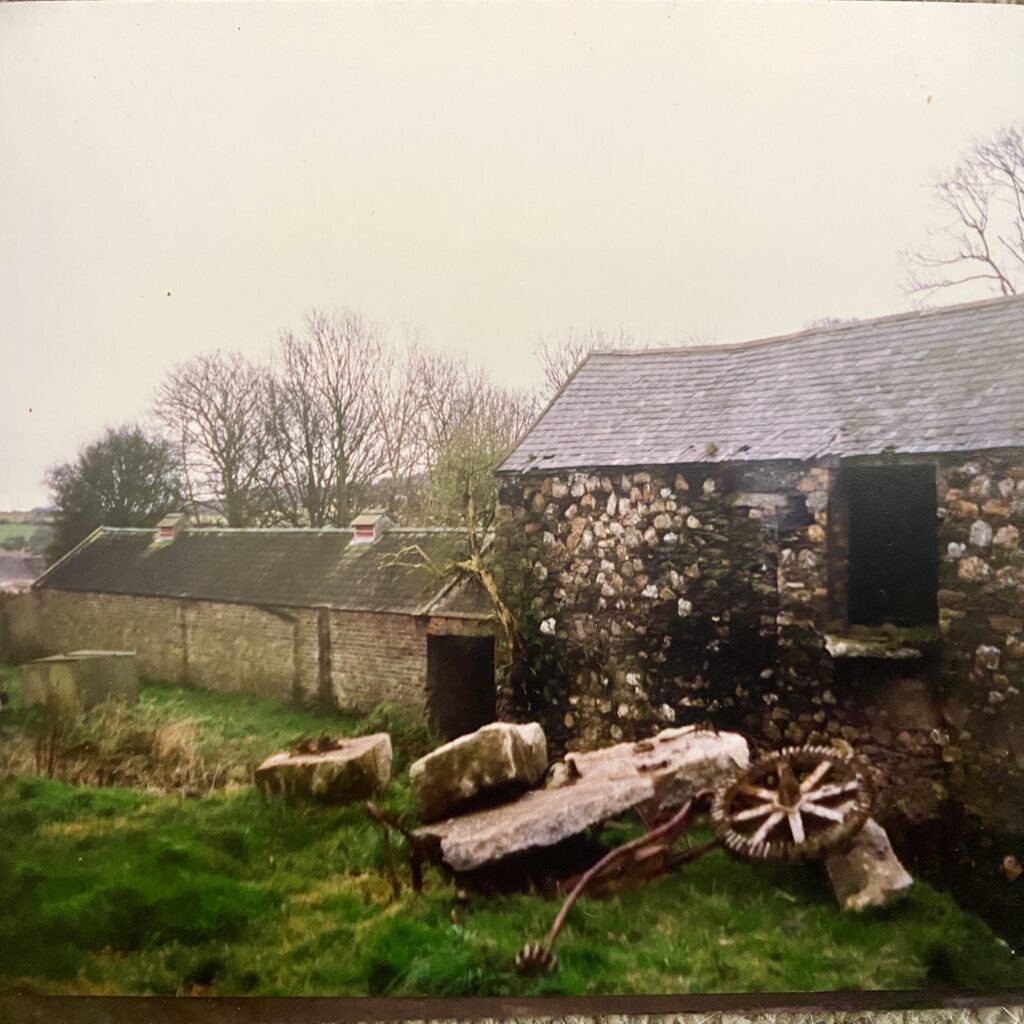
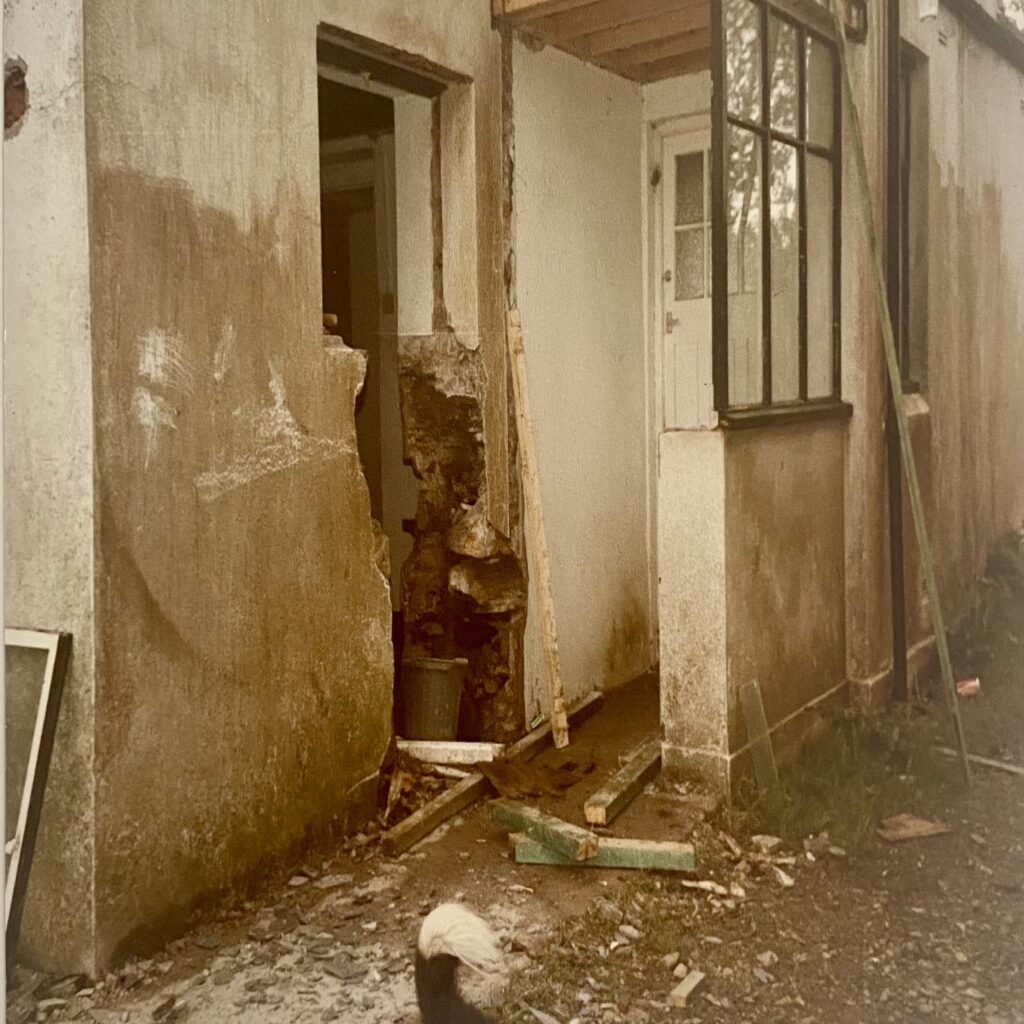
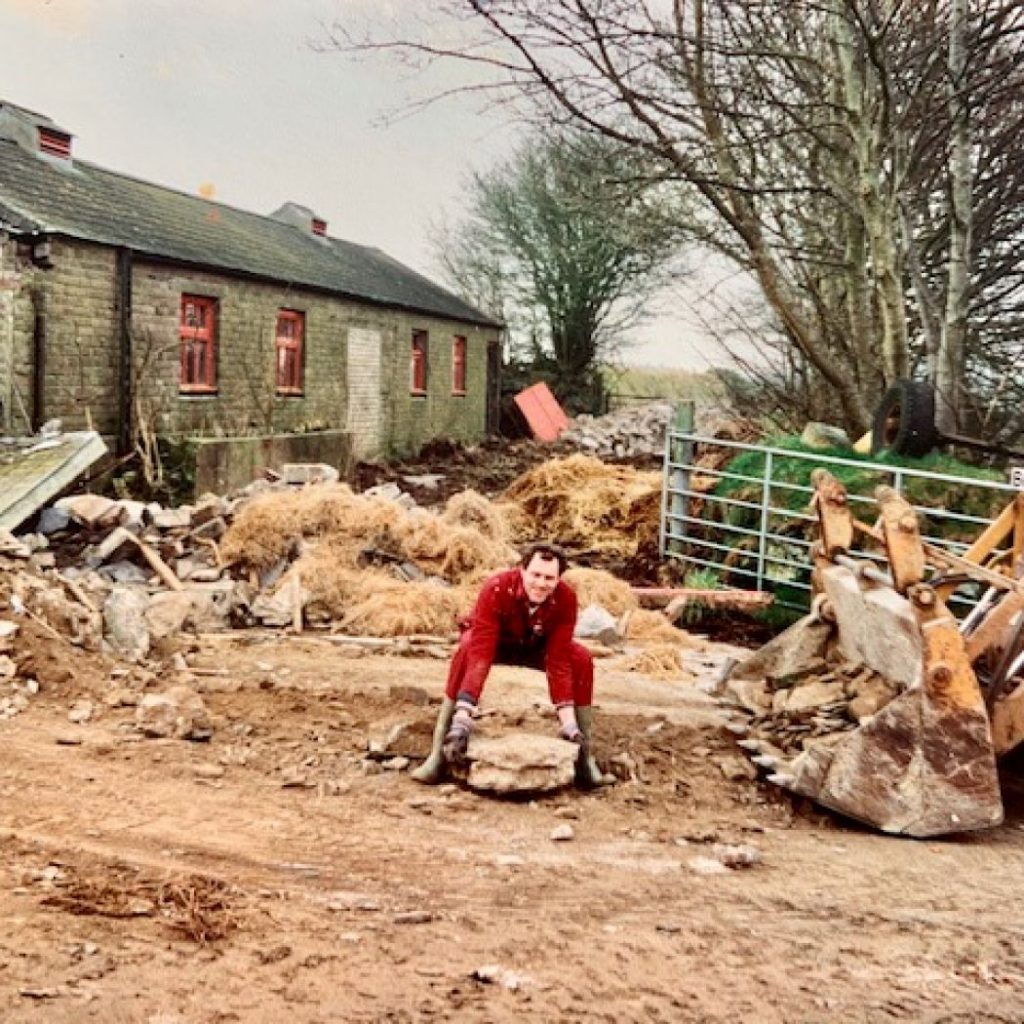
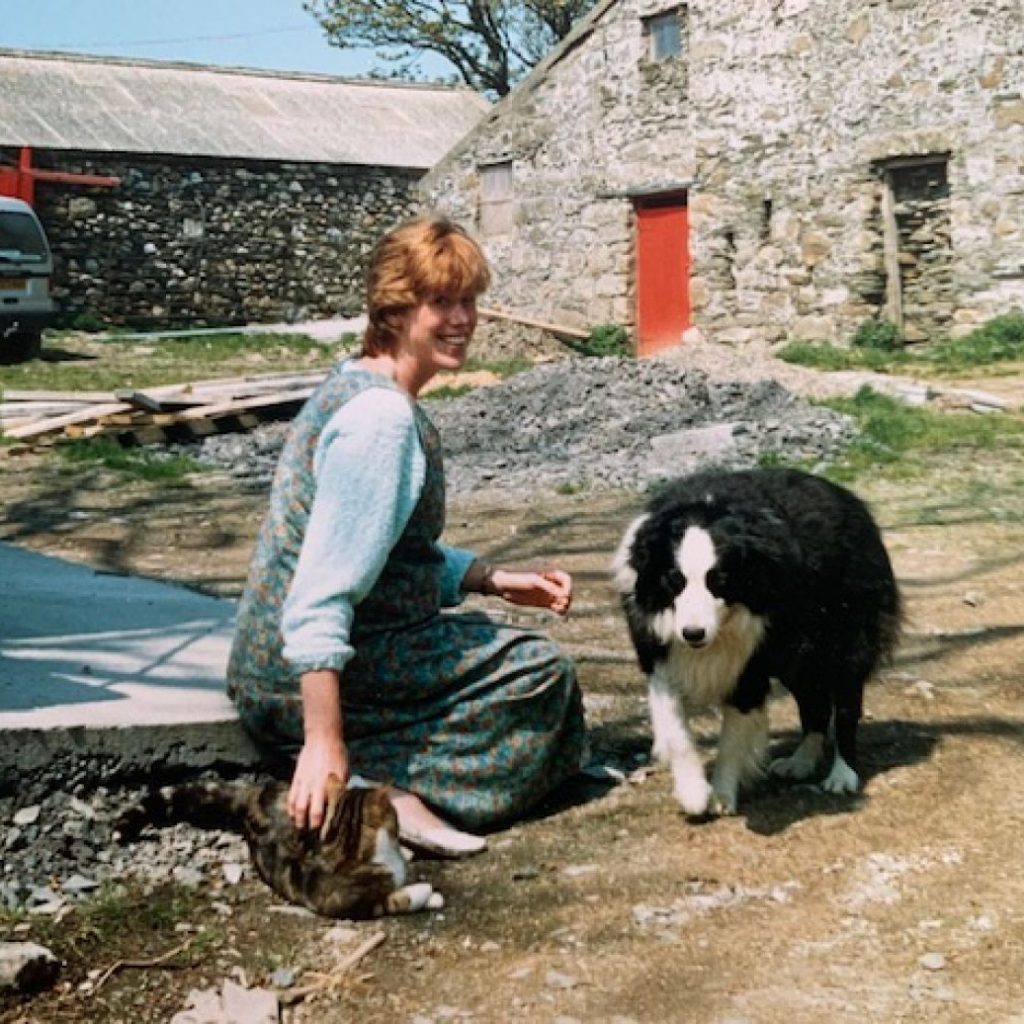
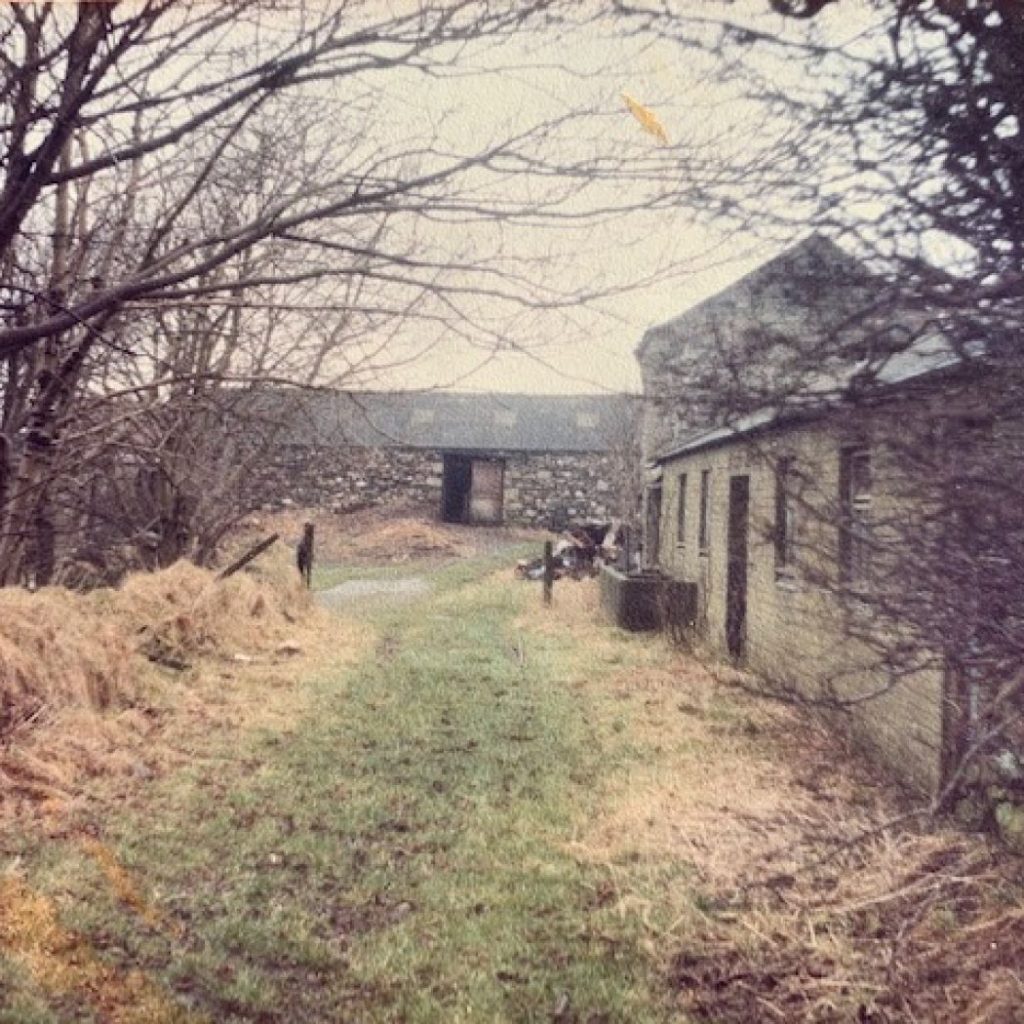
When we first arrived, Kionslieu was a very different place. The house bore little resemblance to the inviting farmhouse it is today with the surrounding sheds in disrepair. However, with the unwavering support of our family and a shared vision, we rolled up our sleeves and transformed our home, and the farmyard one shed at a time, creating a cozy and welcoming atmosphere.
In the early years, I balanced my time between working at the Post Office and managing our small farm, where Tony tended to our pigs, chickens, and our beloved goat, Annie the Nanny.
Tony with Annie the Nanny Feeding the animalsExpecting our first child
In 1987, with the arrival of our first child, I decided to leave my job to dedicate myself fully to the farm and our family. That decision coincided with the beginning of our venture into the hospitality industry, as we opened the doors of our farmhouse to guests seeking bed and breakfast accommodation.
The early days in hospitality
Our early days in hospitality were filled with warmth and simplicity. We advertised our offerings in the Isle of Man Tourist Guide, eagerly awaiting phone calls or letters from potential guests. Requests for our brochures, which we printed as A4 leaflets, soon became the norm. If luck was on our side, a booking would follow, with visitors sending in their booking forms and deposit cheques by mail, often leaving behind post-dated cheques for their next visit. This personal touch fostered a deep connection with our guests, many of whom came back year after year, creating lasting friendships and cherished memories.
Creating beautiful holiday accommodation in the heart of the Isle of Man
As the hospitality landscape evolved, so did the needs of our guests. The demand for en-suite accommodations grew significantly, and with the arrival of our second child we faced new challenges in managing the bed and breakfast in our farmhouse.
Recognising this shift, we decided to repurpose the barns on the farmyard, transforming the main barn into three spacious holiday cottages, which were carefully clad in the original Manx stone and with the dairy was converted into two delightful single storey cottages . This renovation allowed us to offer our guests a blend of traditional charm and modern conveniences, catering to their preferences while maintaining the heart of what Kionslieu represents.
Today, we take immense pride in welcoming guests to our little corner of the world. Each visitor brings fresh energy and stories, turning our cottages into homes away from home. The joy of sharing our space and creating memorable experiences for our guests is truly fulfilling. We love seeing families reconnect, couples unwind, and friends create new memories amidst the breathtaking landscapes of the Isle of Man.
A welcoming retreat
Kionslieu has become more than just a retreat; it is a place where hospitality and community thrive. As we continue this journey, we are humbled and grateful for the opportunity to share our home and invite others to experience the peace and beauty that Kionslieu offers. We look forward to many more years of welcoming guests and being a part of their stories while they escape to the tranquil embrace of our beloved island
Choose from one of our five delightful cottages
Kionslieu Chronicles Vl- A blog by Wally Quirk
In around 1970 papers came into my possession which included a hand written letter from Mary Owen, my great grandfather’s sister.
My father (who died in 1973) and I went to see Arthur Owen who was known to be a relative of his but we didn’t know the relationship. He turned out to be a cousin of my father’s father. He promised “to go up into the loft and get some stuff, there is loads of it up there”. When we went back a couple of months later, he had died and we were directed by his Landlady to a Solicitor in the town. He passed all books, papers and photos to us. It took ages to sort through it all and the papers to which I refer were amongst it all.I t became the original source information for my Family Tree. I sorted out his estate and in doing so, had to write to a number of people to had never heard of Arthur Owen. It was an interesting time
A visit to Foxdale in the Isle of Man
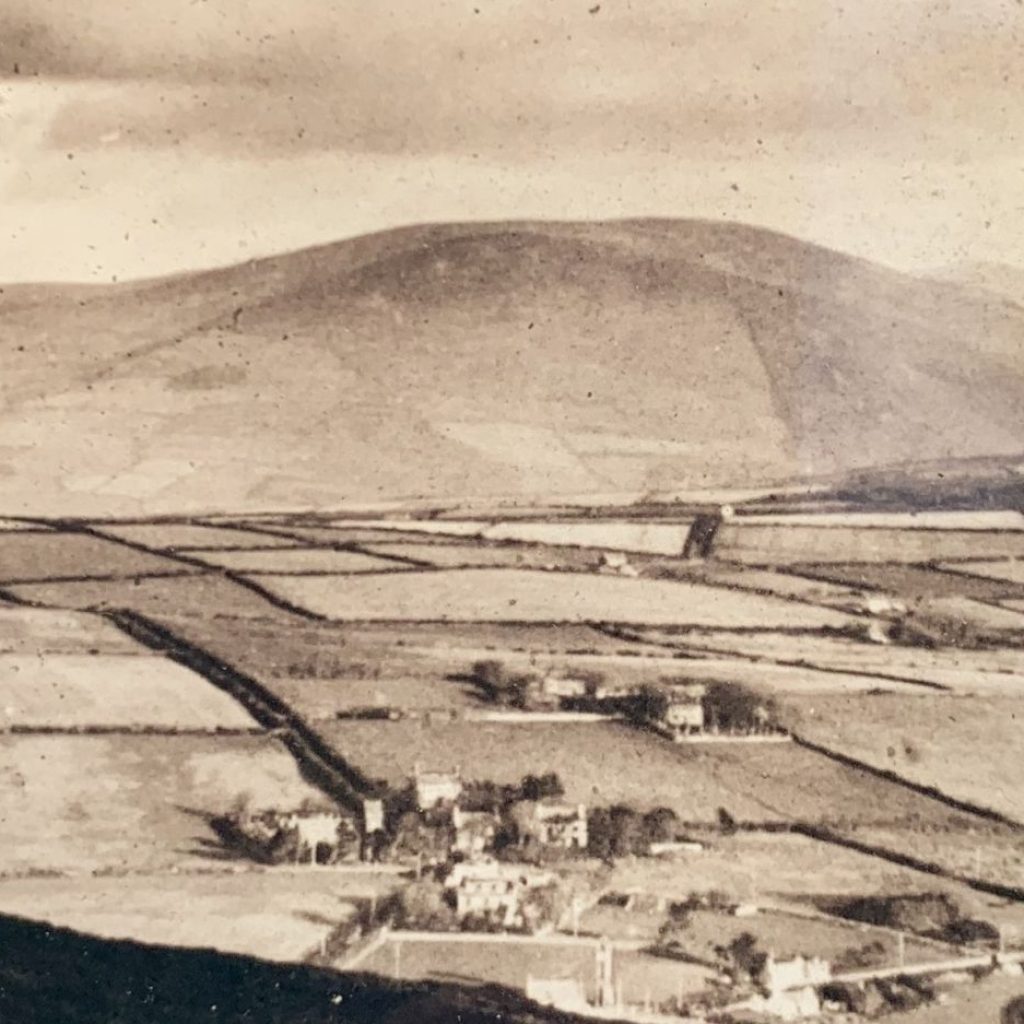
On a visit to the island I took a photograph from a hillside on the south side of Foxdale looking across the valley to the north. The photo included a farmhouse to my left – Lheakerrow, and another to my right – Kionslieu.
The Quirk family farmed Lheakerrow and the Clucas family lived at Kionslieu and as in all good love stories, they married.
Richard Quirk (b.1768 – d. 1845) married Mary Clucas (b.1764 – d. 1842) and set up home at Kiondhooag in Foxdale.
They had a son Richard Quirk born in 1799 who married a widow Margaret Kennaugh (b.1809). She came from Glenmore where she lived with her parents Philip Cornelius Quayle and Elinor (nee Sayle). Margaret had married John Kennaugh and had 3 children although the first born didn’t survive babyhood. Unfortunately John died in a mining accident in the Foxdale mine.
Richard and Margaret Quirk were married in 1842 and had 7 children who, in time dispersed to various parts of the world. Elinor (b. 1844)became a dressmaker in Birkenhead on Merseyside ; William Samuel (b.1845) went to Liverpool; Mary (b. 1847) was a nurse and married in Sussex although her 2 children were both born at Kiondhooag ; Lydia (b. 1849) married and stayed on the Island, Catherine Jane (b. 1851) married John Kellett in Birkenhead but moved to the Hertfordshire area, where the large family are still based. Richard died aged only 4 and Hugh Griffith went to Dublin and set up as Marine Surveyor on Eden Quay. Hugh’s son, also Hugh Griffith became a Ship Captain and married an American passenger and set up home in Indiana USA in 1923 where the numerous grandchildren and great grandchildren still live.
When William Samuel lived in Liverpool he was recorded in the 1861 census as living at 284 Crown Street aged16 and next door was Ellen Frances Benson aged 13. Some 4 years later, they married and had 4 children. The 3rd was Walter Benson Quirk (b.1871) who with his wife Annie Ferguson (1871), had 10 children, the 6th of which was Richard Quirk (b. 1904), my father.
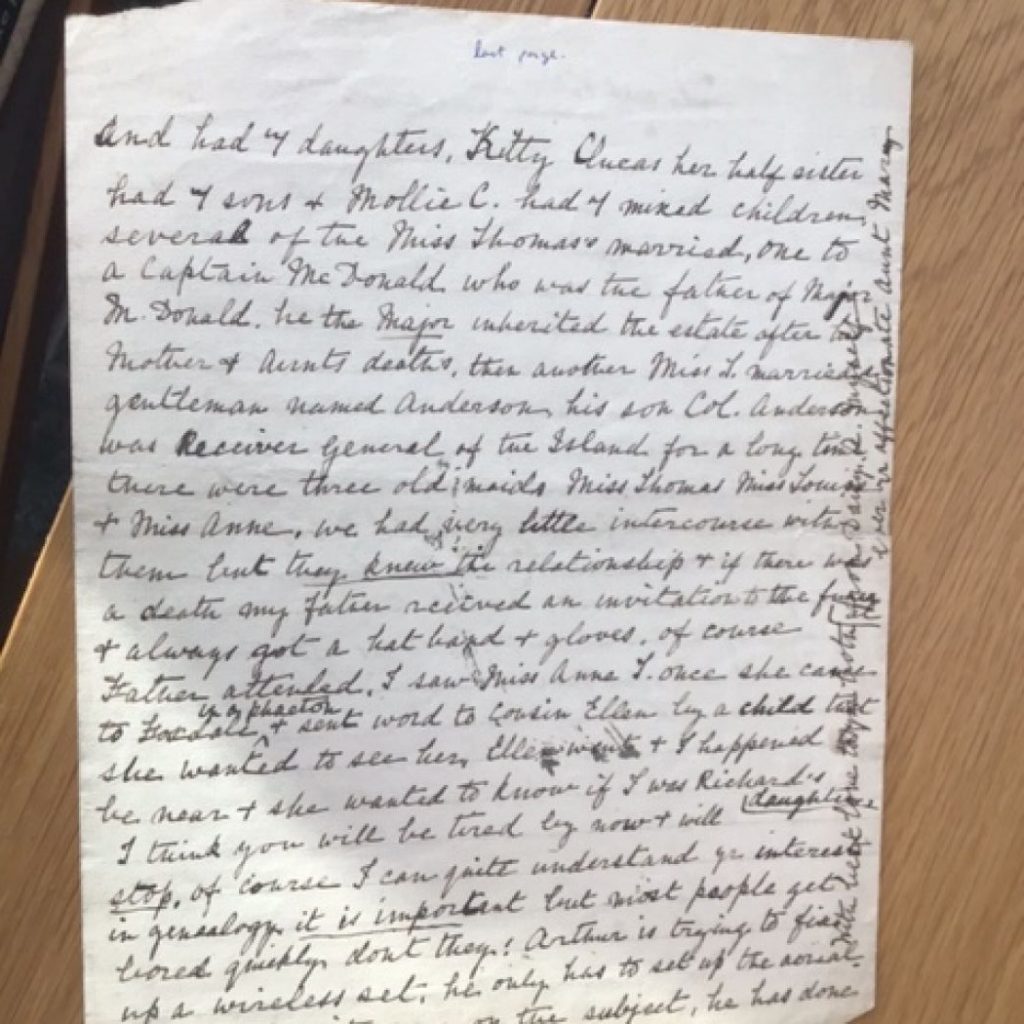
I have handwritten papers (would you be able to send photos?) from the above named Mary Quirk describing various members of the family. She wrote of Hugh Clucas , the Coroner “who was a fine man with a big bushy redbeard”. He built a row of houses called Peveril Terrace in Foxdale. Unfortunately he became bankrupt and his house was bought by Captain Bawden.
She writes of “Grandmother Quirk (nee Mollie Clucas).” She had a sister Kitty who married a Clucas relative and had 7 sons. Sadly only 2 survived –Dr Clucas and Hugh.
She also had a half sister Ann Cosnahan who married a Dr Thomas and had 7 daughters, One of them married a Captain McDonald. Another sister married a man named Anderson – they had a son William James Anderson, who became the Receiver General for the Isle of Man in 1896.
If you are researching your family history and would like to contact Wally his email address is: – walcarq59@gmail.com
Kionslieu Chronicles Vll – Penny August 2022
The Kionslieu Chronicles continue, helping descendants of the Clucas and Kermode families of Kionslieu Farm in Foxdale in the Isle of Man to research their family history. In August 2022 we were delighted to welcome Penny and Jessie to Kionslieu, this is their story.
A visit to Kionslieu Farm in the Isle of Man to research my family history – by Penny
The Clucas family has farmed this land for hundreds of years and so treading in their footsteps was magical for me and my adult daughter, Jessie, as we are direct descendants of the Clucas’s of Kionslieu. My daughter, Jessie wears the 1882 Gaelic gold engagement ring that belonged to her great great grandmother who lived here at the farm as a child. We also treasure a 150 year old sampler completed by little Jane Clucas in 1887 when she was only 12.
I already knew a great deal about our family history. My mother, (Mary, Nee Cowley) helped Terry Kermode compile the Kionslieu chronicles which Fiona has so Kindly made (links below) available on this website for all the Clucas’s and Kermodes who are now scattered around the world.
But I’d forgotten the unique beauty of this magical Island which I’d last visited as a child to stay on a farm near Kionslieu, where my great uncle let me help him milk his cows.
Terry Kermode was my second cousin once removed.
Returning now, I wasn’t ready for the romance, the wildness and emptiness of the landscape, or the hills shrouded in mists and mystery. Thanks to Fiona and Tony for providing a perfect home away from home for our ancestral pilgrimage.
Terry Kermode was my second cousin once removed, his detailed chronicles is brilliantly researched, but very long, links below:
For those looking for a broad brush history of 19th century Kionslieu, here is a shorter alternative:
The Clucas’s of Kionslieu
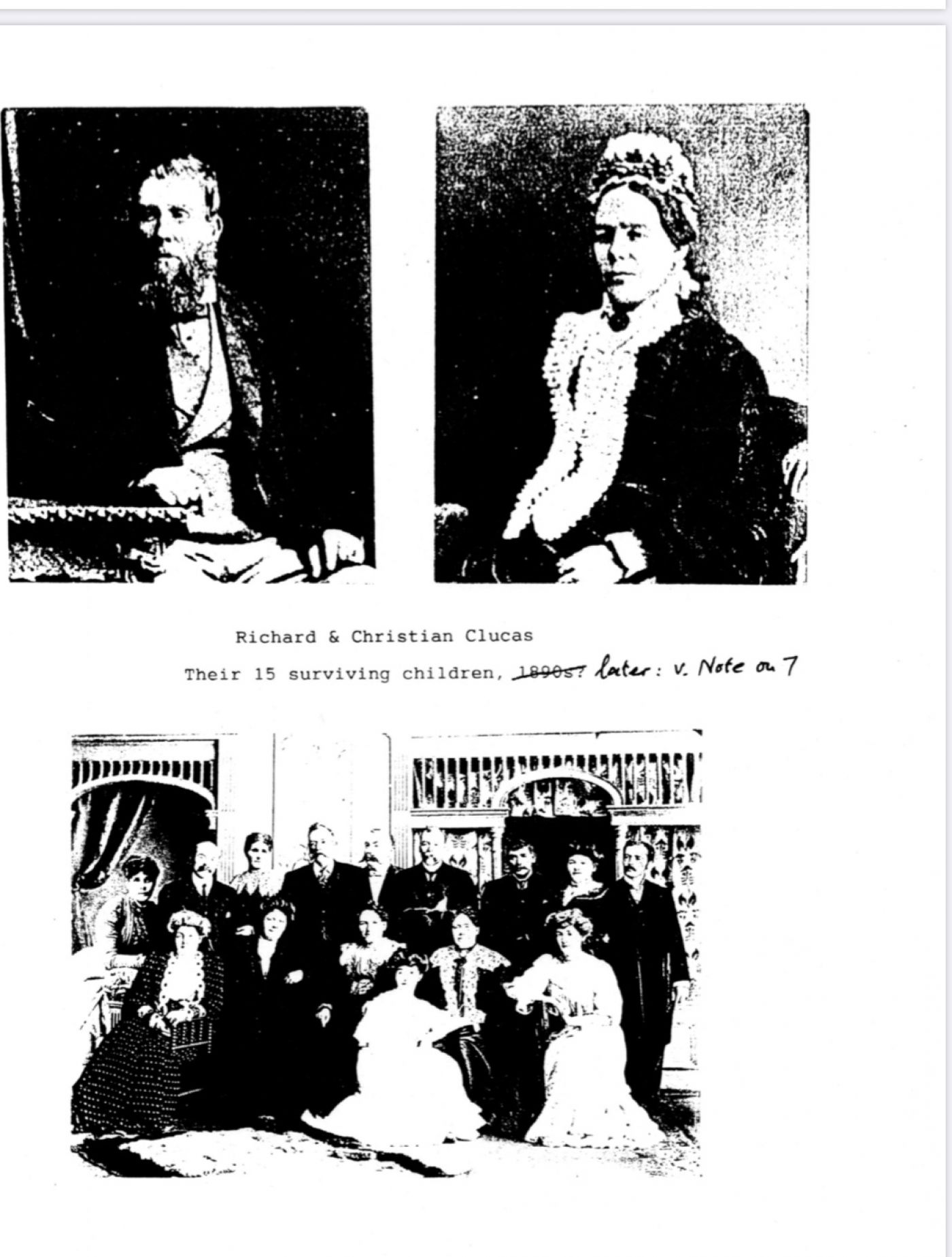
Richard Clucas ( 1816- 73 ) is the earliest Clucas of whom there is a photograph. He is my Great Great Great Grandfather.
Richard Clucas 1816 – 1873
Richard Clucas 1816 – 1873 and his wife Christian Corkhill
He was born at Kionslieu, his father John had farmed the land before him, and his father before him … and so on until, we think, before records began. This Richard we know was tall ( 6 foot 4 ) and imposing, and was so “highly thought of that when he died the pall bearers carried his coffin 6 miles to the parish church” in Old Patrick. His wife Christian Corkill was 16 when they married and she had 16 children in 29 years here at Foxdale. Despite that Christian outlived her husband Richard and went on to remarry 2 years after he had died. No doubt she needed support to bring up the rest of her children. She outlived her second husband too. She must have been a strong woman.
Christian Corkhill (wife of Richard Clucas)
The Clucas family
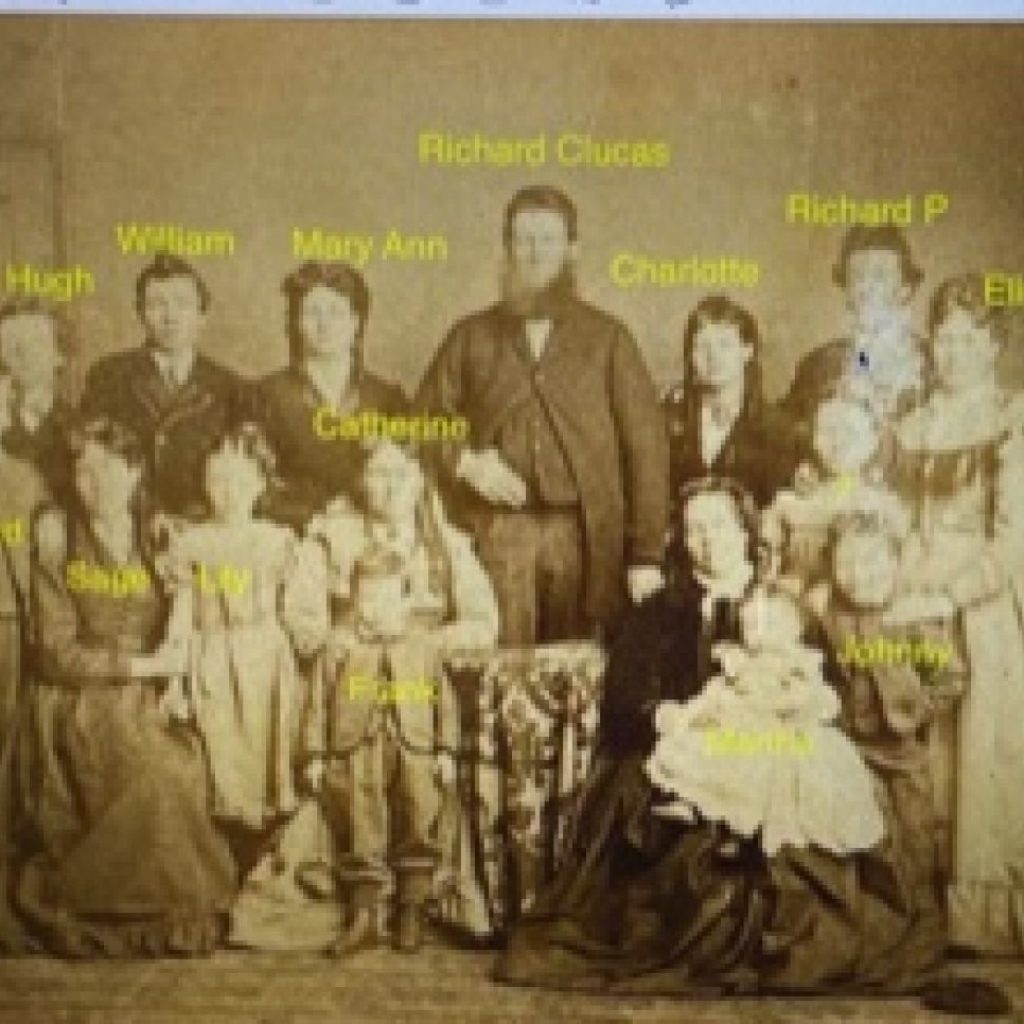
Here is a picture of the Clucas family with the imposingly tall Richard and his ( surely exhausted!) wife Christian centre back row . It was taken in around 1870 in the kitchen of this farm with 15 of their children, Richard died a couple of years after this was taken. One of their children, a son John, died before he reached adulthood and he is missing from the family photo, Jess and I have attempted to identify the children from their ages matching them to the censuses but we could be wrong .
The Clucas Family picture in Kionslieu farmhouse around 1870
R Clucas and his family – inscription on Kionslieu Farmhouse
This Richard Clucas and his family were fairly well off . The inscription on the side of the house marks their time here.
Inscription on Kionslieu Farmhouse
Although not a “principal” island family, they were significant local land owners of around 70 acres with live-in servants and farm helpers. On the farm back then, the plans show they kept pigs, cows, hens and also horses to pull their ploughs. Eighty percent of the IOM was and remains agricultural land and corn and green crops were grown on farms like Kionslieu as well as potatoes which were introduced to the island in the early 1700’s. They had no running water obviously and life was basic – with only 4 or 5 bedrooms for their children.
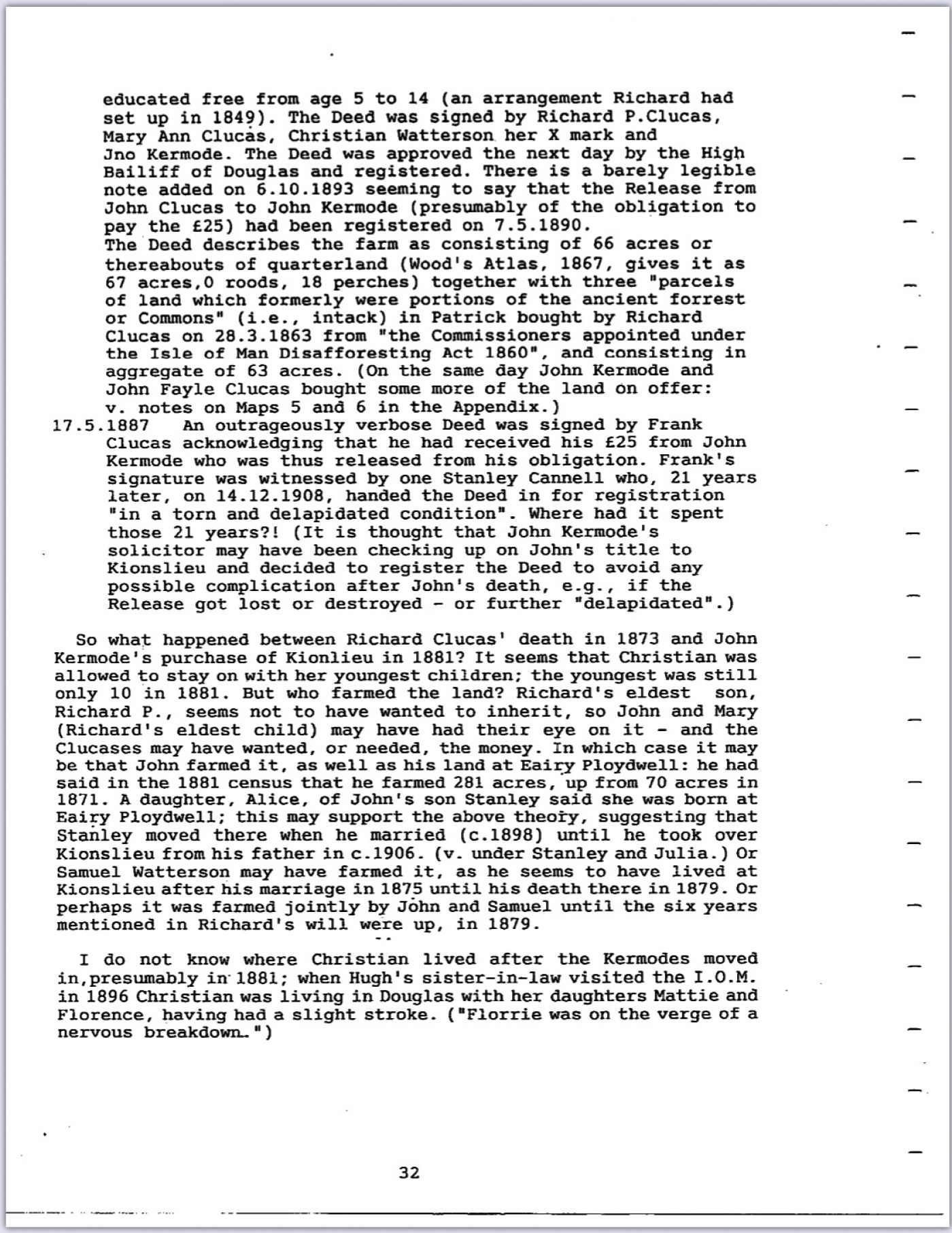
After the widowed Christian died in 1897 there was a gap of a few years before her eldest daughter Mary Anne Clucas ( now a Kermode through marriage ) formally took over Kionslieu with her husband John Kermode. We suspect they were already farming the land in the interim when Christian was old and widowed and also for a few years after she died whilst the inheritance of the farm was sorted out. None of the Clucas sons appears to have wanted the responsibility of taking it on.
This is when the farm became the home of the Kermodes.
John Kermode and husband of the eldest Clucas child: Mary Anne started to live and run Kionslieu.
But what happened to Mary Anne’s younger brothers and sisters featured in the sepia photograph? I have found out and can share their stories too as they settled all over the world and between them had 74 children.
Here is a summary; their life choices tell us so much about social history.
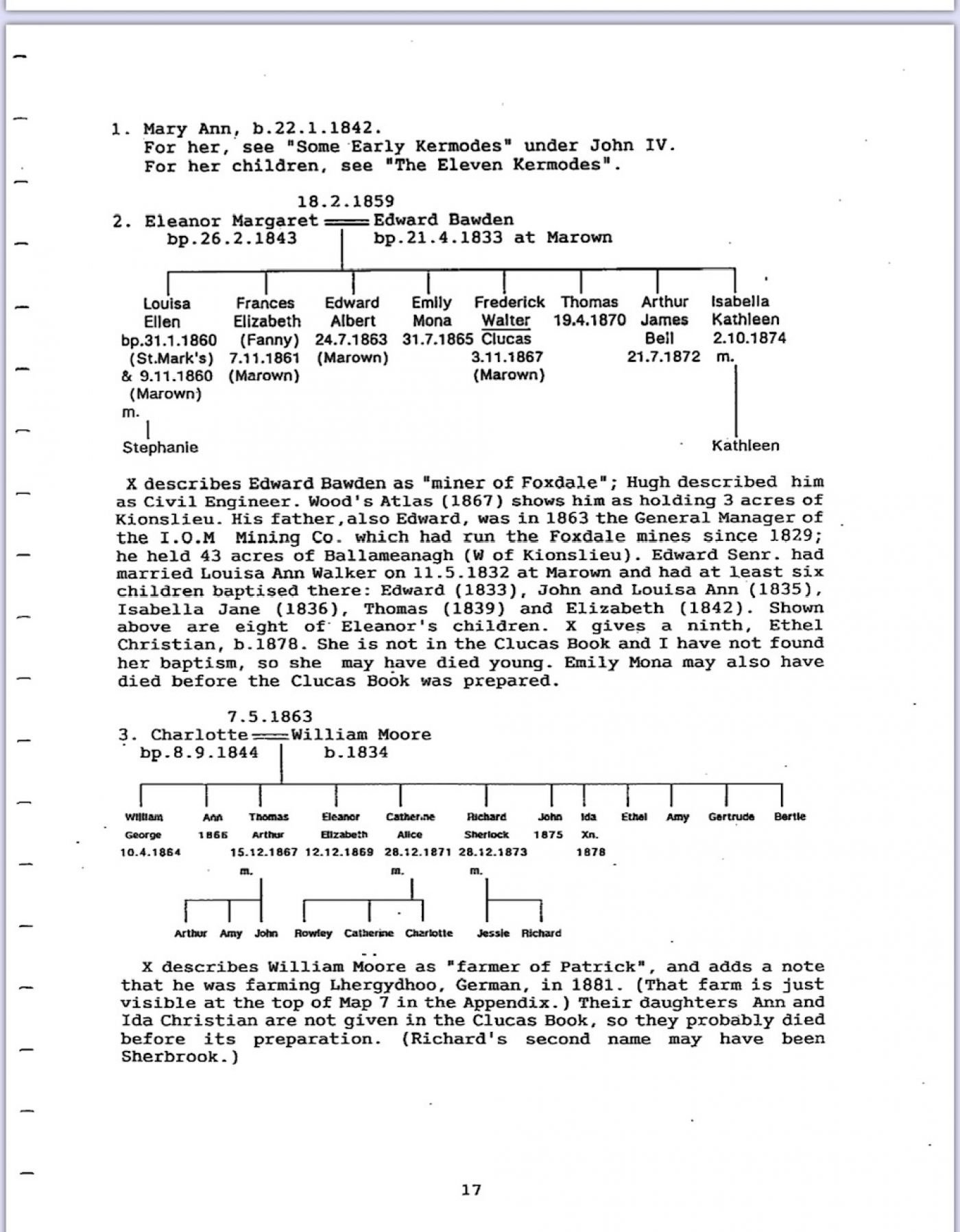
The first five Clucas children were all girls: Mary Anne, my Great Grandmother we know about . After her birth in 1842 came her sister, Eleanor Margaret in 1843, then Charlotte in 1884, Catherine in 1846 and Sage in 1848.
The eldest four all remained in the Isle of Man.
Eleanor
Eleanor married a mining engineer in Foxdale and remained here with her 9 children.
Charlotte
Charlotte married another local farmer, William Moore and had 12 children nearby.
Catherine Clucas, daughter of R Clucas married Reverend John Thomas Clarke
Catherine’s story is more curious. Her husband was 40 years her senior, and a venerable Manx figure. He was the esteemed Minister in Foxdale and a widower. She married him when she was only 20 and he was already in his mid sixties,
John Thomas Clarke, (1799- 1888) had been appointed Minister at the local church, St Marks in Foxdale in July 1827 and he stayed there for 37 years becoming known as” the patriarch of St Marks” He writes about his time in the parish and the records are now online and they provide a fascinating history of the parish. Manx Soc vol 28.
John Thomas Clark 1799 – 1888
Rev Clarke did a great deal to improve living conditions and the church in the village. Two years after he retired from the ministry though he must have surprised everyone when he married Catherine. Rev Clarke is also remembered for publishing (in 1866) an Encyclopaedic English Manx dictionary and a Manx hymnbook.
Together he and Catherine went on to have five children. She moved to Wales after he died remaining there for the rest of her life.
Sage Clucas
The last of Ricard Clucas’s elder sisters was Sage Clucas. Sage married a local farmer, John Curphey, of 50 acres in 1870, but after their first child was born they left together to begin a life in England, setting in Lancashire.
Sage had three sons and six daughters with John and died in January 1924 in Lancaster, Lancashire, at the age of 80, and was buried in Scotforth, Lancashire. The next 6 children were 5 boys, and one girl, born between 1850 and 1860.
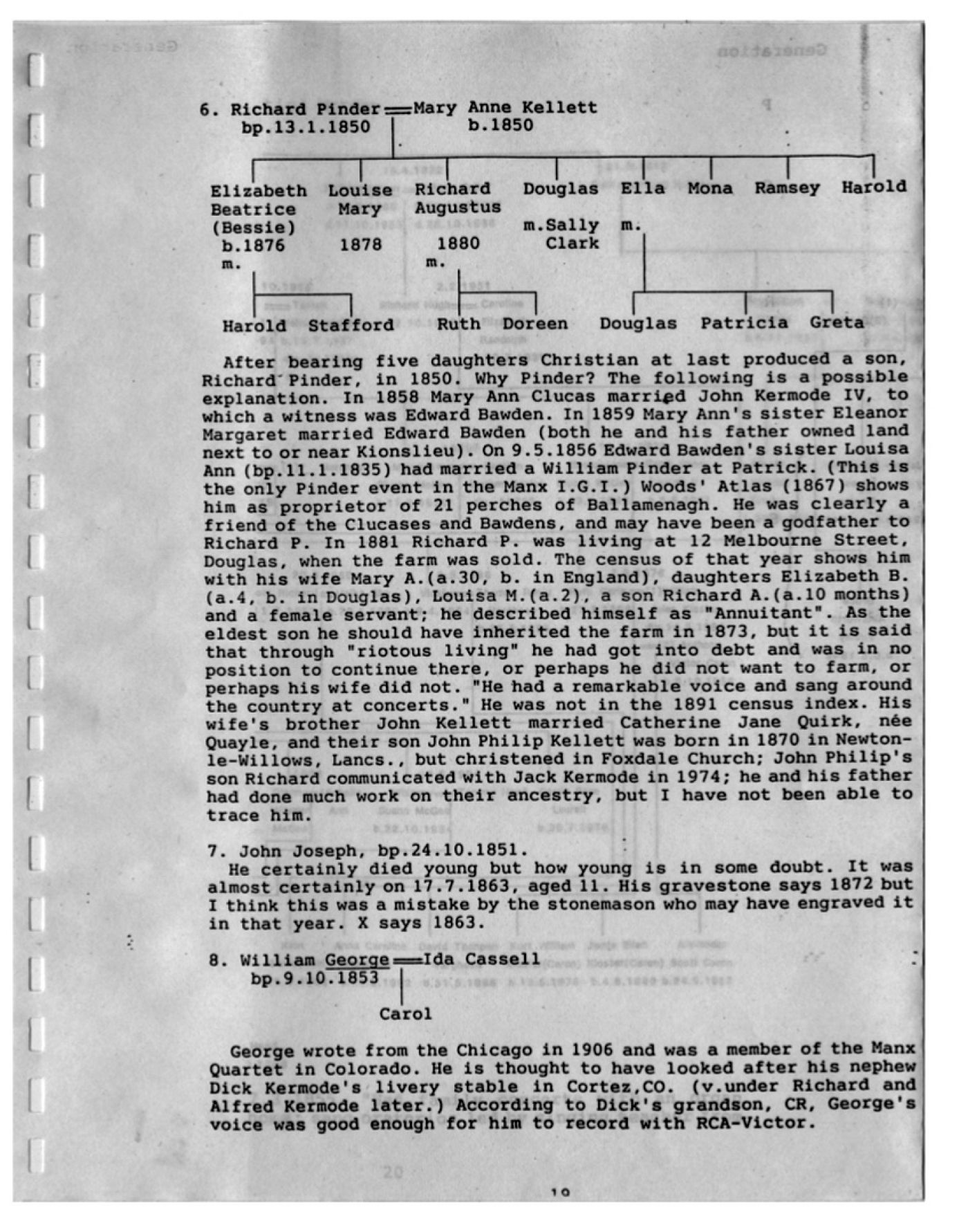
One died young ( John ) and three of the other boys left the IOM; two emigrating as single young men to America;
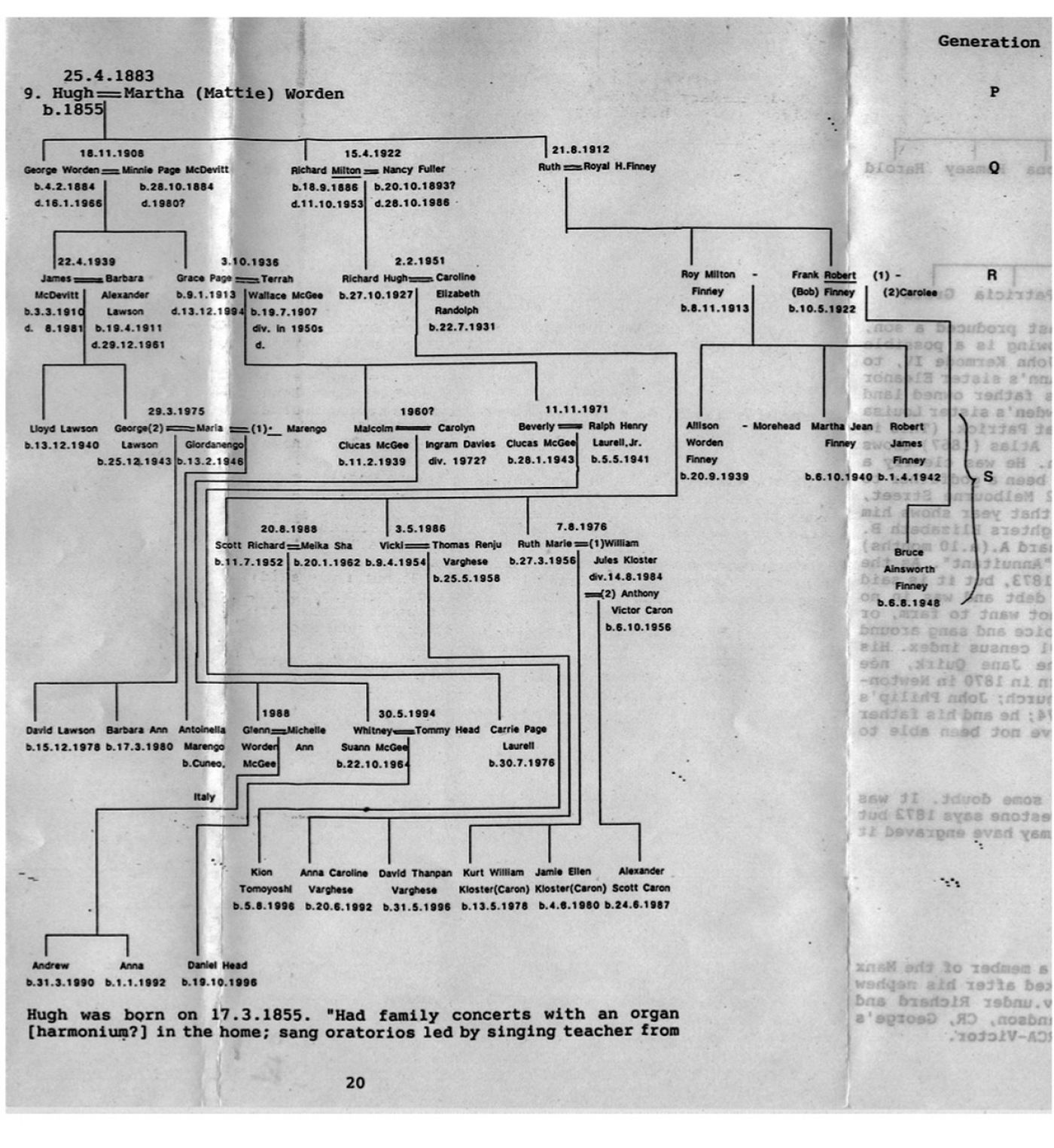
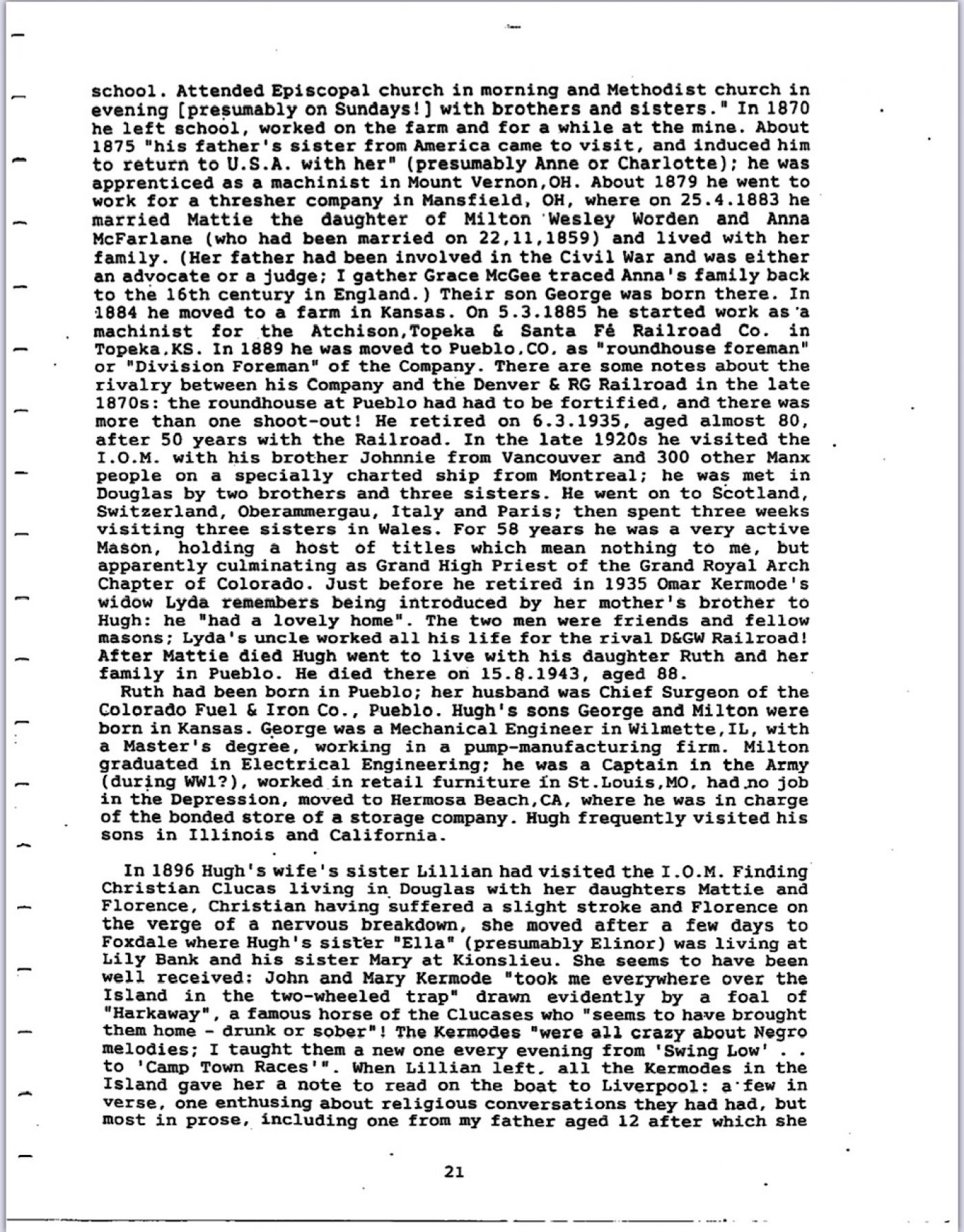
William and Hugh
William settled In Ohio and then Colorado and had 3 children with his American wife Ida Cassell.
Hugh settled in Colorado and also had 3 children with an American woman: Kate Mordon.
Richard Pinder
The eldest son in the family was Richard Pinder Clucas who also left the Isle of Man in the 1880’s after the farm’s inheritance was settled on his eldest sister Mary-Anne. I think he was unwilling to take it on rather than overlooked. He settled in Cockermouth Cumbria with his wife who was originally from Lancashire. He worked as an “iron worker” there and had 8 children
Edward Walter
The youngest boy of this group, Edward Walter, moved to Lancashire (no doubt to be near his siblings )with his Manx wife Frances Quirk . He worked as a baker there, But he was widowed early and left to care for 6 young children, it looks like he returned to the IOM to work as a confectioner and baker in Douglas.
Christian
Christian, the only girl in this batch moved to Wales and then Tetbury and married a school teacher . She had four children.
The four youngest Clucases born between 1862 -1871 all left the IOM. Their father Richard died in 1872 so life would have been less settled for them as they watched their formidable mother remarry and then move away from Kionslieu. When her second husband died he did not leave his widow Kionslieu, even though it had been her home not his, and the existing legal documents suggest she had her daughter had to fight hard to get it back. No doubt it wasn’t easy for the youngest of her children.
Louisa “Lilly
Louisa “Lilly’ had left the island by 1881 and was working as a servant in Warwickshire, but she was back looking after her widowed mother with her younger sister Martha in 1891.
By 1901 she is married to a Roman Catholic from Lancashire. He was a licensed victualler and together they emigrated to Canada where her husband became a milk man. Together they had 3 children. She died there.
Frank
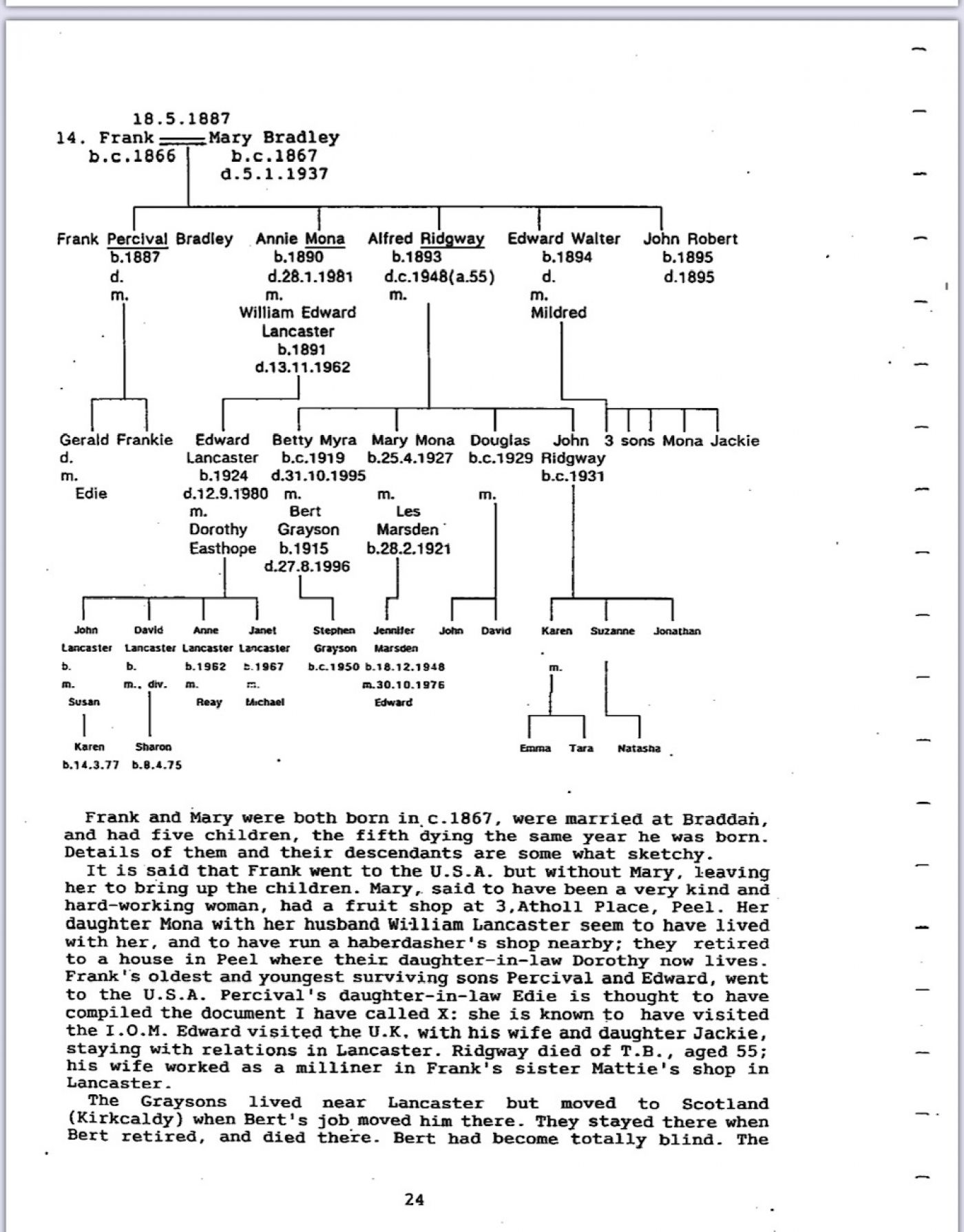
Frank Clucas followed his elder sister Sage and set off to Lancashire accompanied by his young Manx wife and they had four children together and made a lief there. He was a horse trader and then Hackney cab driver.
Martha
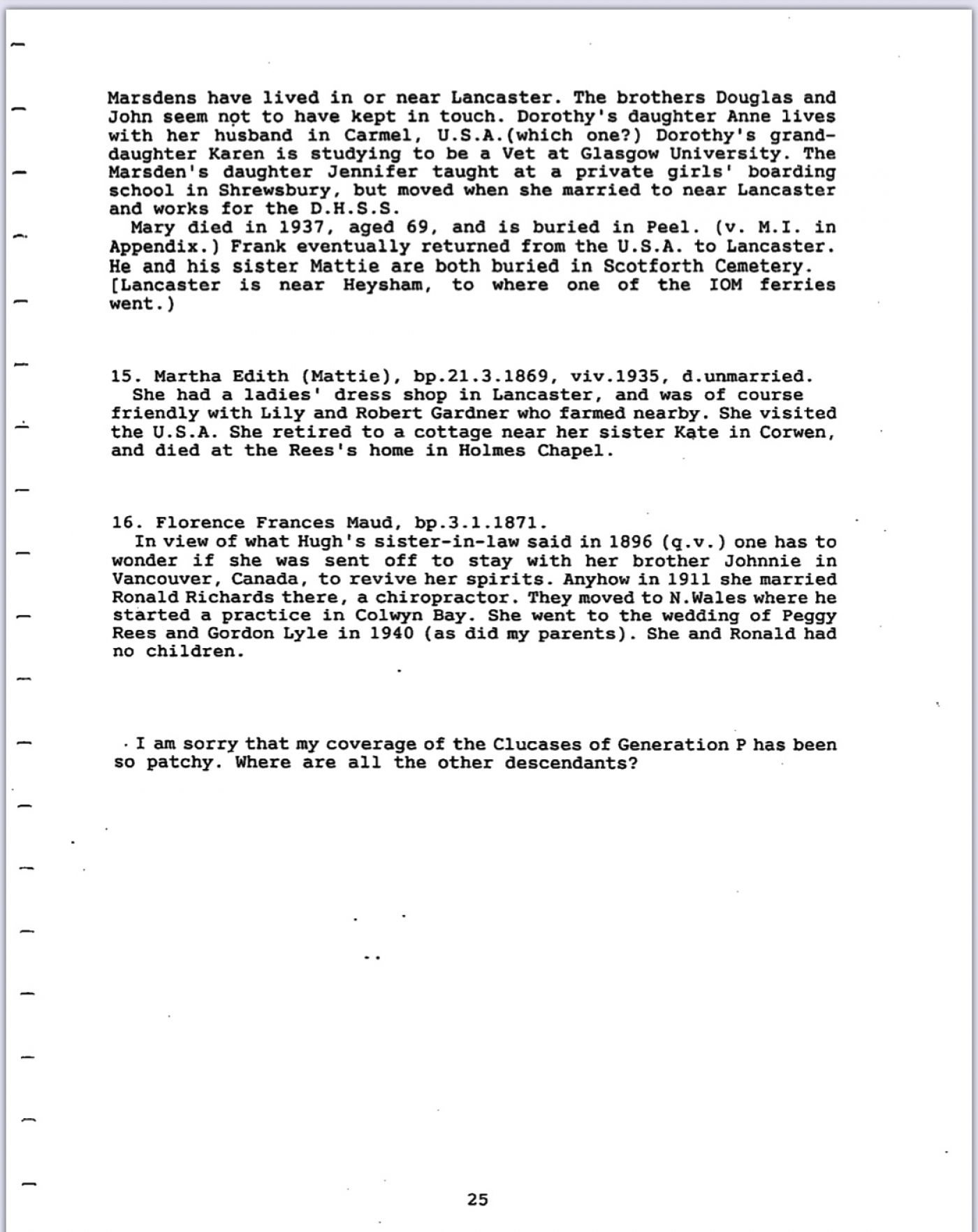
His little sister Martha also followed to Lancashire. She never married but lived with her sister Sage and ran a milliner’s shop, dying in Crewe. She is also mentioned by her great great grandson who visited Kionslieu here
The very youngest Florence Francis who was born in 1871 also followed her siblings and left Kionslieu. First she went to Tetbury to be near her older sister Christian who was living there and had married a teacher. She then went to Canada to follow her elder sister Lilly. She married there but returned to the UK with her husband and retired in Wales, near her sister Catherine. She was buried in Lancashire near her siblings Frank, Sage and Martha. Although married, she had no children,
The Kermodes of Kionslieu
The Kermodes were an interesting lot too and here is a photo of them taken outside the farm house in 1904.
To be absolutely clear and annoyingly repetitive, the mother in the picture , Mary Anne was a Clucas before she married John Kermode so she is in both photos, above as a Clucas daughter and below as a Kermode mother . Both photos were taken at Kionslieu but about 30 years apart. She and John had 11 children. They were my Great Great Grandparents and in this picture they are seated in the front centre; John with the white beard and Mary Anne to the right.
The Kermode Family pictured at the front of Kionslieu Farmhouse in 1904
Marianne Kermode/Cowley
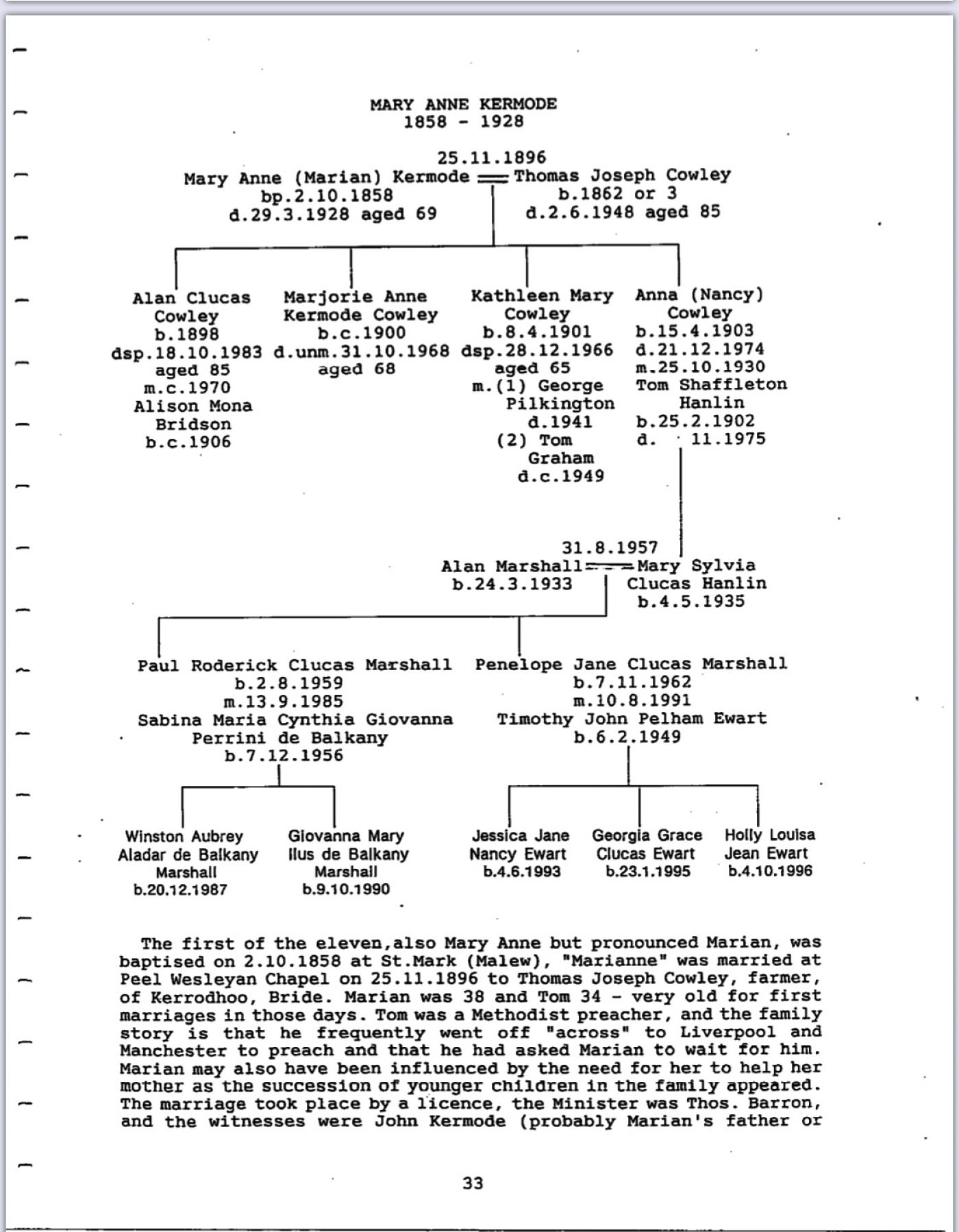
My great grandmother, their daughter, Marianne is seated on the left of her father. She remained on the Isle of Man and married a Cowley, moving to another local farm when she did so.
Four brothers emigrated to America
By 1904 four of her brothers had already emigrated to America and their heads were copy pasted into the photo. They are seated on the far right . (The original hangs in my home.) I’d love to know what took them there, what hopes drove them to a new life. Born in the 1870’s they would have missed the unrest of the potato riots of 1825 but modern communication had transformed life and no doubt one one brother had gone and sent back good reports, the others would have followed.
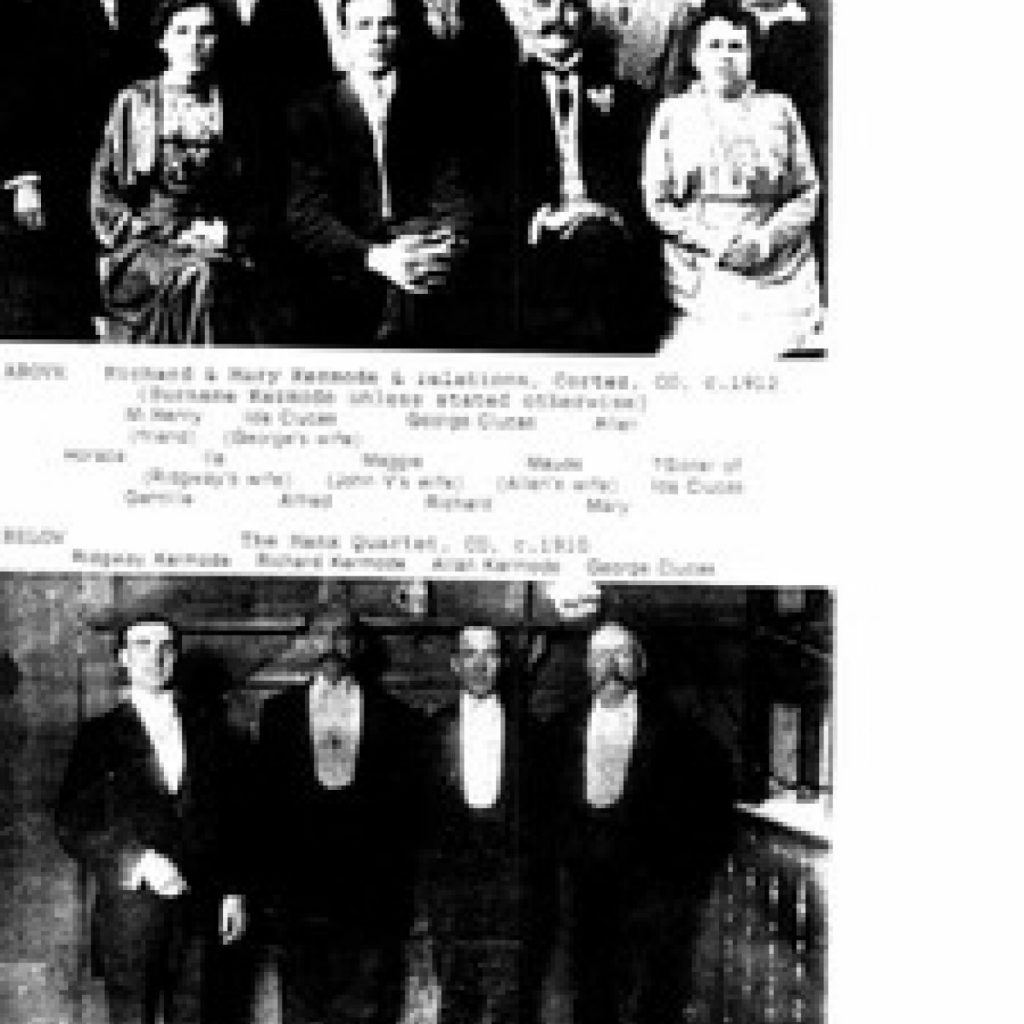
We also know that the family was musical and that the brothers and cousins formed a barber shop quartet in America, pictured above and known as the Manx Quartet. In the Isle of Man too the family was involved in the musical life of the community.
We know that the brothers, once in America , made a success of their lives there and travelled West. Their knowledge of horses helped. Them set up a transport business.
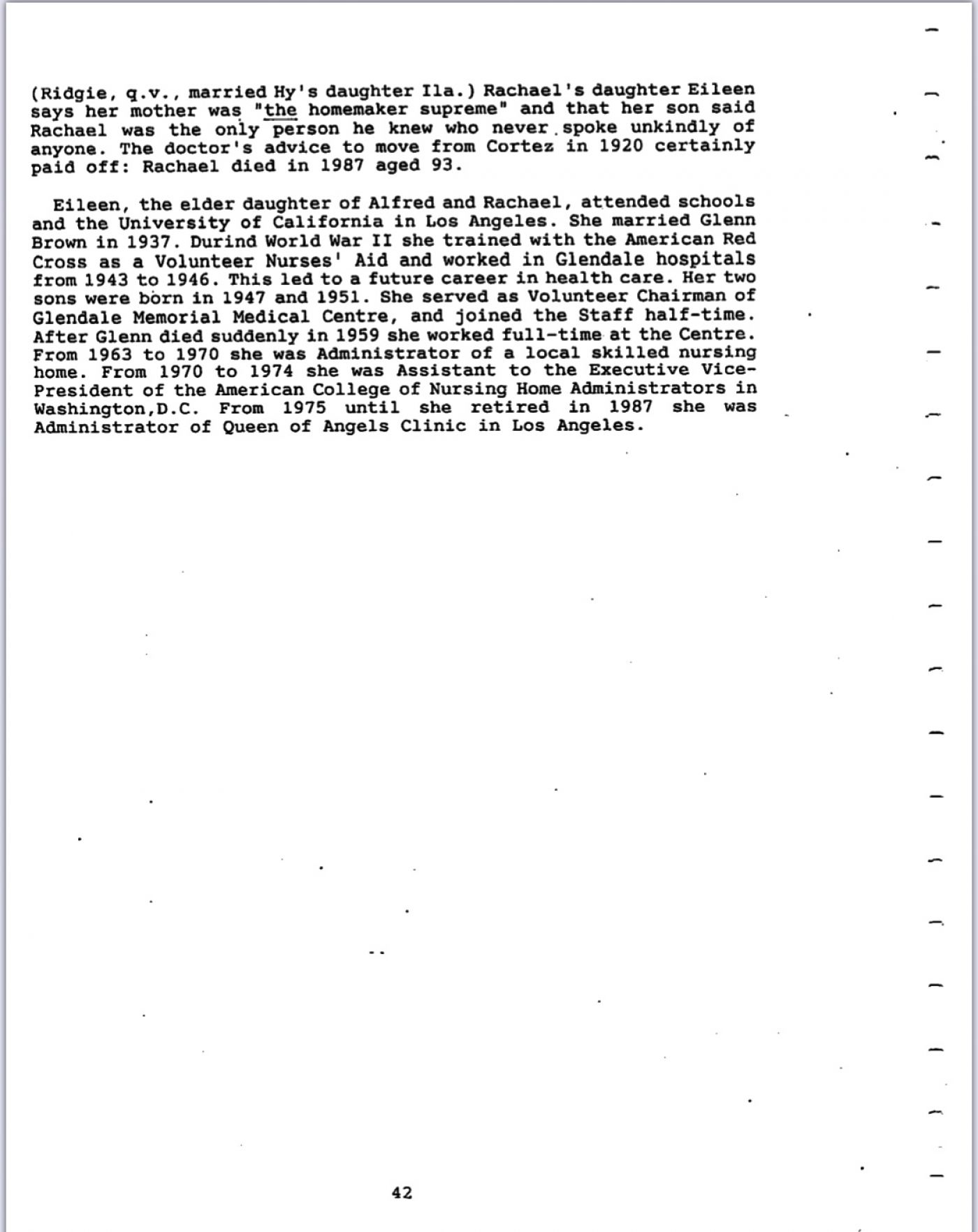
Richard Kermode became the Sheriff of Montezuma County in 1901
Richard in particular ( seated with the curly moustache in the picture) became Sheriff of Montezuma County in 1901: Home Message from Sheriff Spruell Inside MCSO Administration Detention Division Patrol Division Records Division Fees and Costs Civil Division Tenant/Landlord Facts Writ of Restitution Sex Offenders Most Wanted CCW Permits Sheriff’s Posse Around Montezuma County History of MCSO
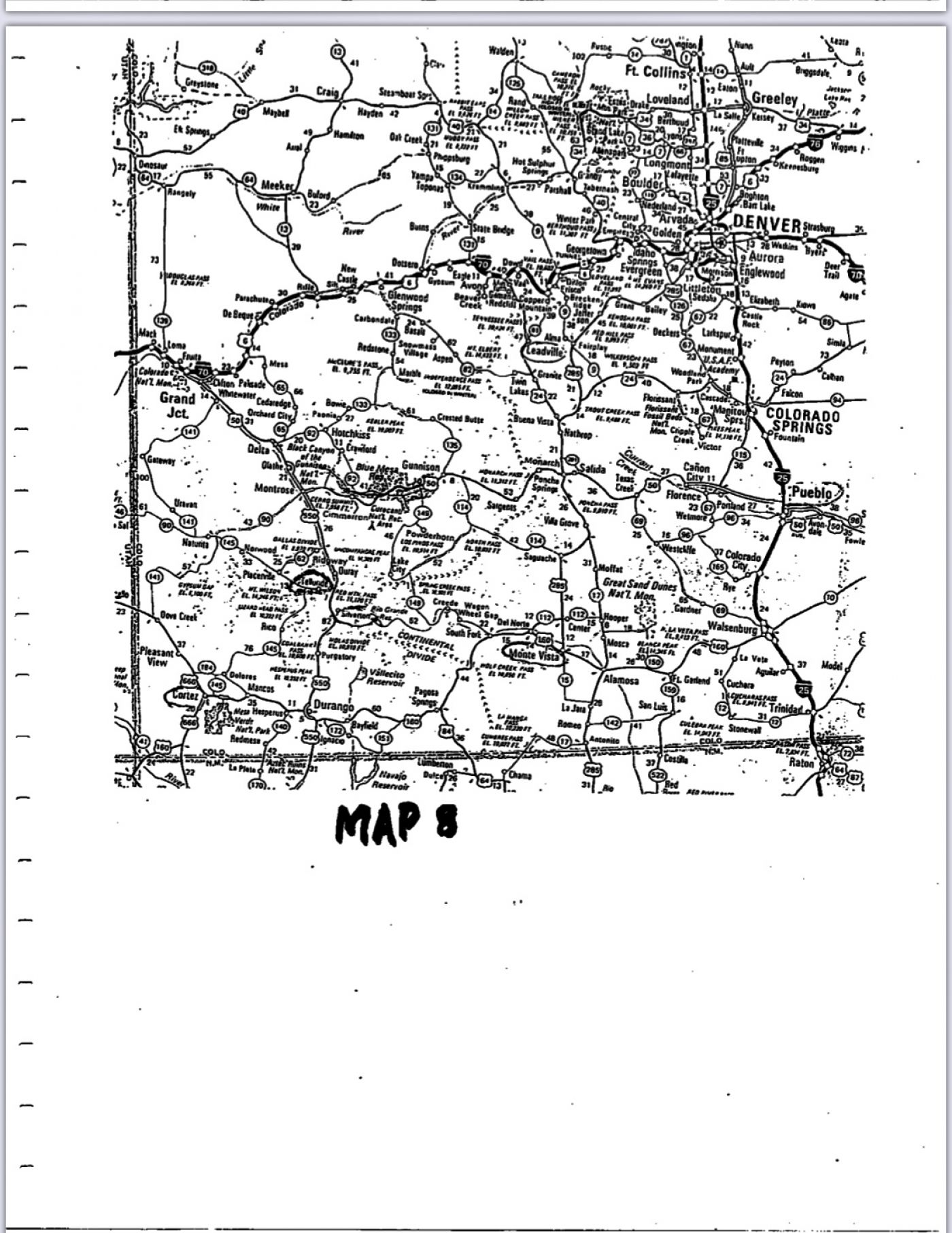
Although yet a comparatively young man, and for only ten years a resident of Montezuma county, so forcibly has Richard Kermode, of Cortez, impressed his sterling manhood and far-seeing and resourceful business capacity on the people of the county, that he has risen to consequence and power among them, and has also achieved a substantial success in business. He is a native of the Isle of Man, England, and is the son of John and Mary Kermode, also English by nativity. He was reared and educated in his native land, and in 1886, at the age of twenty-four, emigrated to the United States, taking up his residence at once in Colorado. He located in San Juan county and engaged in farming, the pursuit of his ancestors for many generations. In 1893 he moved to Montezuma county, and located land two miles north of Cortez, where he passed three years in successful farming. He also served two years as county road overseer, and gave the people such excellent service in this capacity that in 1901 he was elected sheriff. Removing then to the county seat, he started the livery business which he is now conducting there, and has built it up to large proportions, and managed it with great enterprise and close attention to its every want. He has one of the best equipped barns and most active trades in this line in his portion of the country. In 1902 he also took a contract to carry the mails between Cortez and Dolores, and is prosecuting this enterprise with the same vigor and generally good results that characterize all his other undertakings. In addition to his home place he owns a ranch of one hundred and sixty acres eight miles from Dolores; and on the two he has find herds of well-bred cattle. Fraternally he is a member of the Knights of Pythias and the Woodmen of the World. At Telluride in 1887 he was married to Miss Mary Calhoun, a native of Minnesota. They have two children, Gentle and Alfred. In the discharge of his official duties he is wise, firm and fearless; in his citizenship elevated, patriotic and devoted to the best interests of the county; and in social life genial, companionable an entertaining. He is everywhere popular and highly respected. [Source: Progressive Men of Western Colorado, Publ 1905. Transcribed by Marilyn Clore]
They did not mention that Richard and his brothers owned a silver mine for some years in Silverton, CO.
Whilst staying at Kionslieu Fiona took a picture of us in the same spot as where the 1904 Kermode photo was taken:
Penny and Jessie – August 2022
Graves at St Paul’s Church, Foxdale, St Runius above Crosby and St Mark’s Church at St Mark’s
John and Marianne Kermode were buried at St Paul’s Church in Foxdale, along with their daughter Julia. (standing behind their parents in the photo) Julia didn’t marry and cared for them in their old age.
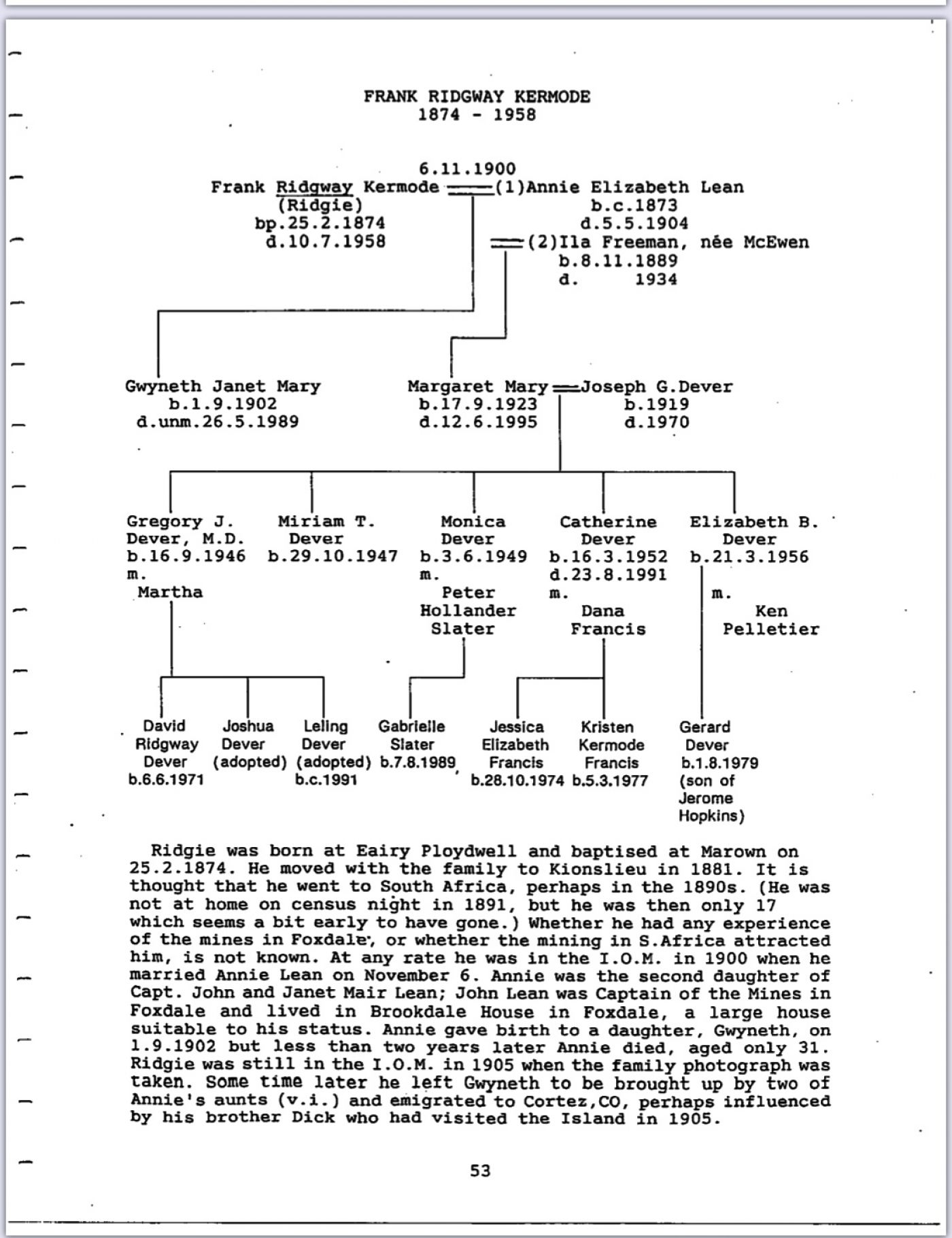
One of their sons is marked there : Frank Ridgeway with his first wife, Anne Elizabeth ( Lean) Kermode , who died in 1904 in childbirth in Foxdale . He left for the USA as a young widower and remarried there . He also has a grave with his second American wife in USA (!) so it’s a bit confusing !
There’s several crosses at the very top/north end of the cemetery and that’s essentially Kermode row. Guests might also like to visit the grayeyard in Patrick over near Peel on the A27. There’s the old cemetery north of the church where the earlier Clucases were buried, up to Richard in 1871 I think. They demolished and rebuilt the church mid-19th century on a site further to the south so there’s also a new cemetery down on the south side of the church. I think only Christian (Corkhill) Clucas’ grave is in that section, it’s a tall light brownish-coloured stone memorial near the southeast corner of the church.
Guests might also want to visit Old St Runius Church, which is up on a hill south of Crosby. The earlier Kermodes tended to bury their folk there (not sure if there are any stones left) but they often used St Mark’s Church in Malew parish to baptise their children, St Mark’s is a couple miles south of old Marown church on the A26 as you head down towards Ballasalla.
Seeing that Ridgeway has a grave in St Paul’s in Foxdale, although he died in USA perhaps shows that his heart was always here. I can understand that now having visited myself.
“Through the mists I can see my home”
There is a Gaelic expression used on the island; “Through the mists I can see my home”, and that is how anyone with any Clucas blood running through their veins feels when they find themselves returning to their roots at Kionslieu.
Penny
For links to all of the information gathered about the family history of the Clucas and Kermode families of Kionslieu Farmin the Isle of Man, click the link toKionslieu Chronicles
The Isle of Man Family History Society website may also be of help –website link
Note from Fiona and Tony – we hope that this information helps with your family history research. If you’d like to visit the island please do get in touch. We have a choice of cottages, a perfect central base from which to explore the beautiful Isle of Man – link below:
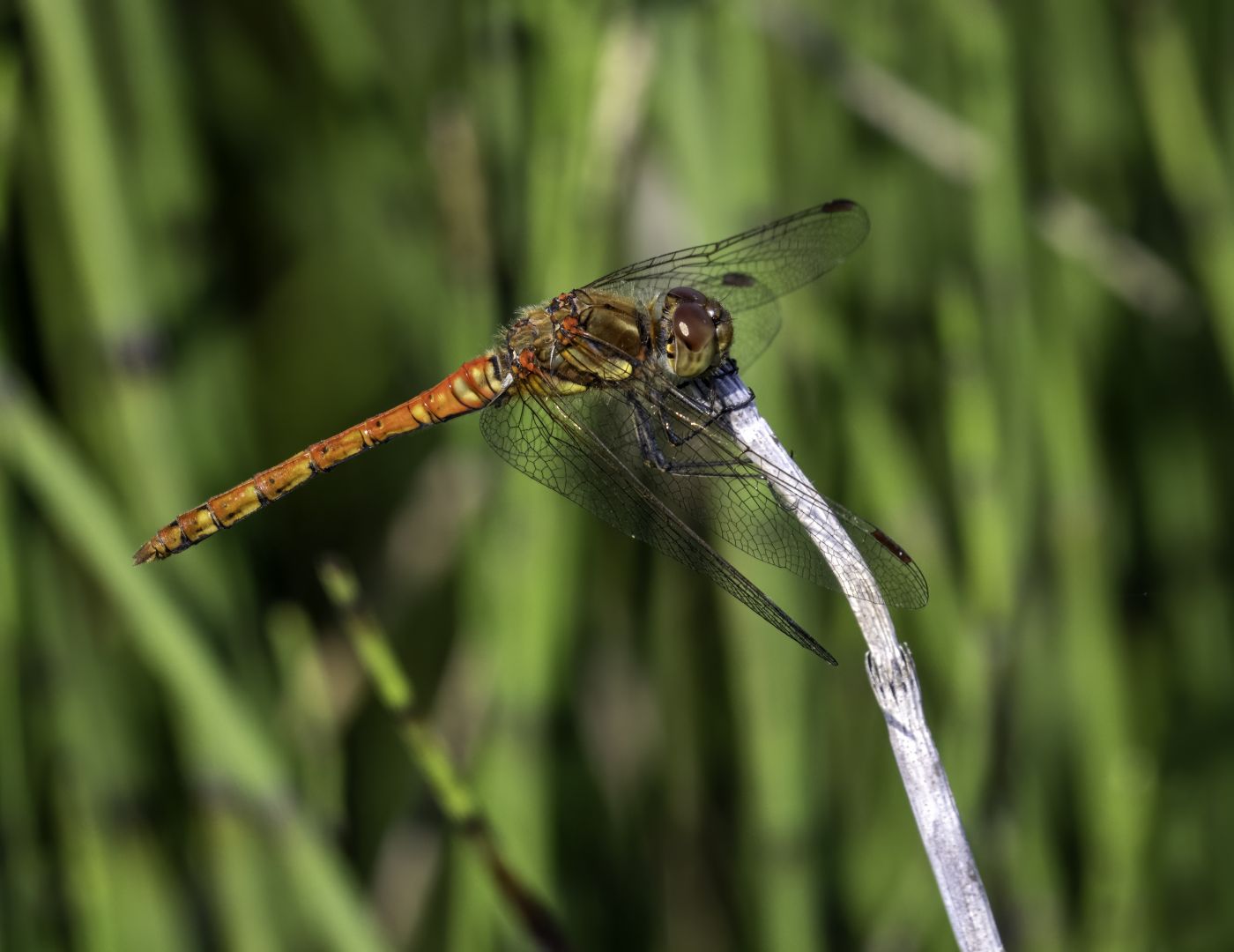
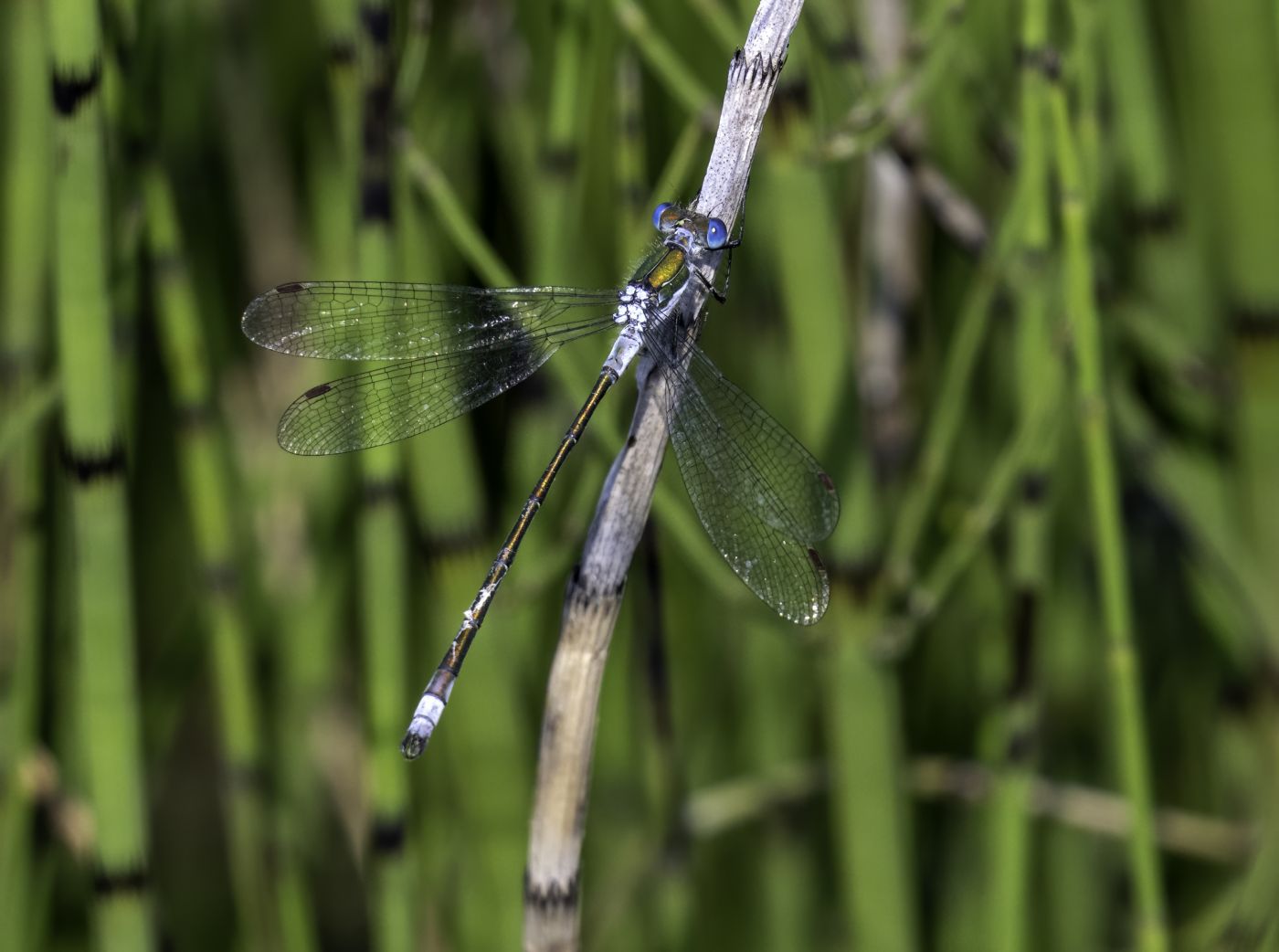
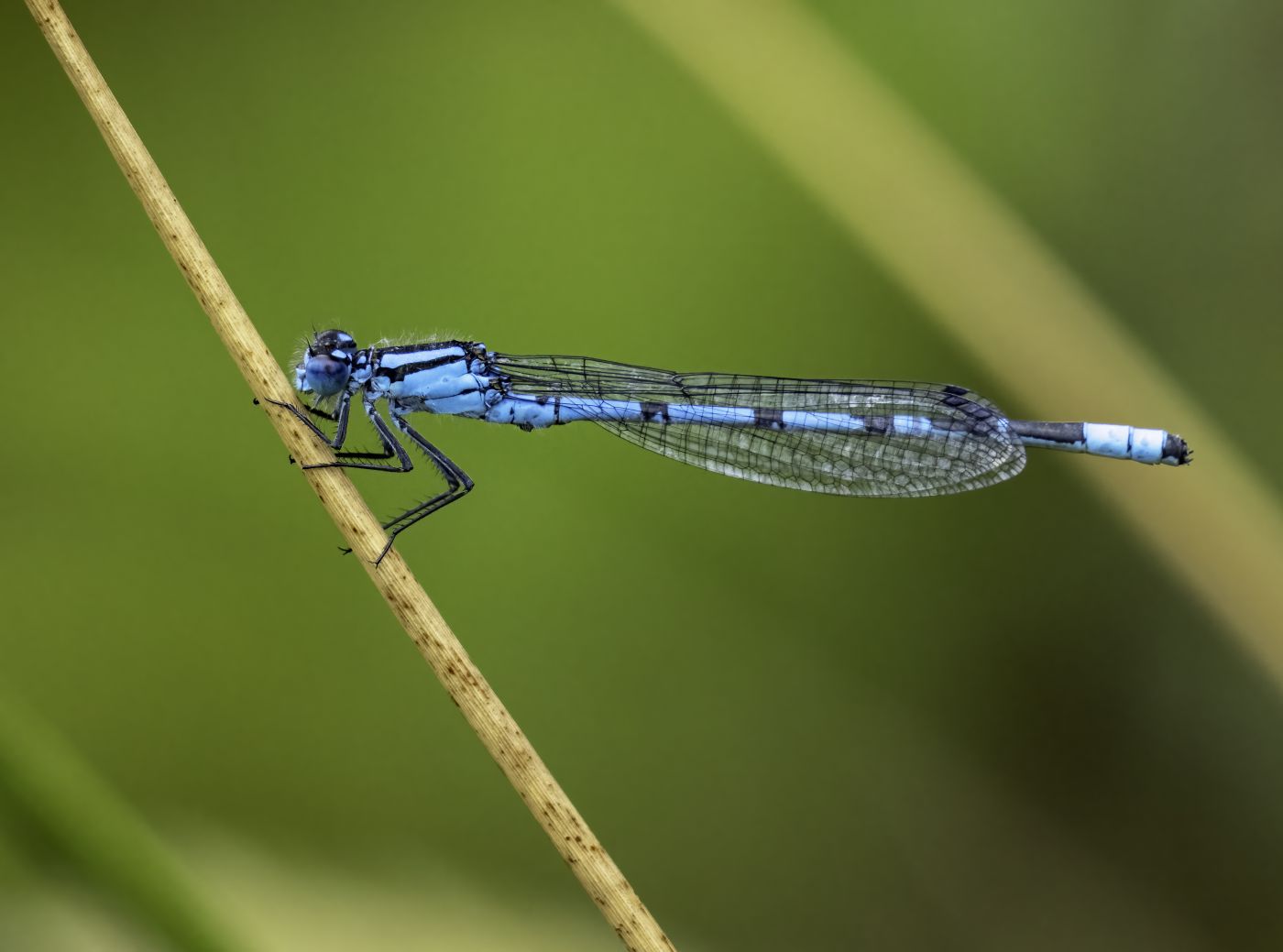
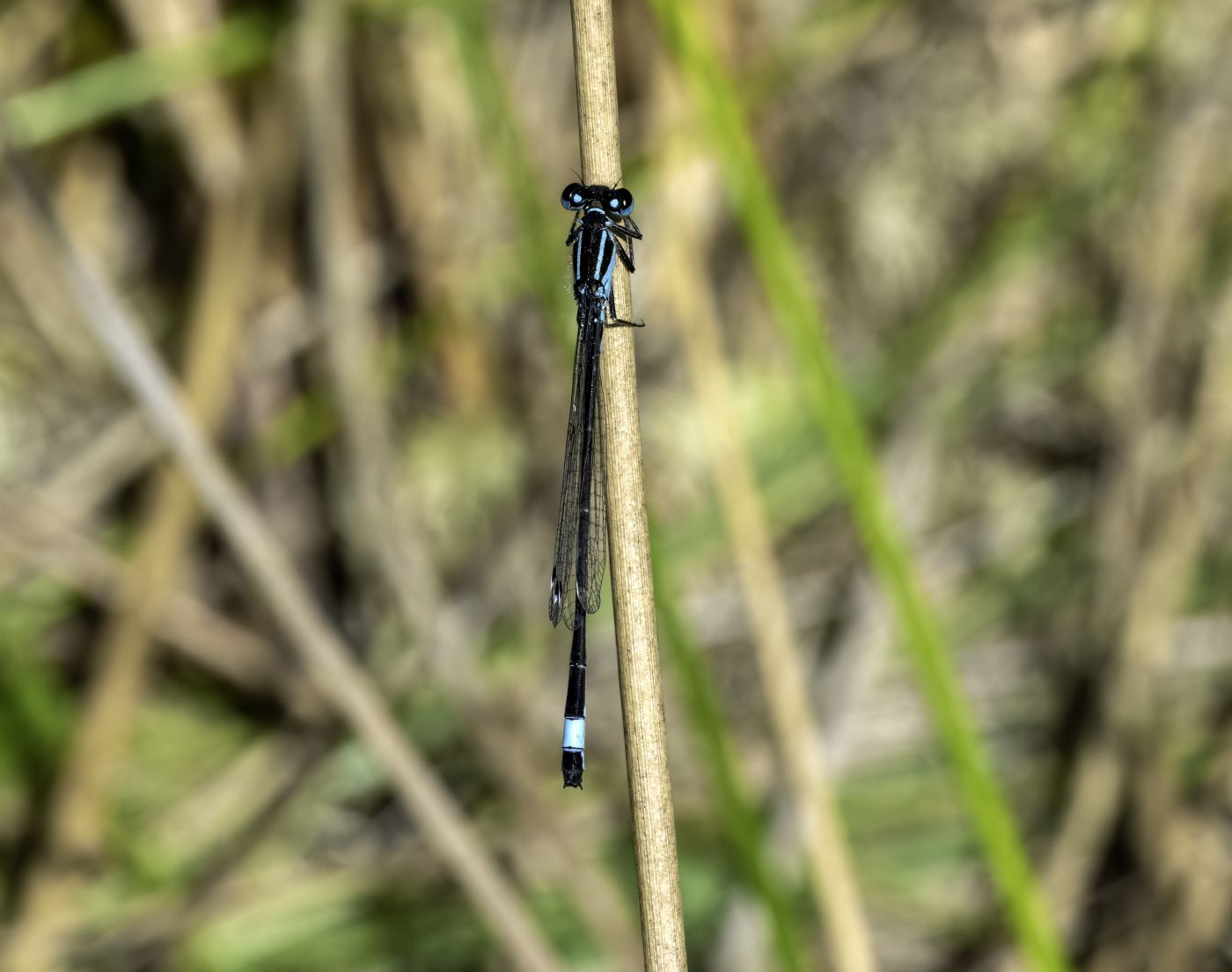
This week we welcomed our local dragonfly and damselfly enthusiast, Pete Hadfield to visit the pond at Kionslieu Farm, in the heart of the beautiful Isle of Man.
Weather conditions were perfect and Pete identified the dragonflies and damselflies in the photos below, together with 2 large red damselflies. Pete explained that it is a little late in the season for them. He also told us that there is a good chance that earlier in the year there would have been the four-spotted chaser and will visit again earlier next year.
Common Hawker – 1 Black Darter – at least 20 Common Darter – at least 40Emerald Damselfly – at least 30Common Blue Damselfly approx 5 (likely more earlier in the year) Blue- tailed Damselfly just 1 (late in the season for them)
In the UK, the numbers of the Common Hawker, Black Darter and Emerald Damselfly are in decline, this is likely to also happen on the Isle of Man with upland ponds drying out during dry spells so it is brilliant that we have all 3 at our pond.
Kionslieu Chronicles V: the family history continues…
Emails from the great, great, great grandson of Richard & Christian Clucas.
10th June 2020 – today I received emails from Matt Laird, great, great, great grandson of Richard and Christian Clucas, mentioned in my first chronicle & pictured below outside Kionslieu Farmhouse.
Greetings from Fredericksburg, Virginia, USA! Richard and Christian Clucas were my great-great-great grandparents, and so I’ve been aware of Kionslieu for some time. But I want to thank you so much for taking the time to include all this new genealogical information on your blog! It’s wonderful that you’re doing this, and I hope that you’ll continue. I’ve just recently been in touch with some other Clucas relatives I’ve “met” via Ancestry DNA who live in Australia in New Zealand. And we have many relatives throughout Canada and the U.S.A. So you truly have a “world wide web” of folks who have an ancestral connection to your beautiful home.
My 8-year-old son and I are both avid Liverpool FC fans. Our dream (once such things are possible again) is to see a match at Anfield and then visit the IOM. Of course, we’ll plan to stay with you!
Until we meet, wishing you all the best,
Matt Laird
My reply sent by return…
Dear Matt
How lovely to hear from you! I am so pleased that you’re enjoying my blog, as mentioned this is something I have thought of doing for years and am loving doing it.
When it’s time for your trip over, just let me know, it will be fantastic to meet you and perhaps recreate some pictures! You’ll be pleased to hear that my husband Tony is also a Liverpool supporter!
Finally I am hoping that it is ok for me to add that you’ve been in touch in one of my blogs? Please don’t worry if you’d prefer I didn’t but if you’d like me to and have any photos you’d like me to share just send them through.
Sending very best wishes, Fiona
reply received by return…
Hi Fiona,
I’m so glad to hear back from you! Like us, I’m sure that Tony is also relieved that Liverpool will finally be able to clinch the Premier League title this month (fingers crossed)!
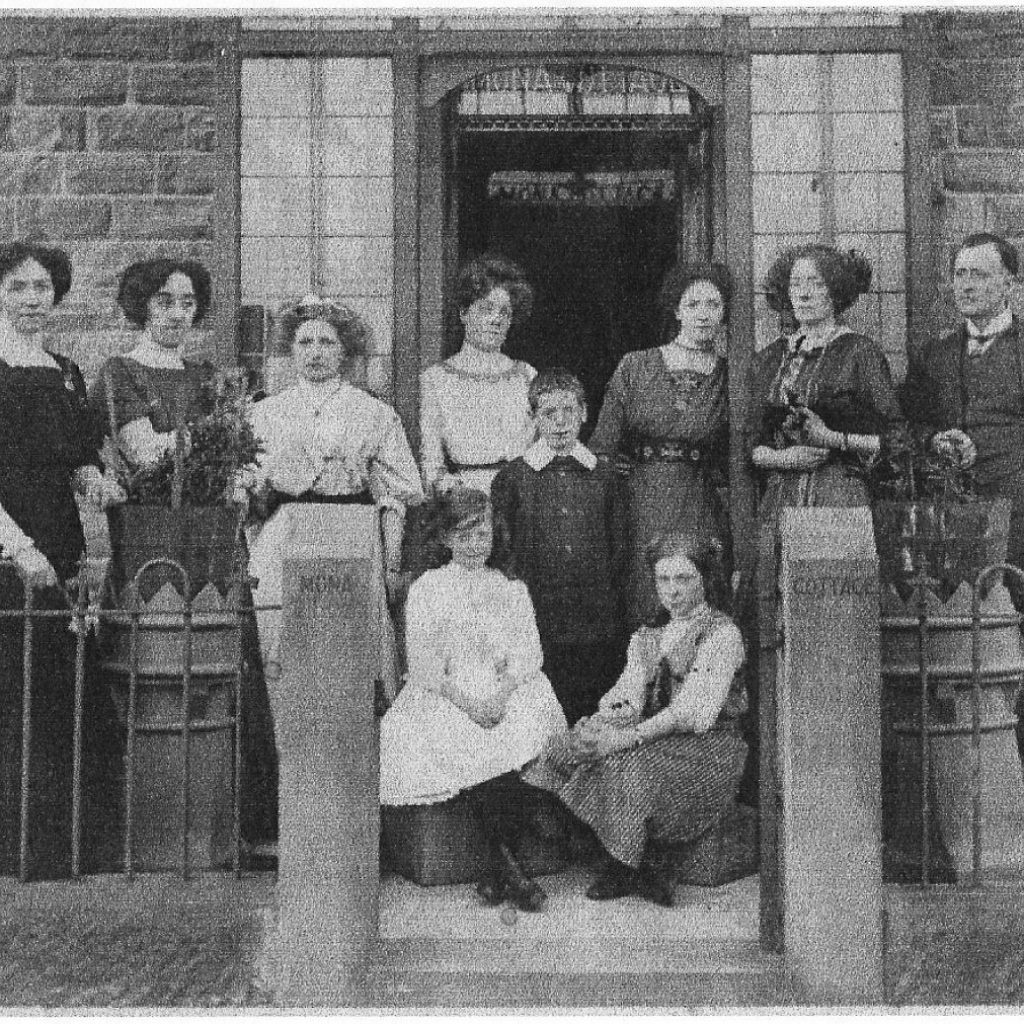
So, I am descended from Sage Clucas, one of Richard and Christian’s daughters. She married John Curphy (also from IOM), after which they moved to England, where my great-grandmother was born. But Sage’s younger sister, Martha Edith (Mattie) evidently was quite an independent and formidable woman. She also left the IOM for England, and established a prosperous shop in millinery Lancaster which operated for decades. She never married, but bought a house which she named “Mona Cottage” (she obviously missed Kionslieu). She was very well-traveled, and even went out to visit her relatives in British Columbia, Canada, where she met my teenage grandmother. She tried to convince her to come back to England to work in her shop. She declined, which was good as she met my grandfather soon after!
I wish that I had more photos to share, but here is one of Mattie Clucas in front of “Mona Cottage” in Lancaster (stern-looking woman second from right). Her niece (my great-grandmother Florence) and my great-grandfather are beside her. Funnily enough, the house is still there and I’ve been in touch with the current owners. It hasn’t changed much over the past 100 years.
I don’t know that any of this is of interest to anyone (!) but feel free to post whatever you’d like on your blog. And I’ve just sent the link to my recent Clucas family contacts Down Under, so they will likely be checking it out, as well. I think that you could probably book Kionslieu solidly with Clucas descendants alone!
My son and I just had a fun virtual tour of the IOM watching James May drive around the TT course on a Meccano motorcycle. What a beautiful place! It’s top on our list of destinations once this miserable virus is over and done with. We will definitely keep in touch!
All the best, and thank you again for preserving all this family history for us.
Matt
My reply, sent a little while later…
Dear Matt,
Thank you so much for the photo and all of the information.
I hope you approve of what I’ve done but do let me know if not as if not I can easily amend/delete & at the moment only you will see it!
If you’d like me to add your contact details so your relatives can be in touch just let me know.
With very best wishes,
Fiona
reply received by return…
Fiona,
That’s wonderful! Please feel free to post it just as it is. And you can include my e-mail address in case anyone would like to get in touch.
This has been fun! Although now I’m feeling even worse about being stuck at home. 😉
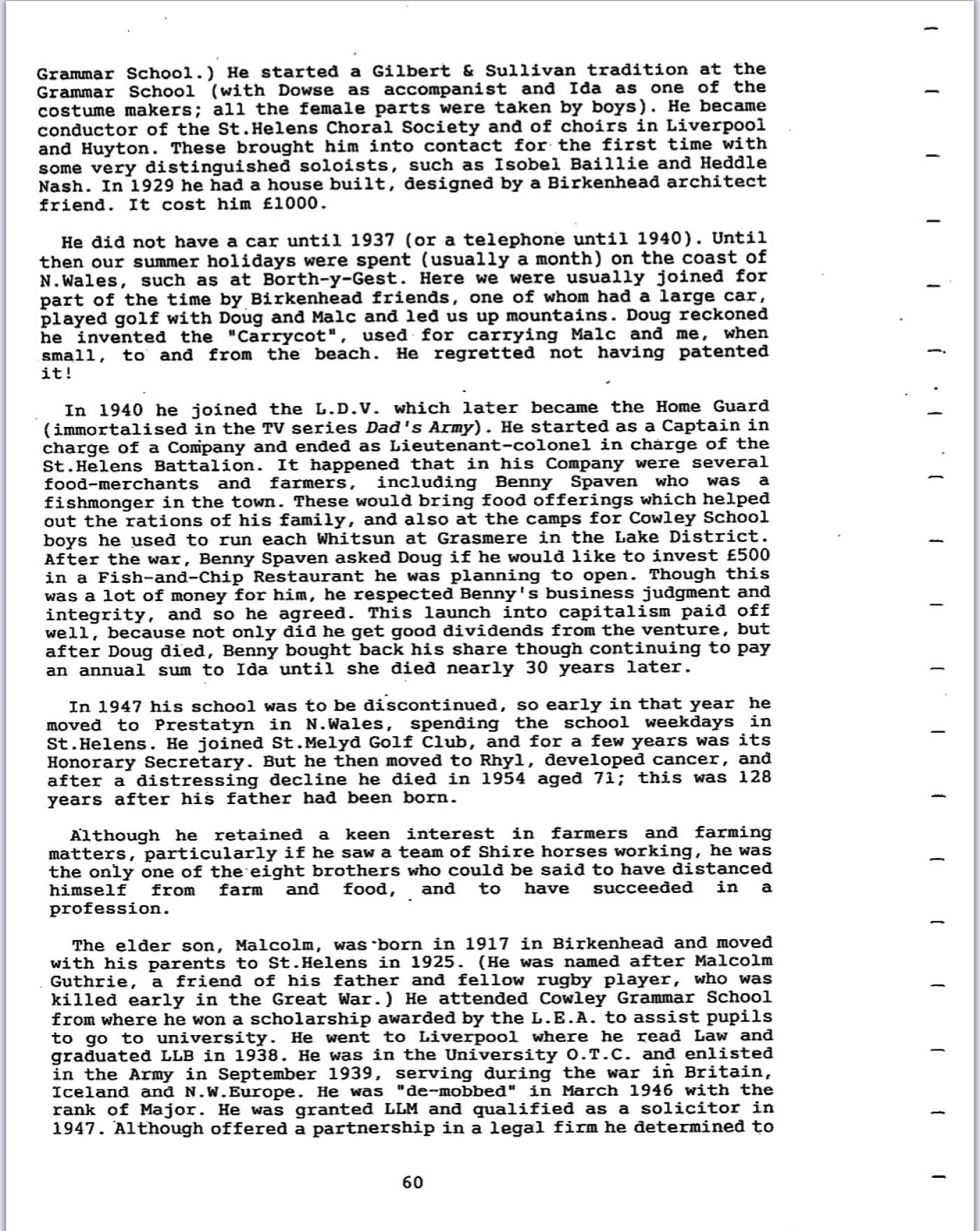
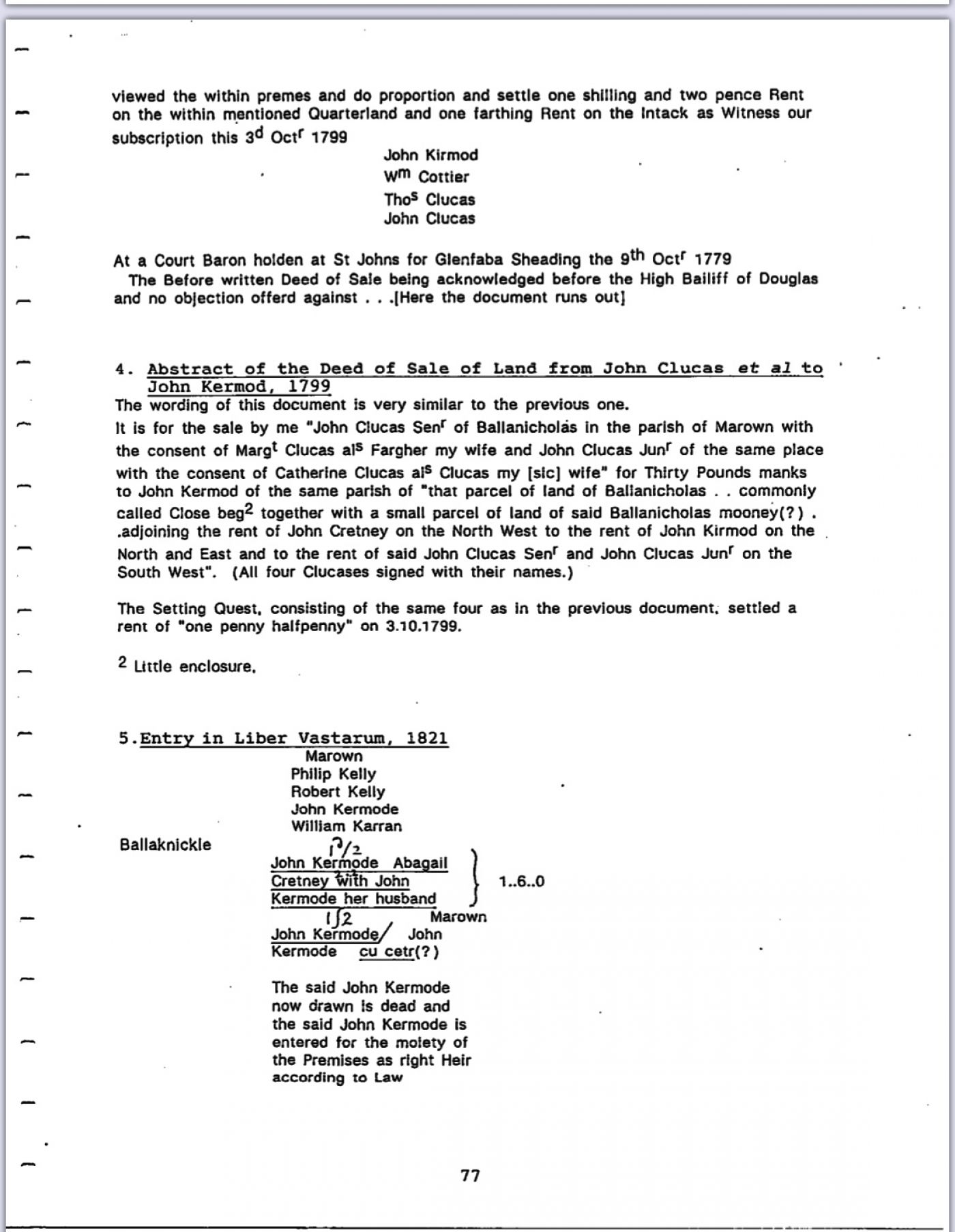
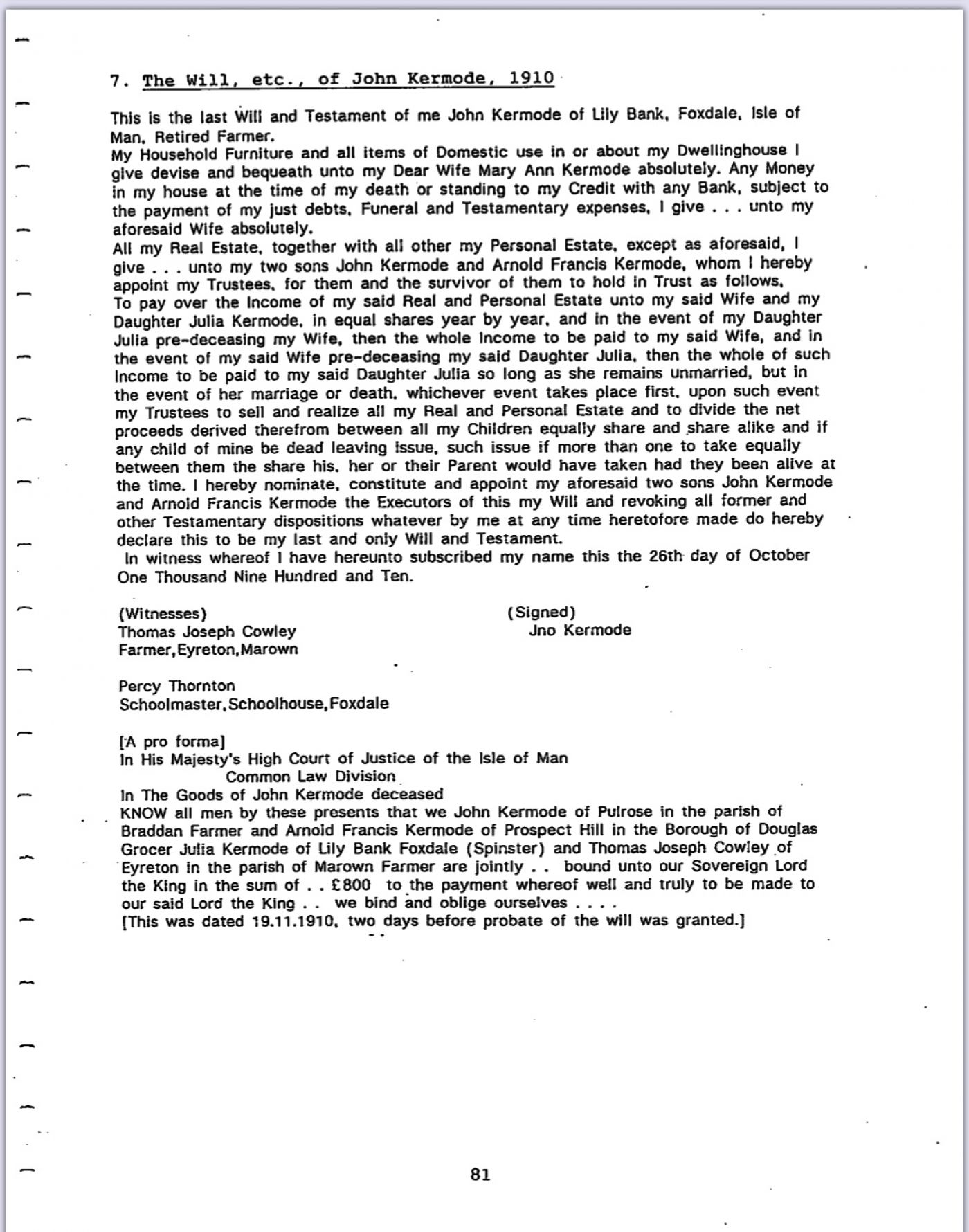
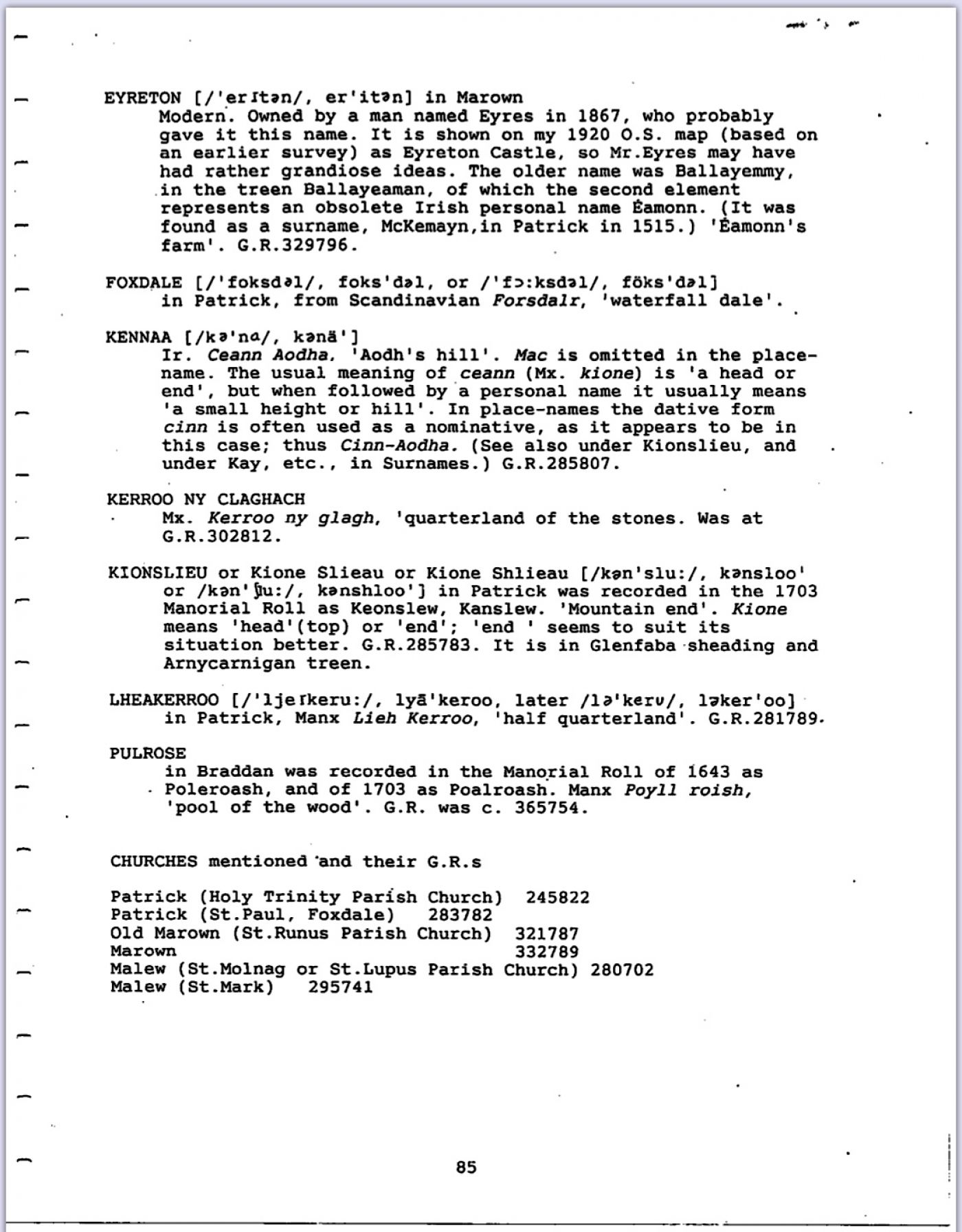
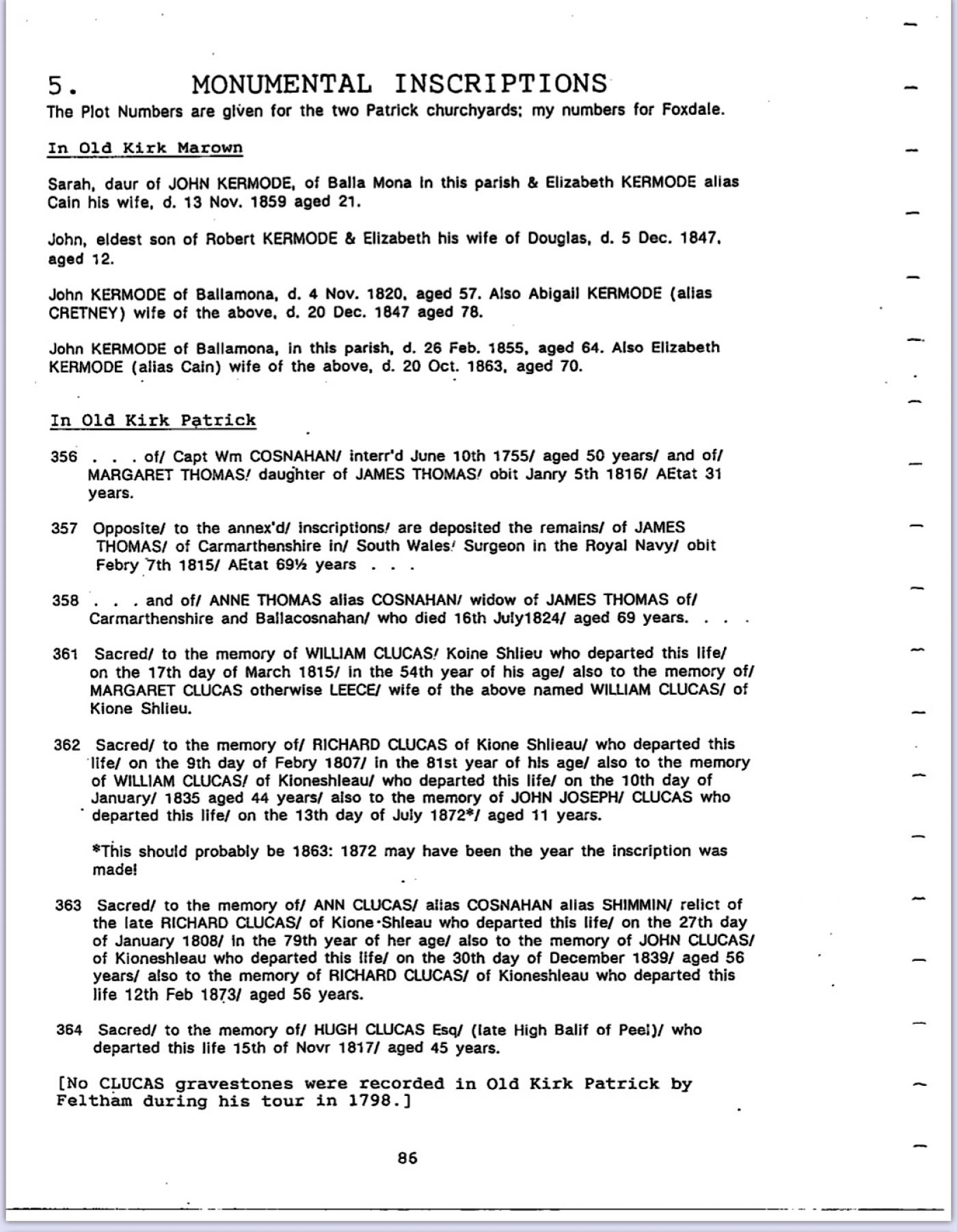
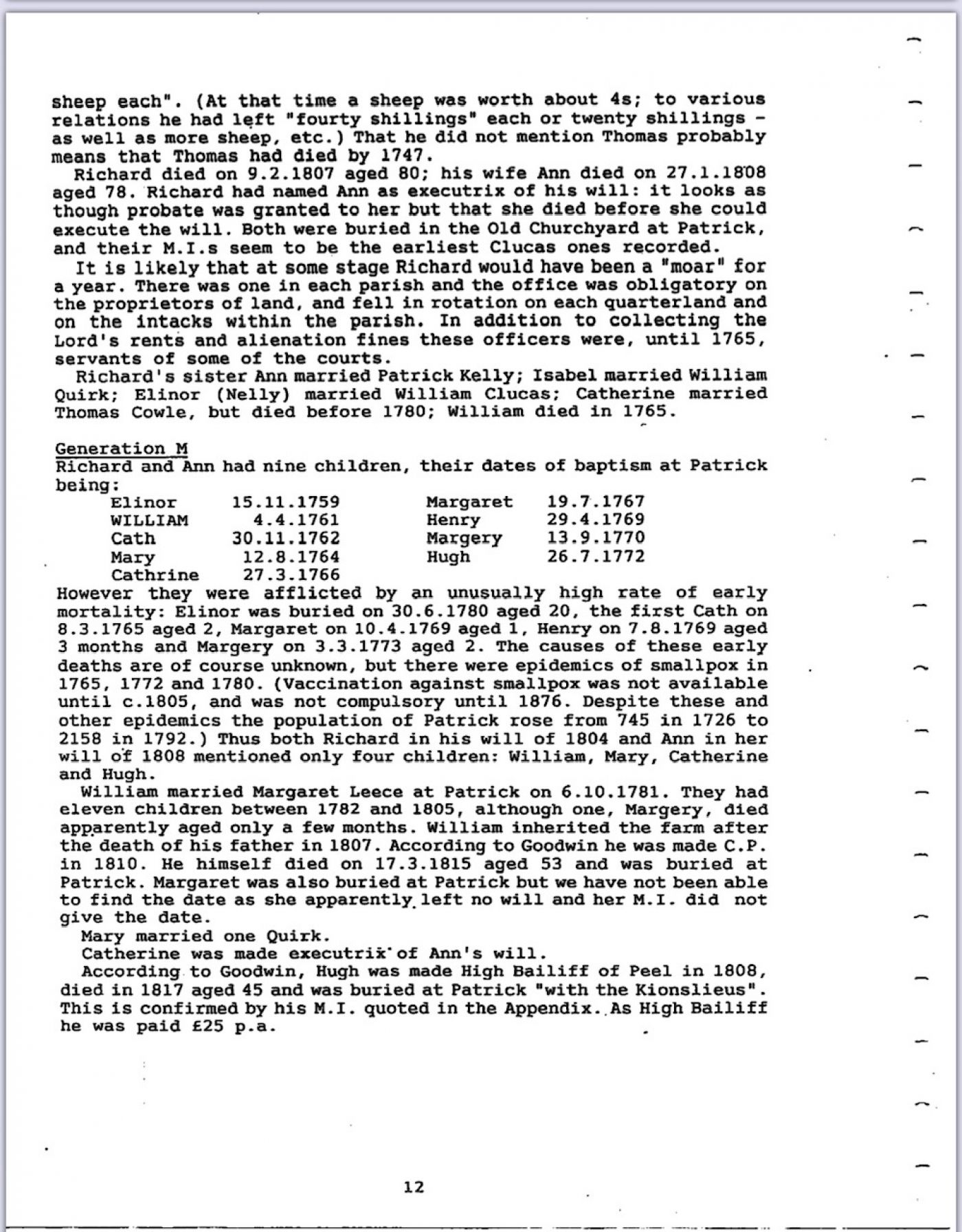
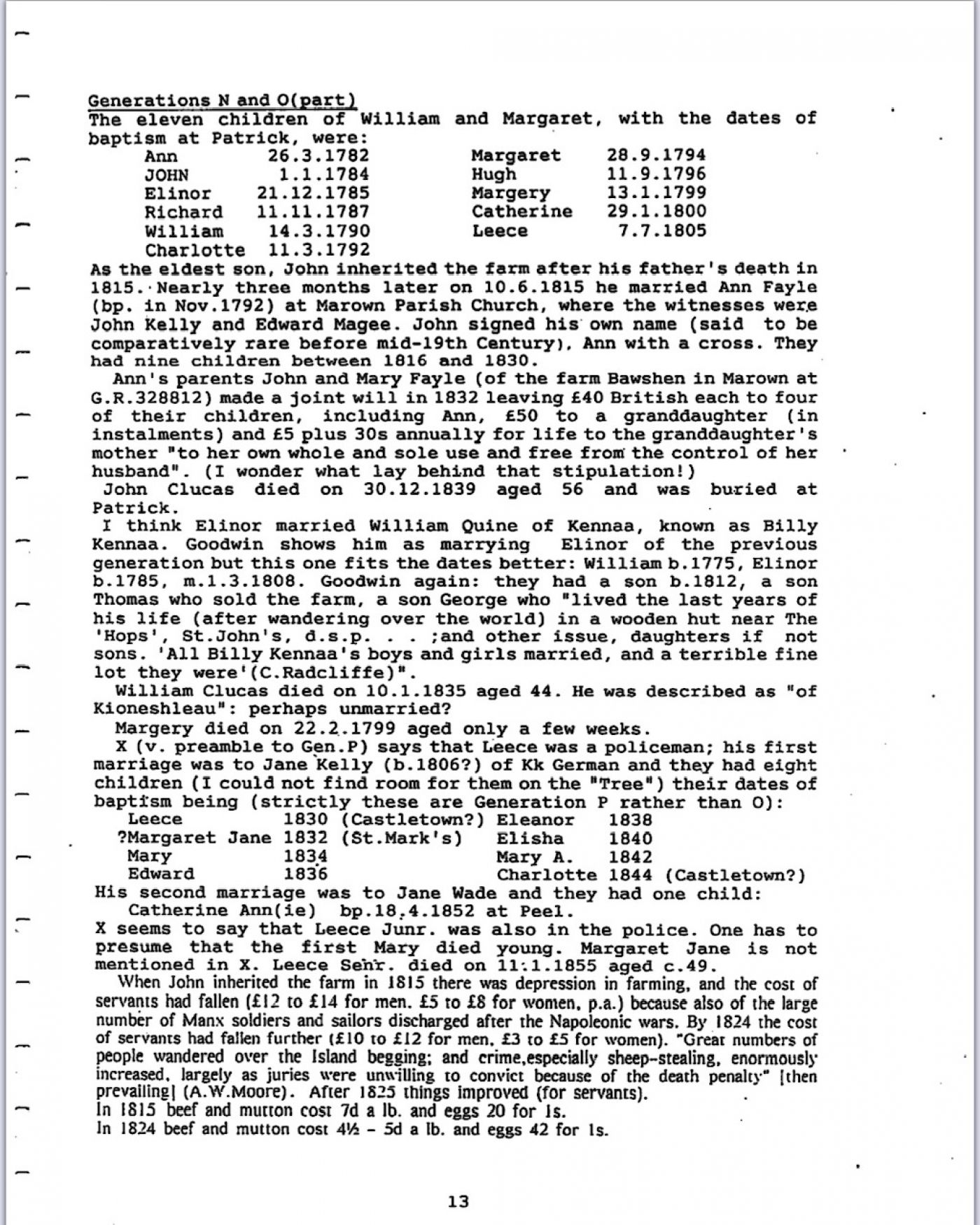
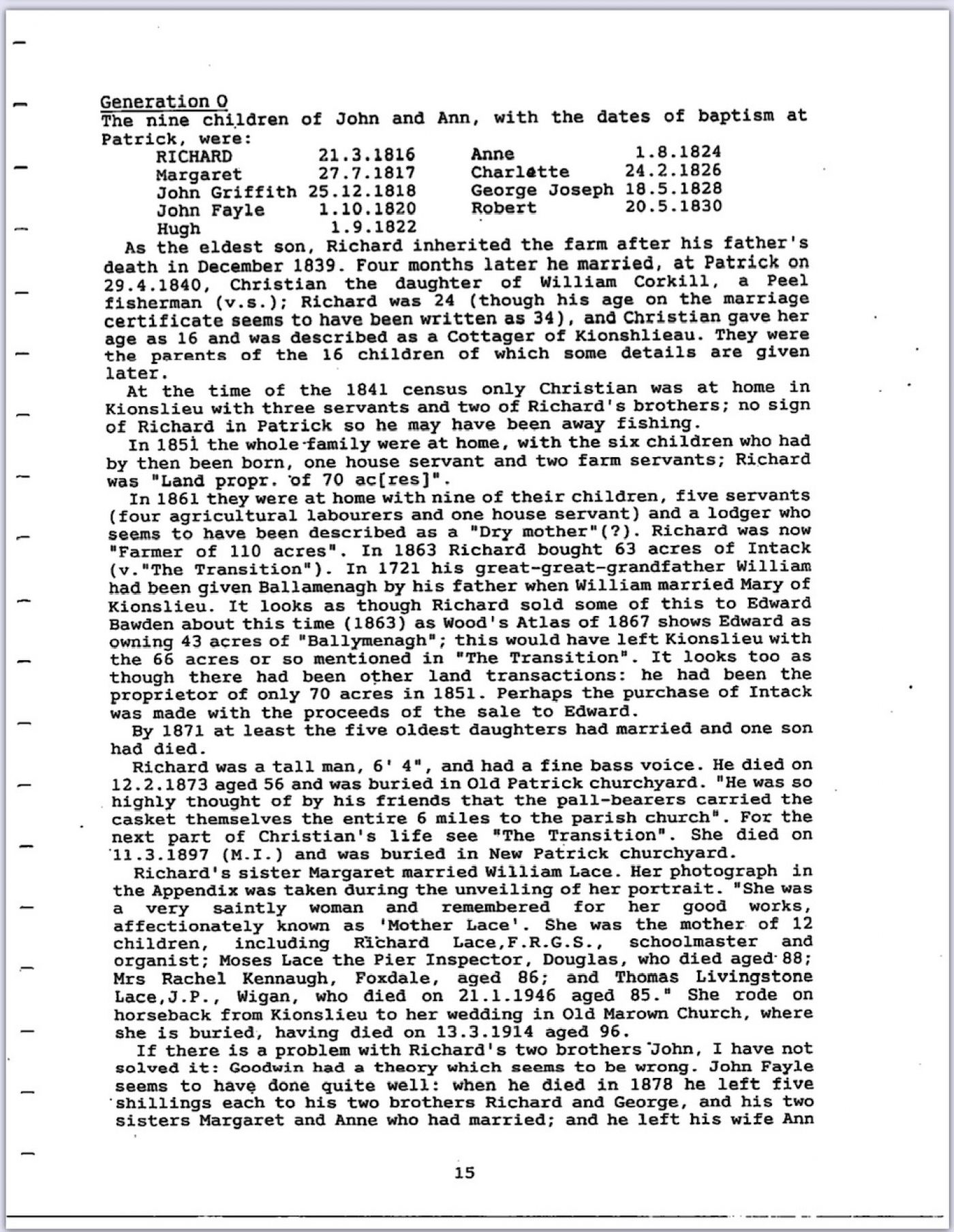
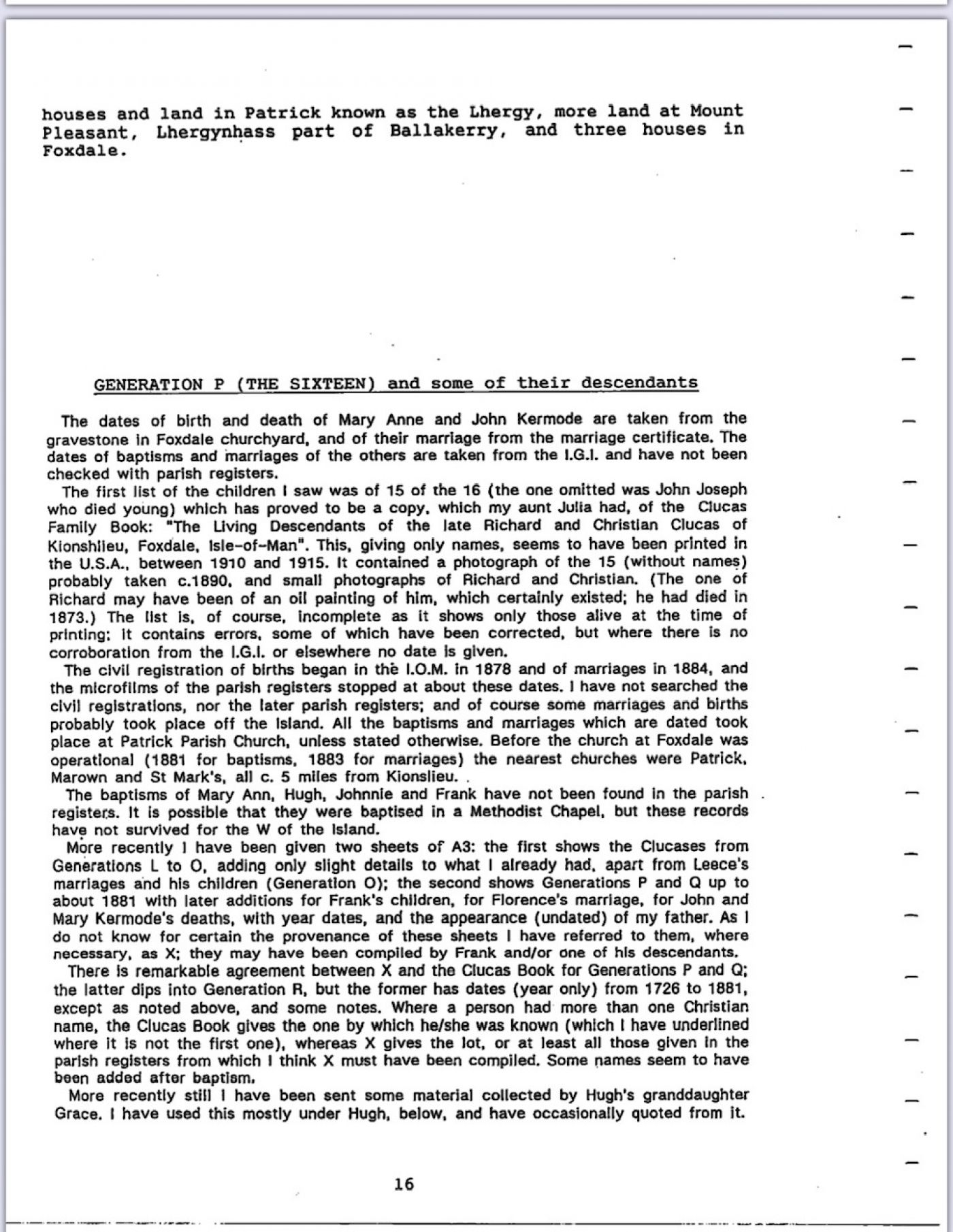
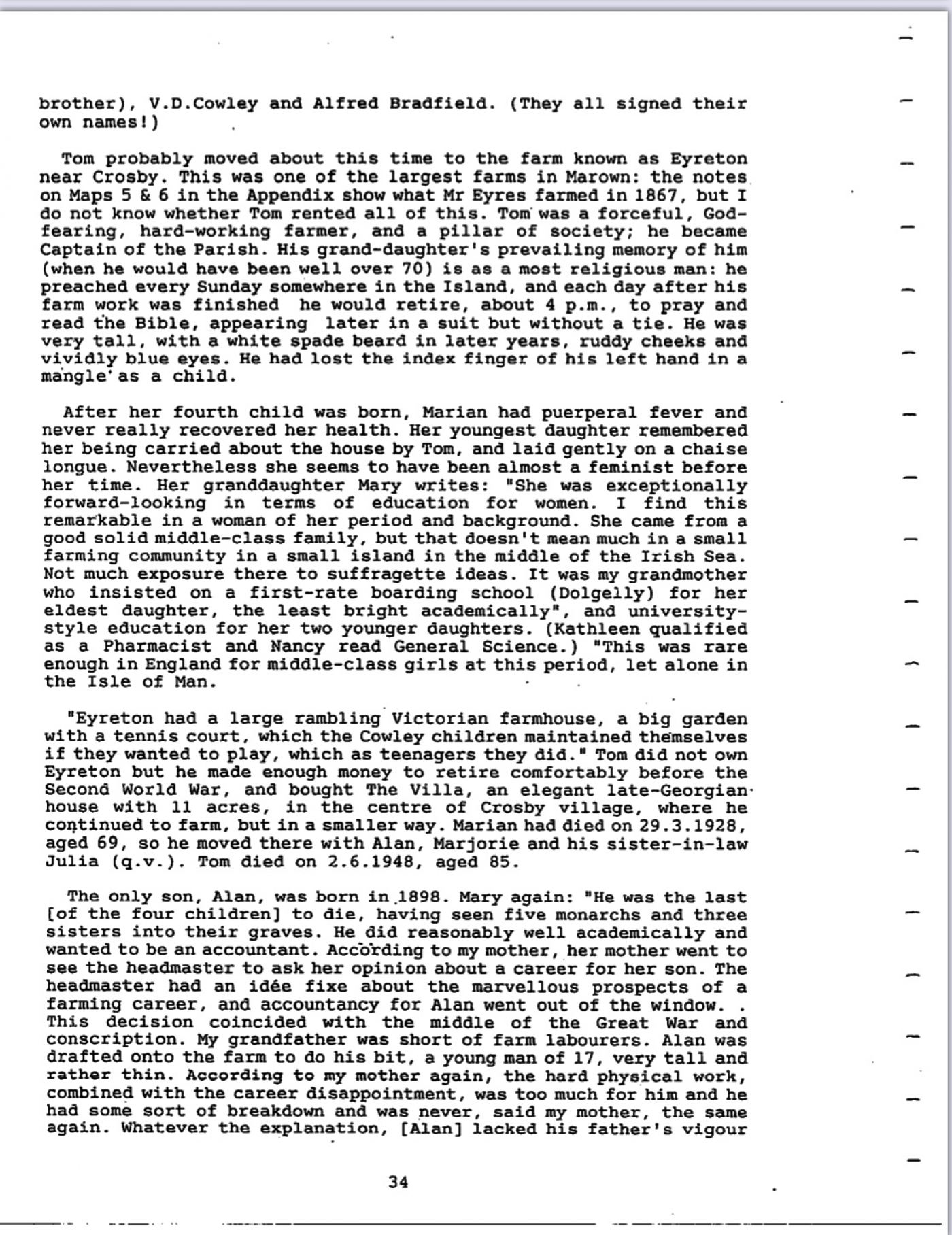
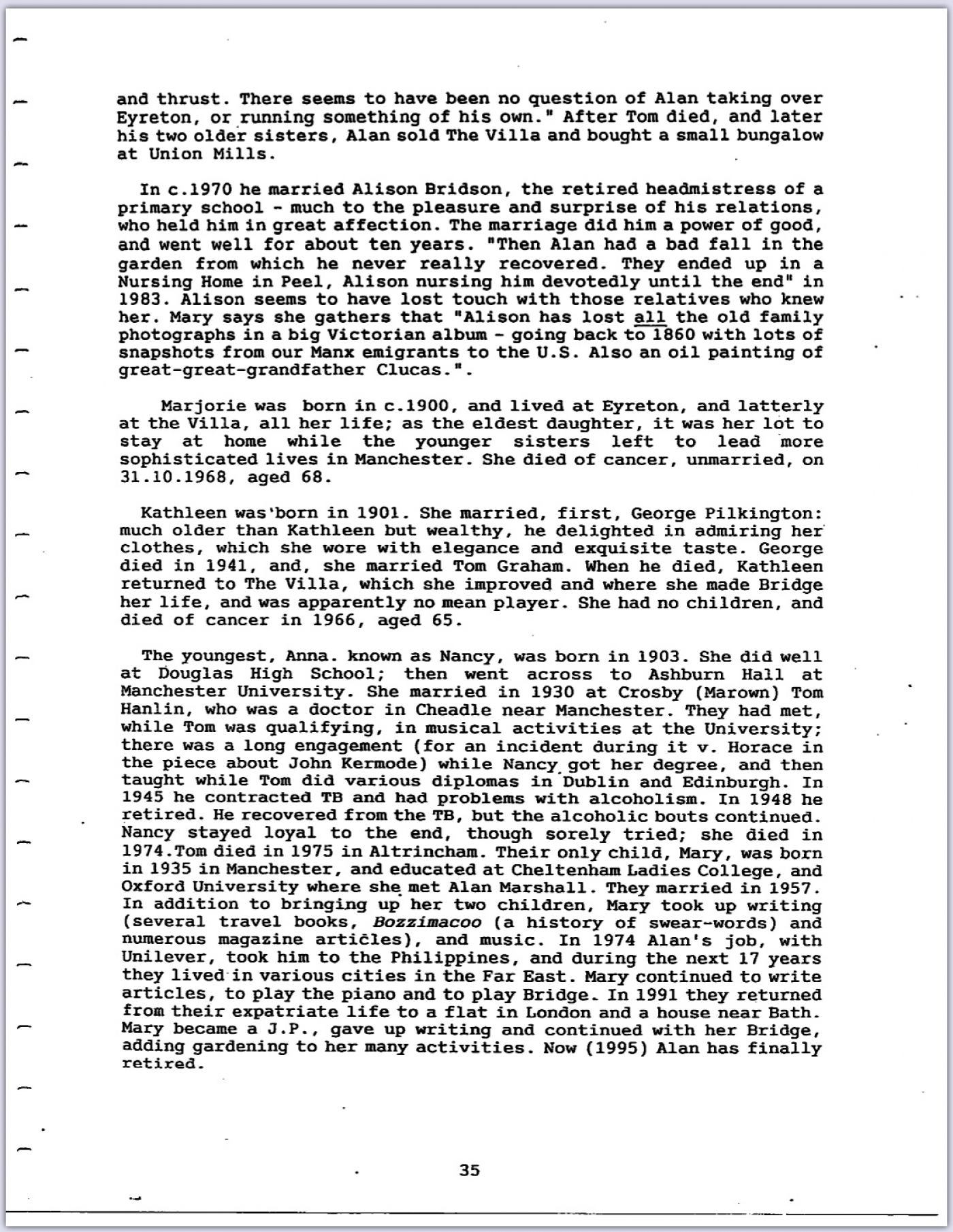
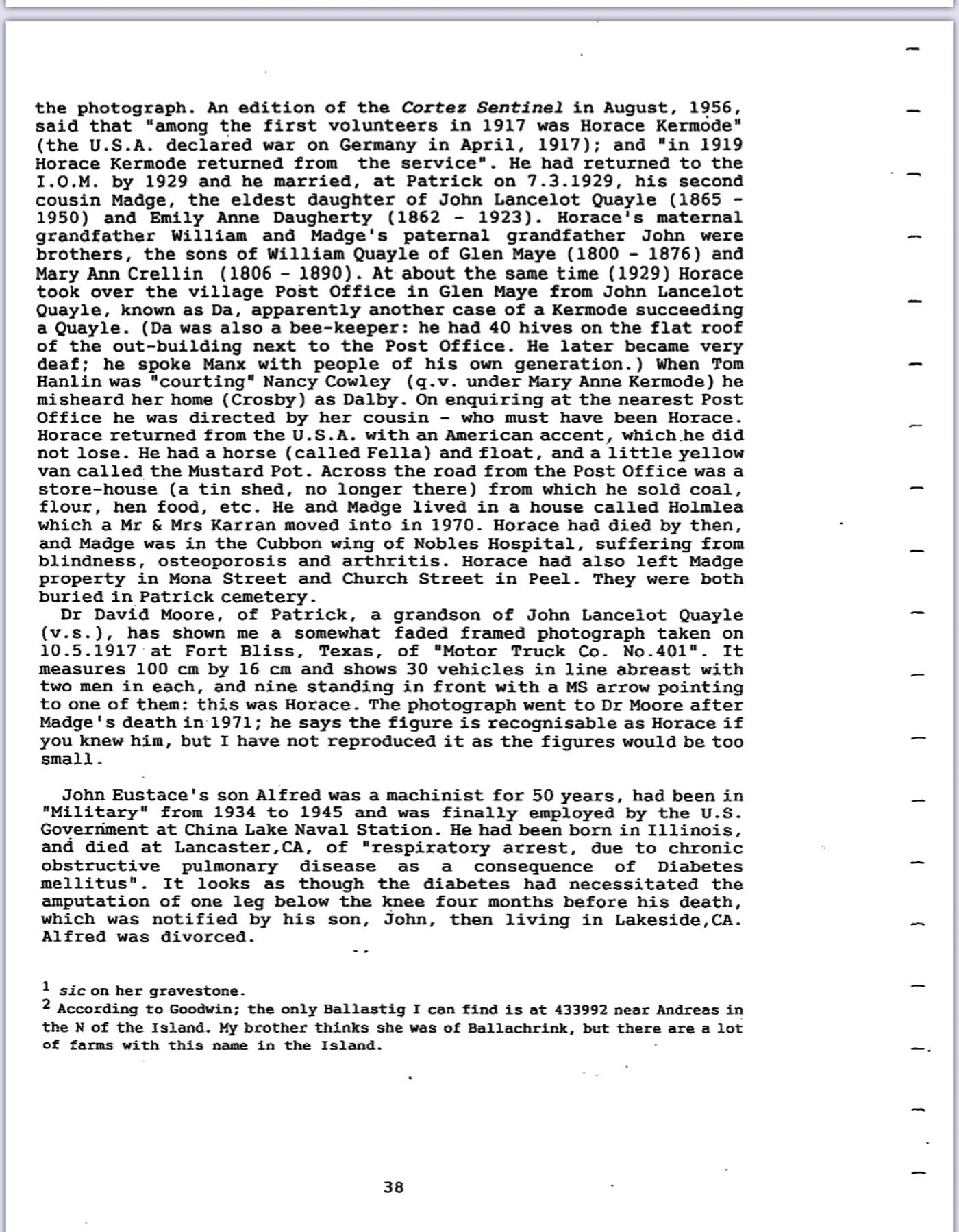
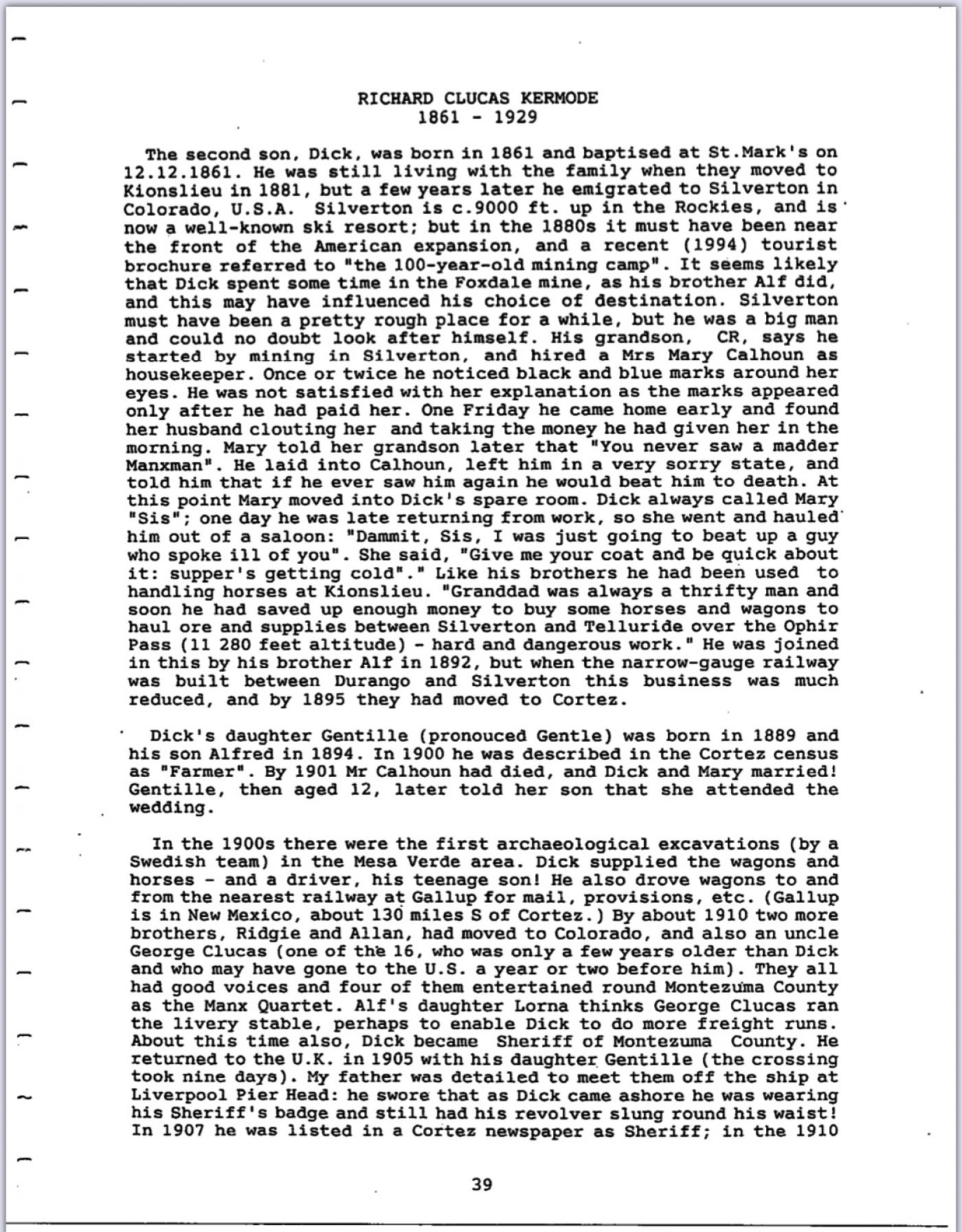
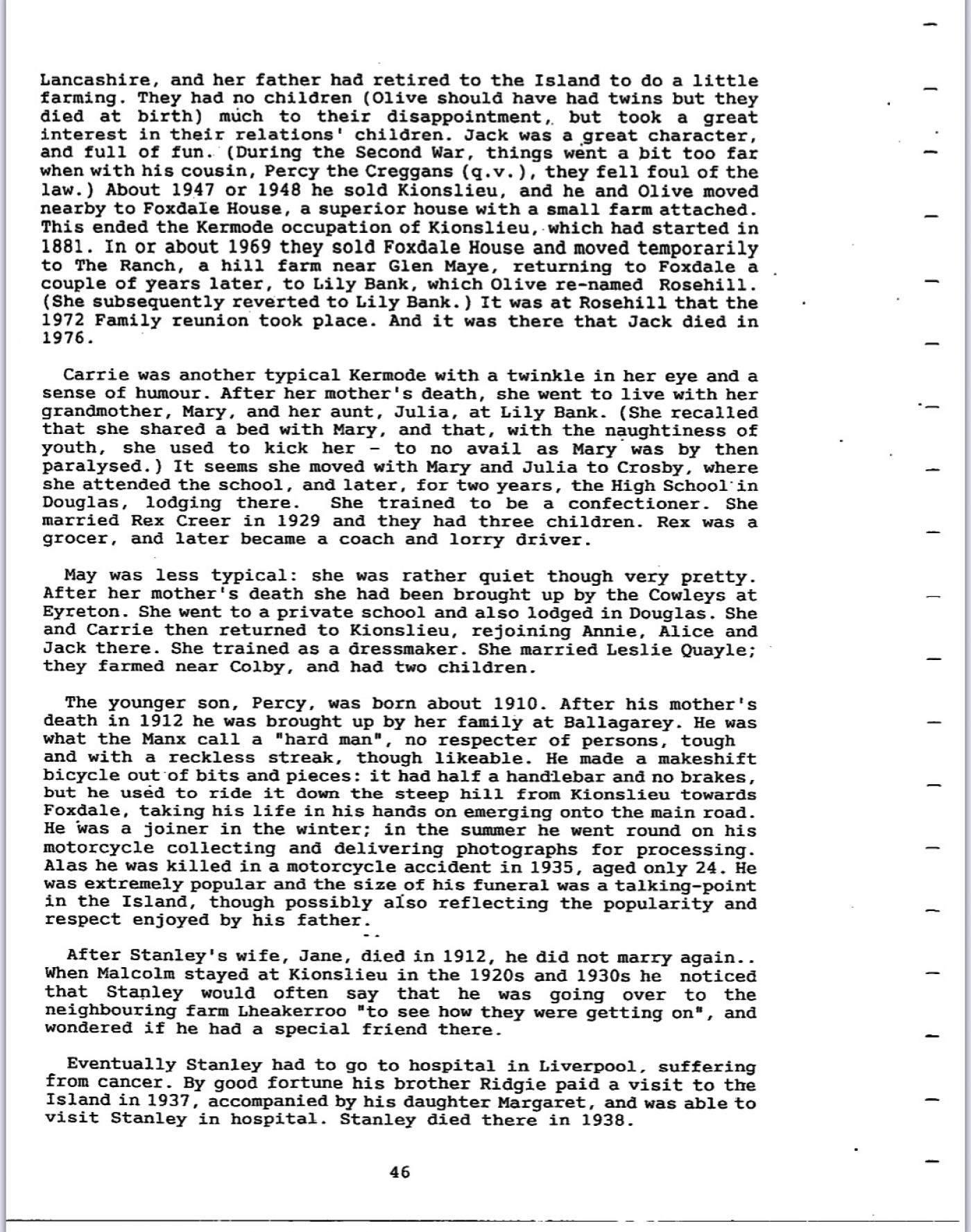
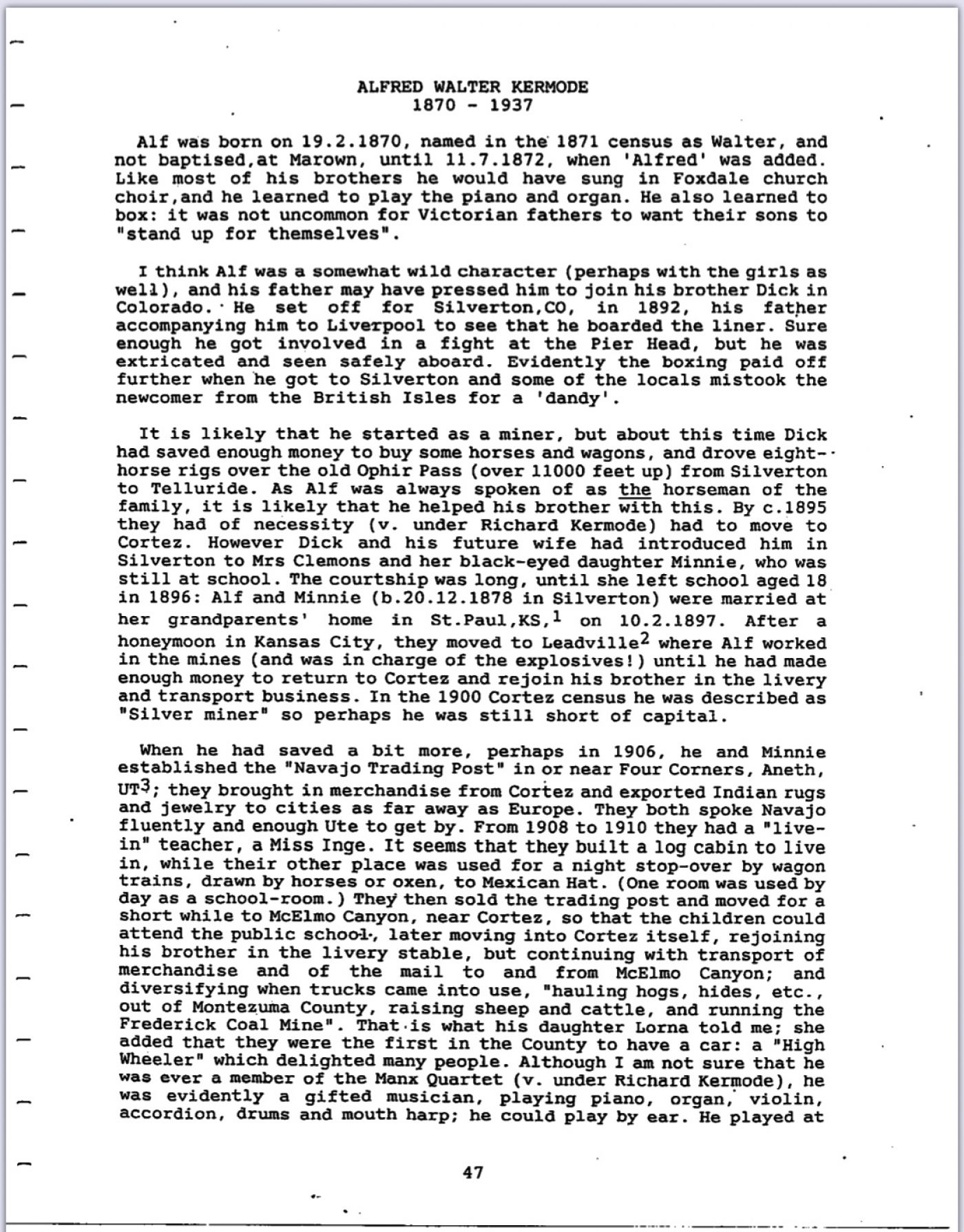
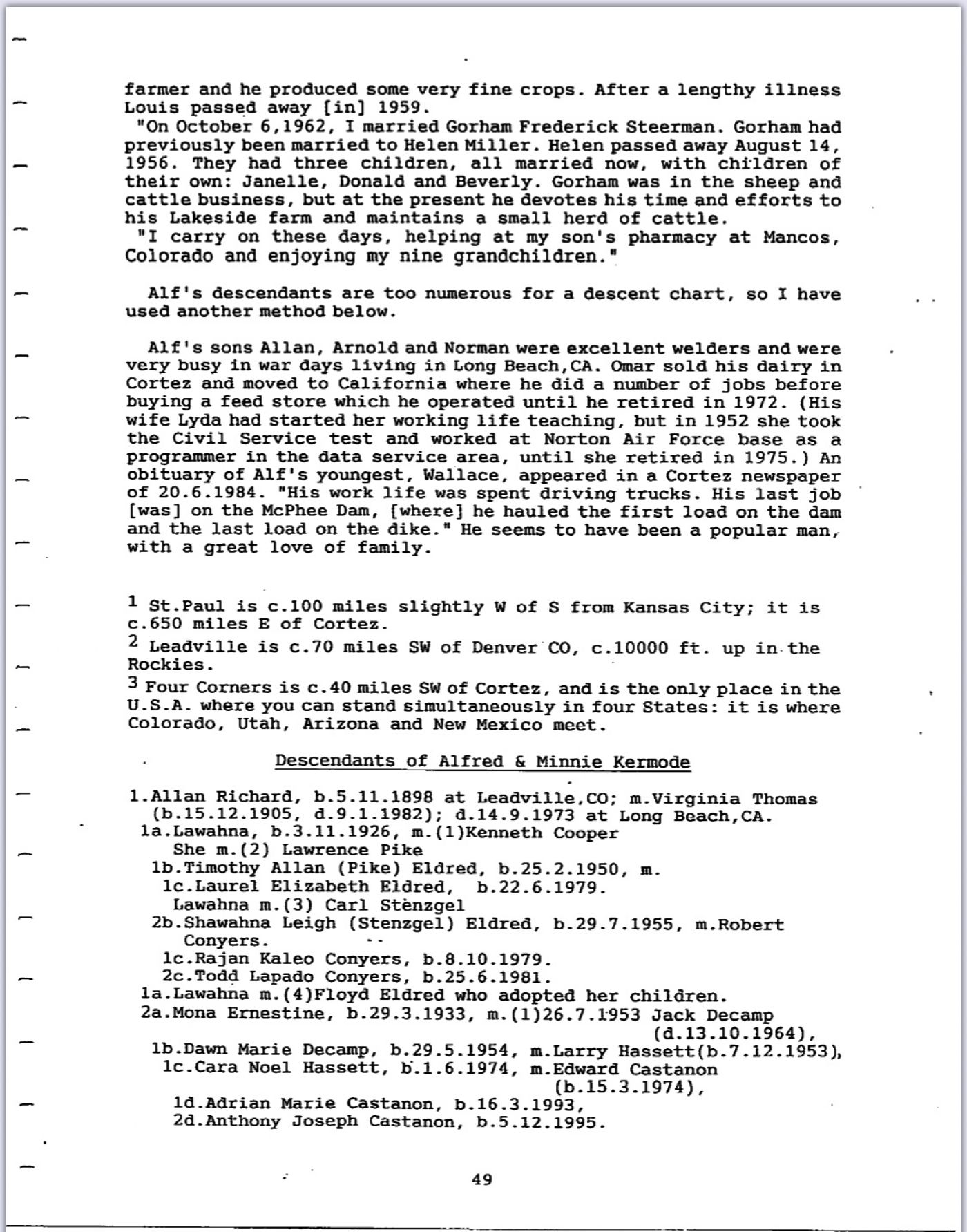
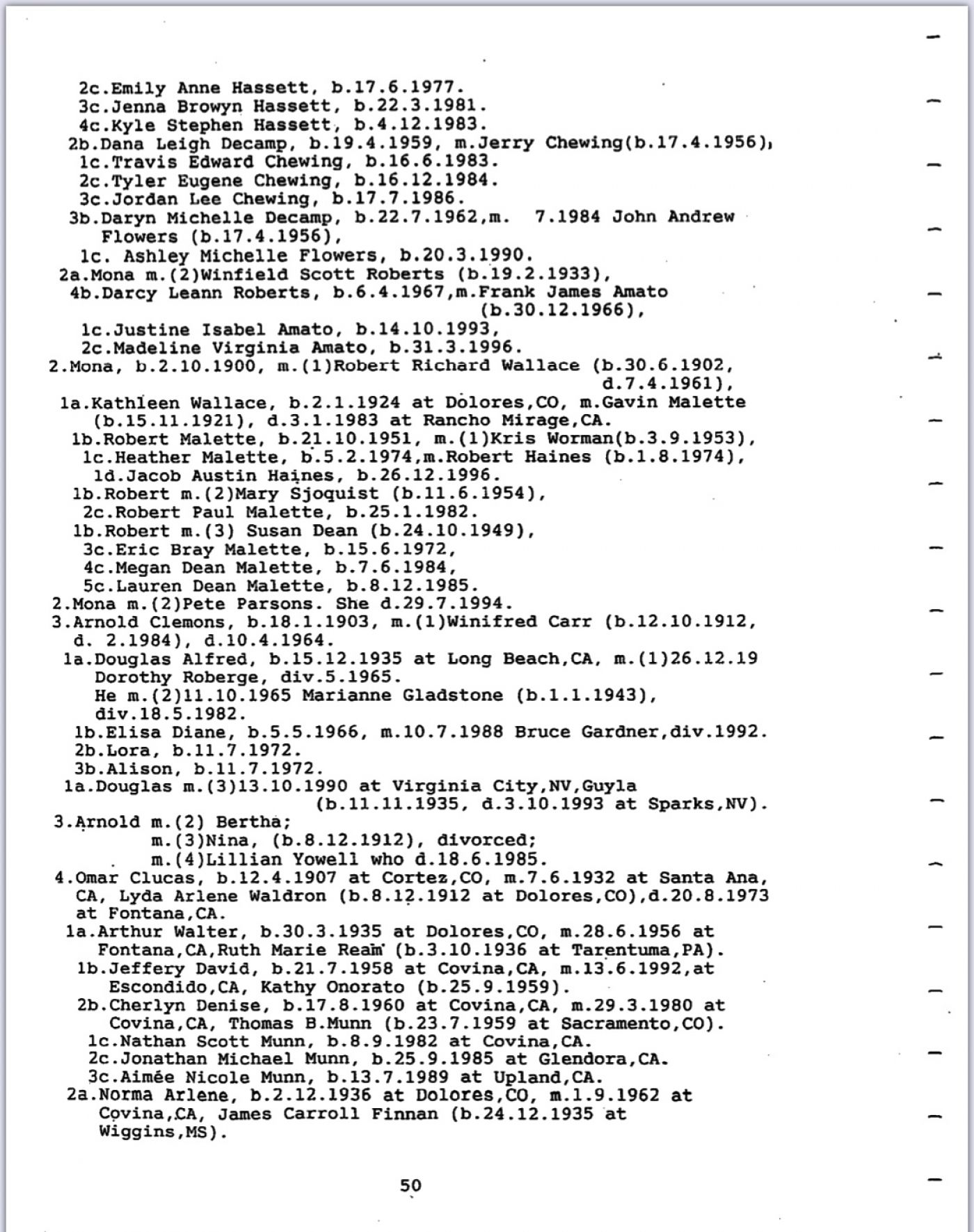
KIONSLIEU CHRONICLES IV ‘AN UNFINISHED MEMOIR’ BY TERENCE KERMODE: PAGES 50-100
If you have come across this by chance then you should know that we have welcomed guests to visit Kionslieu Farm since 1987 when we had a small b&b and since 1994 to our farm cottages.
Over the years we have been contacted by the descendants of the Clucas and Kermode families and finally I am adding all of the information gathered to help those researching their Manx family history.
Looking for help with Manx Family History Research on the Isle of Man?
These incredible memoirs have been recorded here for the descendants of the Clucas family and Kermode family of Kionslieu Farm in the Isle of Man.
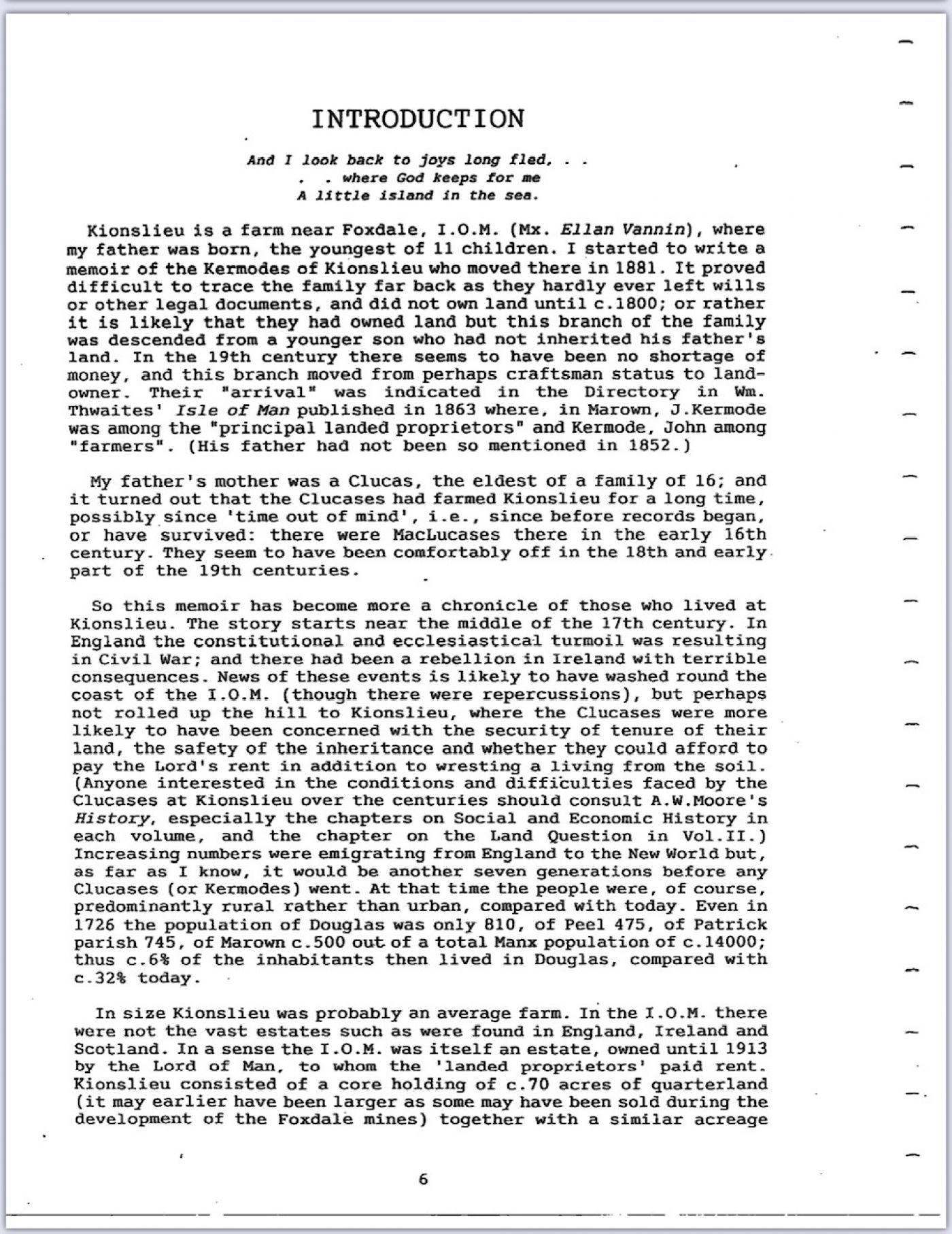
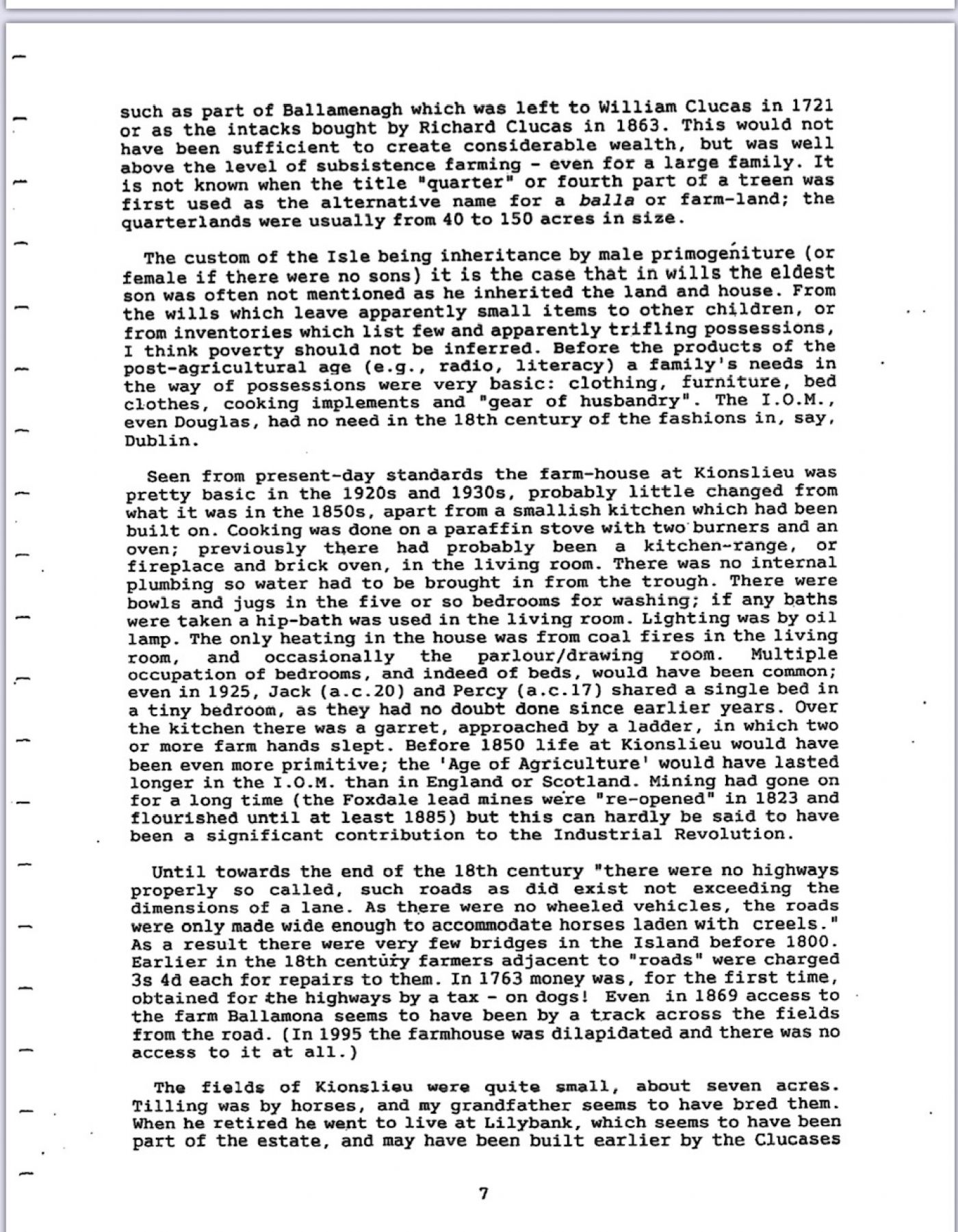
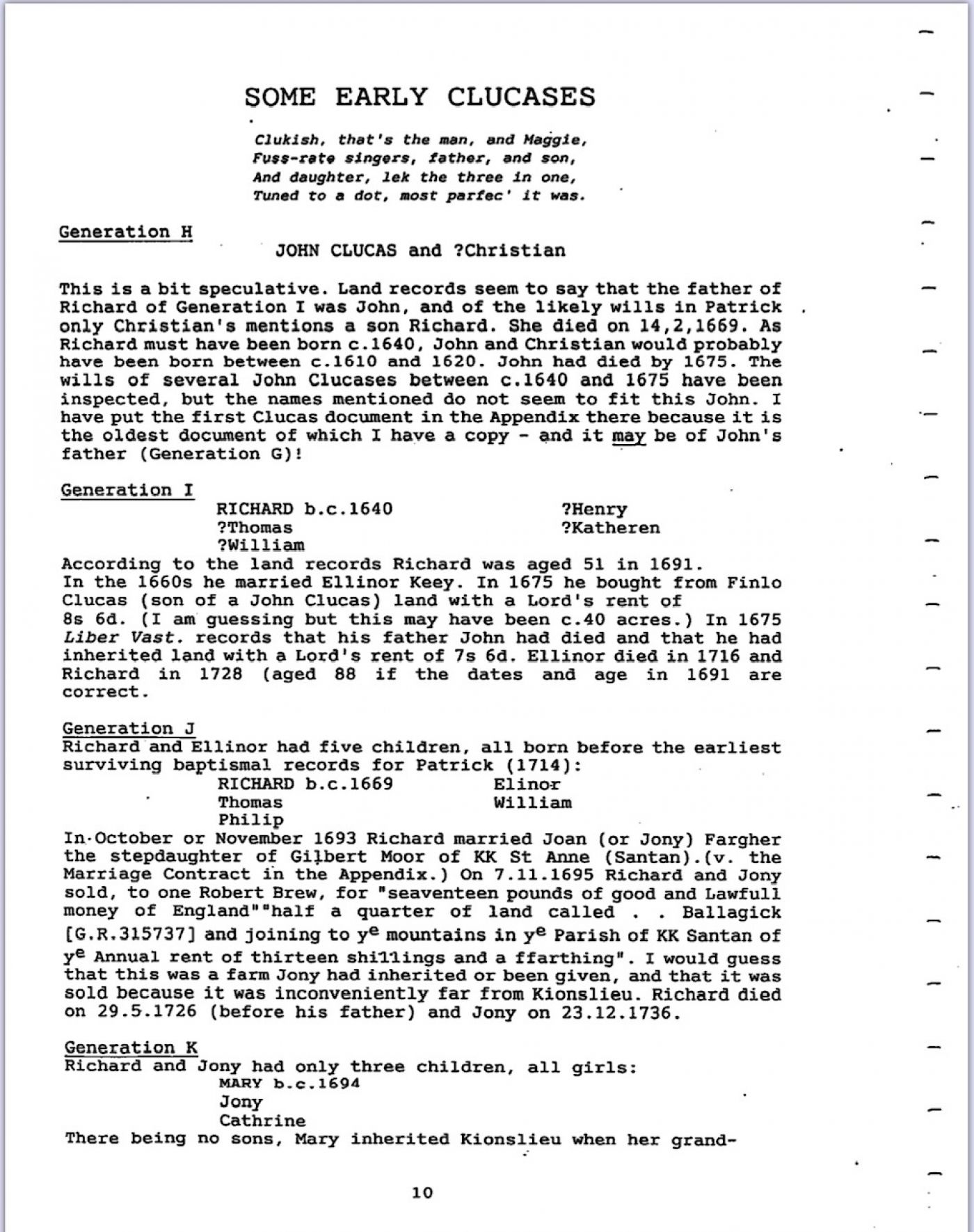
The 20 page introduction was given to us around 20 years ago. Having re typed it word for word, unbelievably I received the full 100 page memoir by email the very next day! After much frustration attempting to upload the pdf files to our website I have found a solution. I’ve taken screen shots of each page and so I hope you will bear with me as I add them in sections.
Introduction to the Unfinished Memoir
And I look back to joys long fled,
..where God keeps for me
A little island in the sea.
Kionslieu is a farm near Foxdale, I.O.M. (Ellan Vannin), where my father was born, the youngest of 11 children. I started to write a memoir of the Kermodes of Kionslieu who moved there in 1881. It proved difficult to trace the family far back as they hardly ever left wills or other legal documents and did not own land until c.1800; or rather it is likely that they had owned land but this branch of the family was descended from a younger son who had not inherited from his father’s land. In the 19th century there seems to have been no shortage of money, and this branch moved from perhaps craftsmen status to landowner. Their “arrival”’ was indicated in the Directory in Wm Thwaites’ Isle of Man published in 1863, where in Marown, J Kermode was among the ‘principal landed proprietors’ and Kermode, John among “farmers”. (his father had not been mentioned in 1852)
Terence Kermode
Contents
Preface
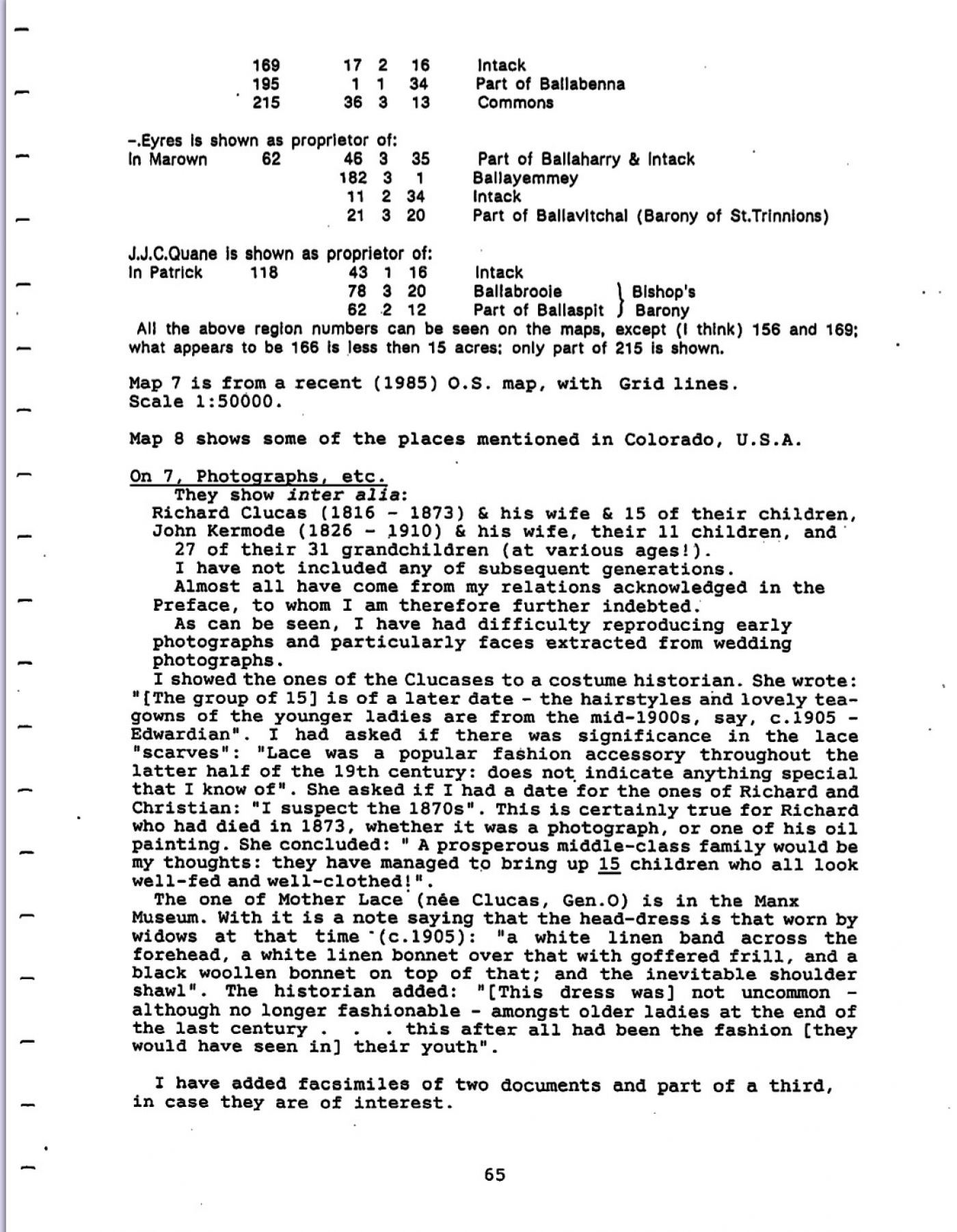
A hand drawn plan of Kionslieu Farmyard
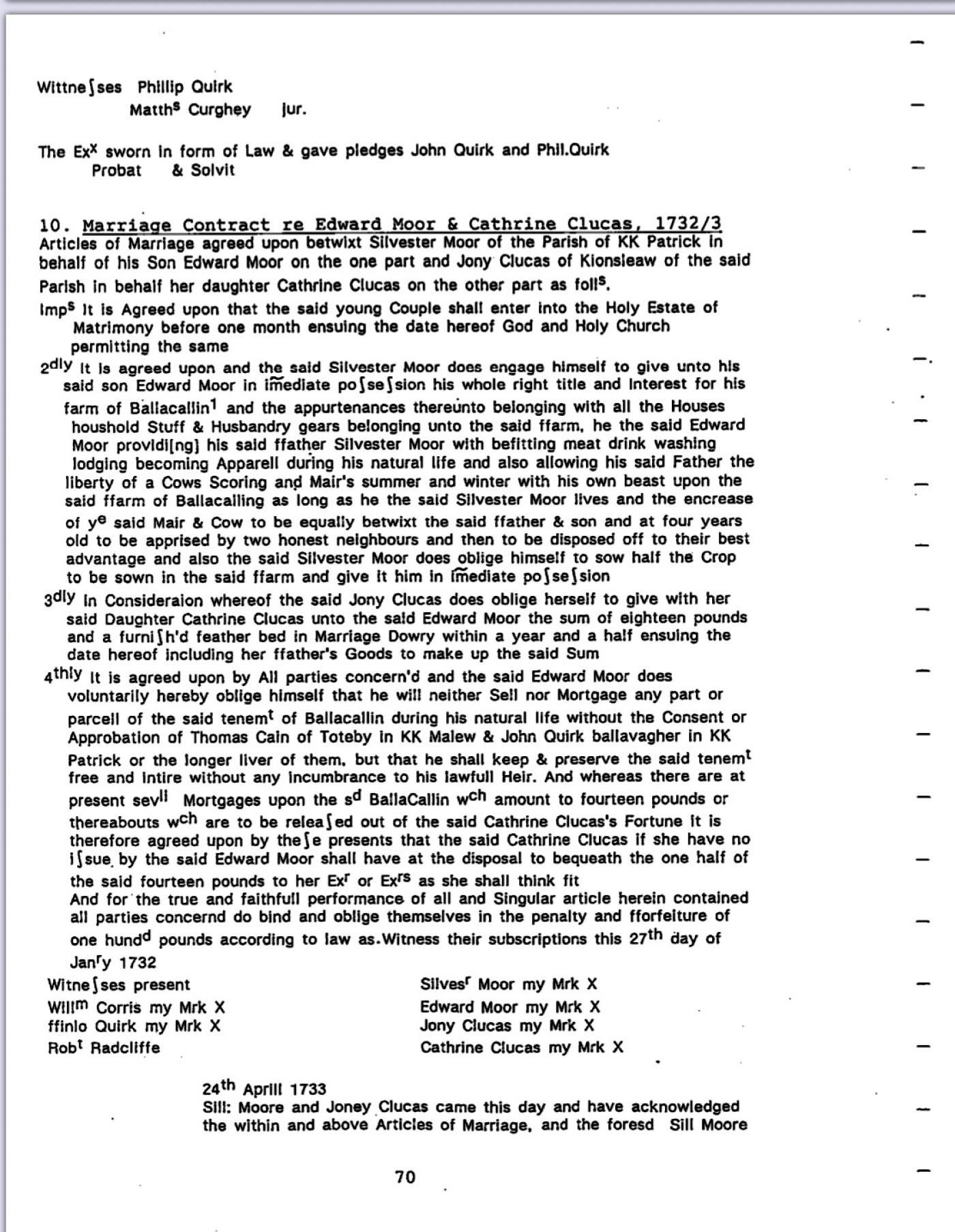
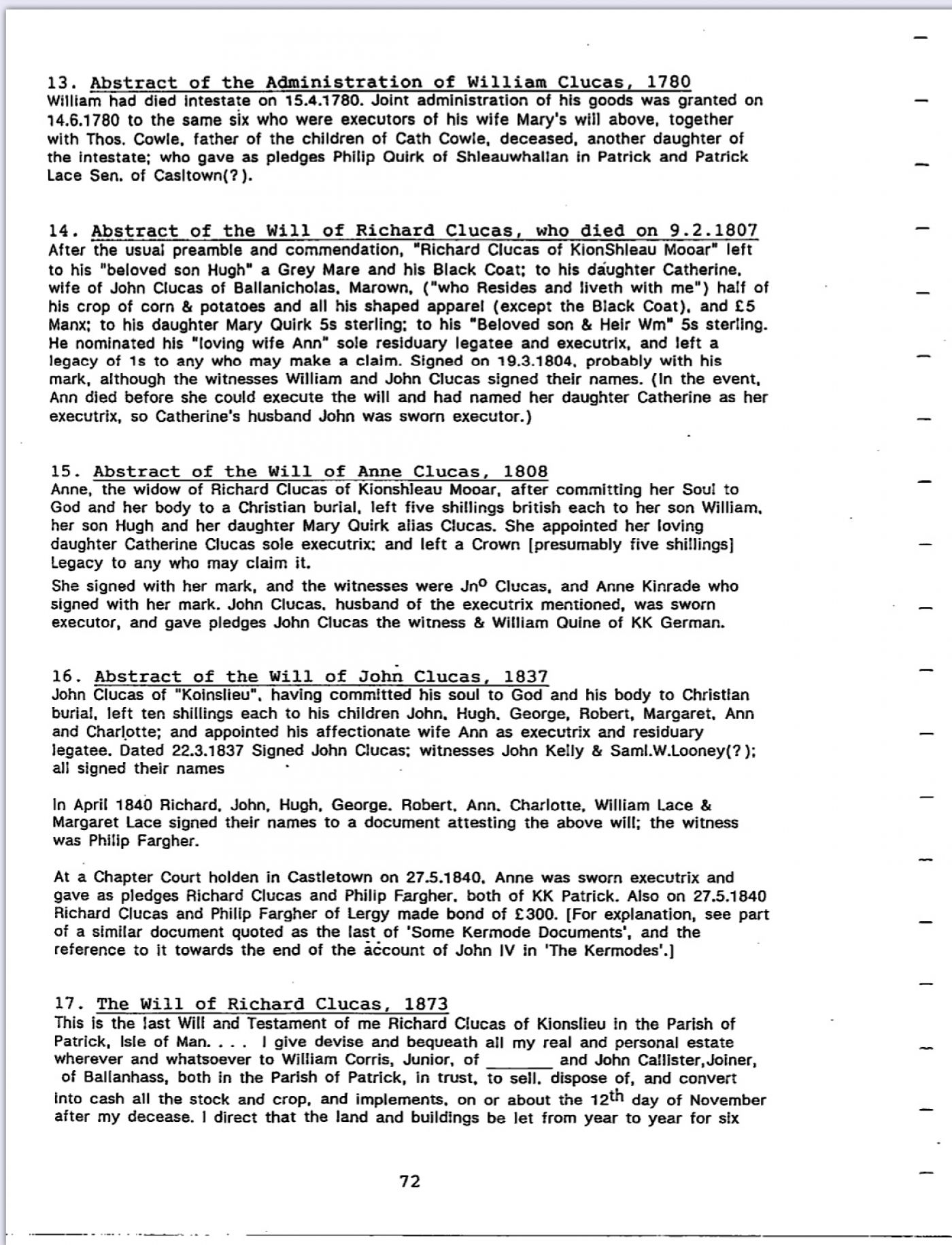
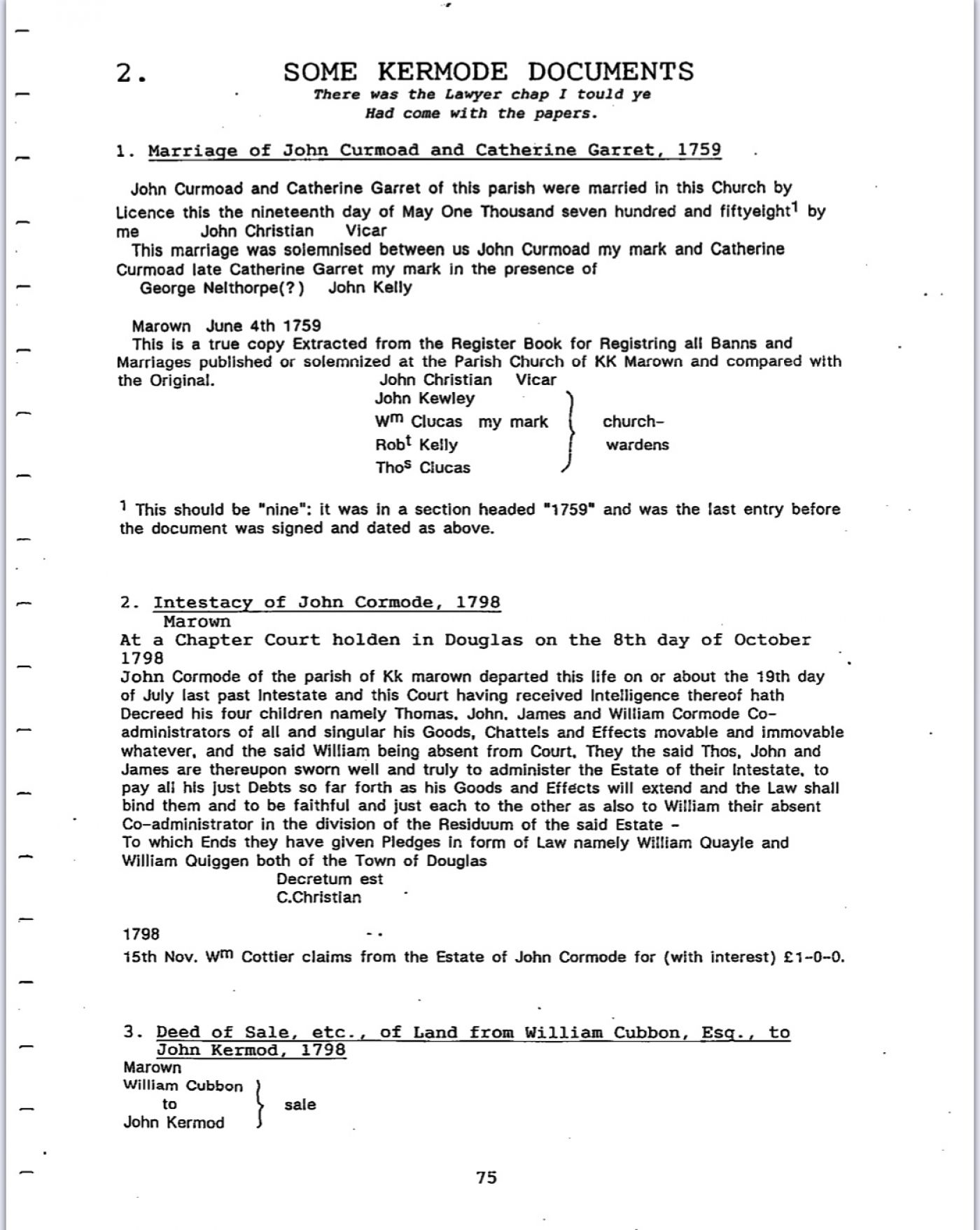
Introduction to the ‘Unfinished Memoirs’
Some early Clucas’s from Kionslieu, dating back to 1640
Page 18 includes: Sage married John Curphy – I believe that this is the Sage & John referred to in emails received in 2020
Useful websites to help you with genealogy research
If the‘Kionslieu Chronicles’ inspire you to visit Kionslieu Farm Cottages and you would like help in researching your Manx family history, we have links with specialists who can help, as above & the following links should be of help.
Somewhere to stay while researching your Manx Family History?
If your looking for a place to stay on the Isle of Man while you research your family history, look no further than Kionslieu Farm Cottages.
During our time here we have welcomed Clucas’s, Kermodes, Kelly’s, Quayle’s, Clagues, Maddrell’s & Wattersons from all over the world and you can be sure of a true Manx welcome when you come to stay.
Kionslieu Chronicles II: More History & Plans of the Original Farmyard
My research continues, I woke up this morning to find an email from Greg Brown from Los Angeles. Greg and his wife stayed at Kionslieu in one of the holiday cottages last December (2019), whilst researching their family history. If you’ve not already seen the first chronicle just click this link: ‘Kionslieu Chronicles I’
How fantastic! Greg has sent me a document with the title ‘Memoirs of Kionslieu’, written by Terence Kermode. I requested permission to share the actual memoirs, Greg tells me that the author passed away a number of years ago. For anyone searching for information for their own family tree in years to come I will add that Terence had no children of his own, he married late in life and had 4 step children but of course they are not Kermodes. When Terence passed away they sent all of his backup materials to Greg’s cousin Simon (the author’s nephew) in Cheshire.
Greg tells me that his cousin sent a copy of the memoirs to the Manx Library and so he suspects that Terence (like any author) would be thrilled to have his work “published”.
Greg’s mother, Eileen (Kermode) Brown also lived in Los Angeles and worked with Terence researching their family history but she also passed away several years ago. Greg tells me that he feels sure that she would also be thrilled for others to learn more about the old family ‘homestead’.
In my first blog of ‘Kionslieu Chronicles’there is a photograph of the inscription of ‘R Clucas AD MDCCCL’ (1850) which can still be seen on the gable of the farmhouse. The following is a photograph of Richard Clucas’s daughter, Mary Ann Clucas, together with her husband John Kermode and their 11 children.
The photograph above, of John Kermode, Mary Ann Clucas Kermode and and their 11 children, was taken in front of Kionslieu farmhouse at the turn of the last century. I was also told that we should note the 1900 style photoshopping on the right side of the picture. Apparently three of the children couldn’t be there in person and so were pasted in!
The date, 1904 and the list of names on the back of the photograph were written by Eileen. It has been pointed out that 1904 may be a best guess rather than based on hard evidence.
Plan of the farmyard taken from the ‘unfinished memoirs’
Eileen visited the Isle of Man and Kionslieu a number of times and the following photographs were taken at Kionslieu in the 1970’s and 80’s.
In the photograph above Eileen is pictured standing in front of the water trough which had originally supplied both the farm and the house (when there was no internal plumbing system); it was fed by a pipe from a spring in one of the fields and had never been known to dry up. The shed to the right was originally a cowshed, which was connected to the Thie veg -Manx for ‘little house’, this was the only toilet, a seat with a hole in the ground, know also as a ‘one – holer’.
Kionslieu Farmhouse Looking up the lane onto the farmyard (we think this was in the 70s)The barns, which are now Kionslieu Farm Holiday Cottages.
from the fields at Kionslieu looking over Springfield Terrace
From the fields at Kionslieu looking over Foxdale 1972 – see the spoil heaps in the centre
The photograph above was taken in July 1972. Eileen (Kermode) Brown is on the right of the picture and her sister Leota (Kermode) Schmidt on the left. The couple in the middle are also Kermodes and were living near Kionslieu at the time, the photograph was taken outside Lilybank.
Perhaps you’d like to visit the island to research your genealogy?
Somewhere to stay?
If your looking for a place to stay on the Isle of Man while you research your family history, look no further than Kionslieu Farm Cottages.
During our time here we have welcomed Clucas’s, Kermodes, Kelly’s, Quayle’s, Clagues, Maddrell’s & Wattersons from all over the world and you can be sure of a true Manx welcome when you come to stay. Just
Useful websites to help you with genealogy research
Kionslieu Chronicles I: A little history of Kionslieu
I’ve decided to name our blog ‘Kionslieu Chronicles’ and intend to cover the history of the farm, information and share photographs of the people who have lived here, together with photographs of the farm itself & the surrounding area.
Researching Manx family history?
I hope that the chronicles will help those wishing to trace their ancestors and hope that anyone with additional information will get in touch.
My first blog, written during the covid19 pandemic
This is a brief introduction to the genealogy and history of Kionslieu Farm, set in the heart of the Isle of Man. I am writing this in April 2020 when much of the world, including the Isle of Man is in lockdown due to the dreadful virus Covid19. It is impossible to comprehend all that is happening in the world as I sit down to record the history of our home.
The meaning of Kionslieu
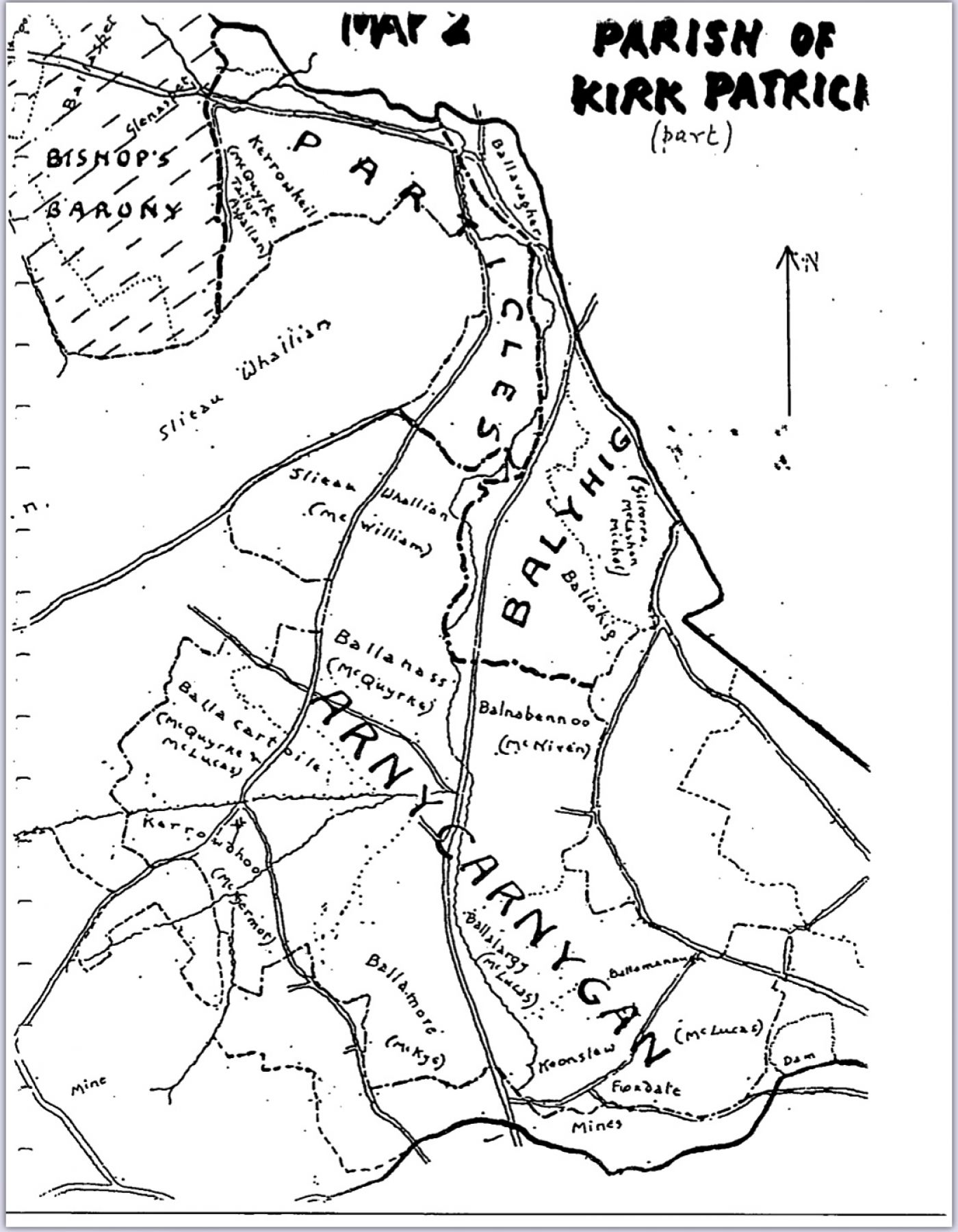
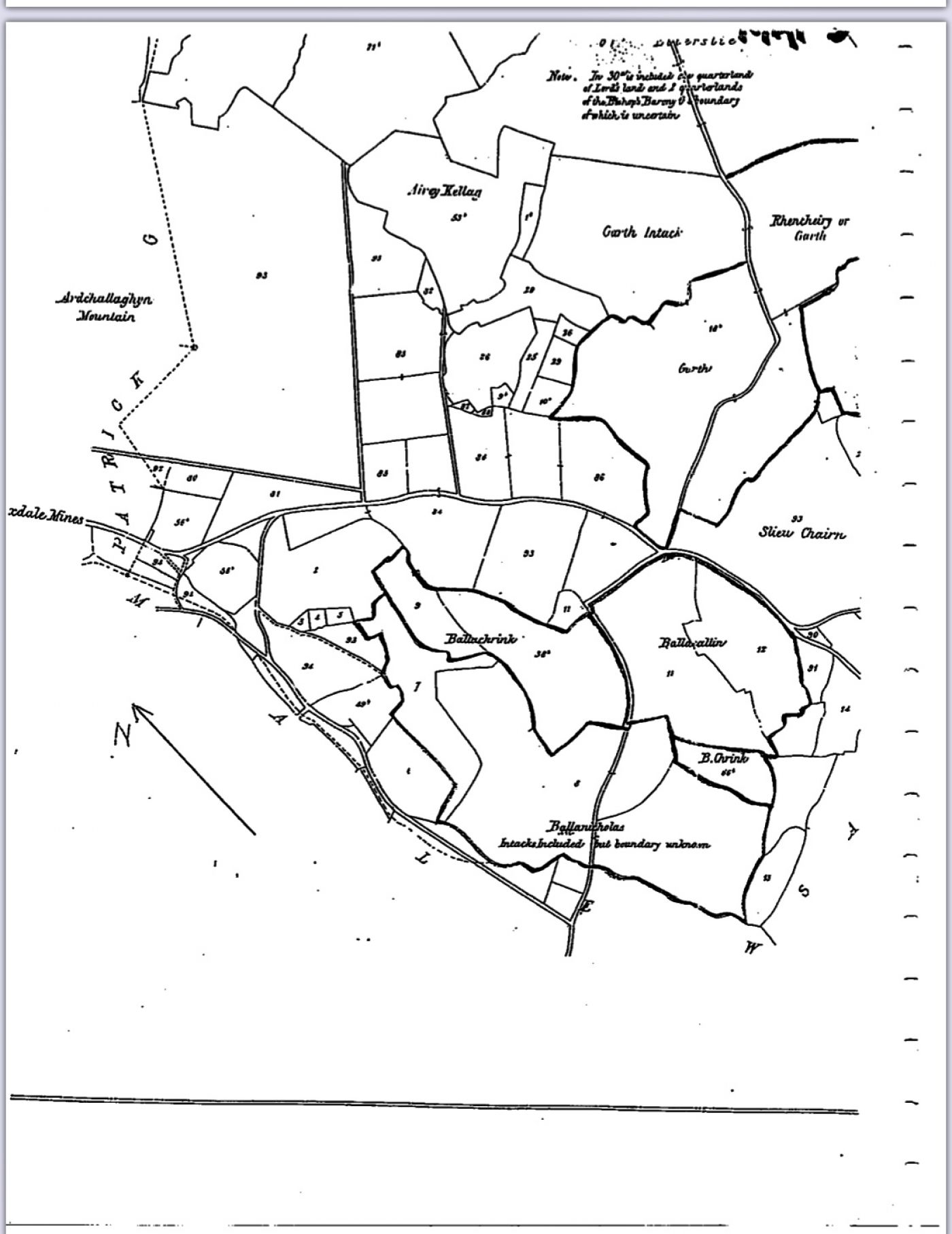
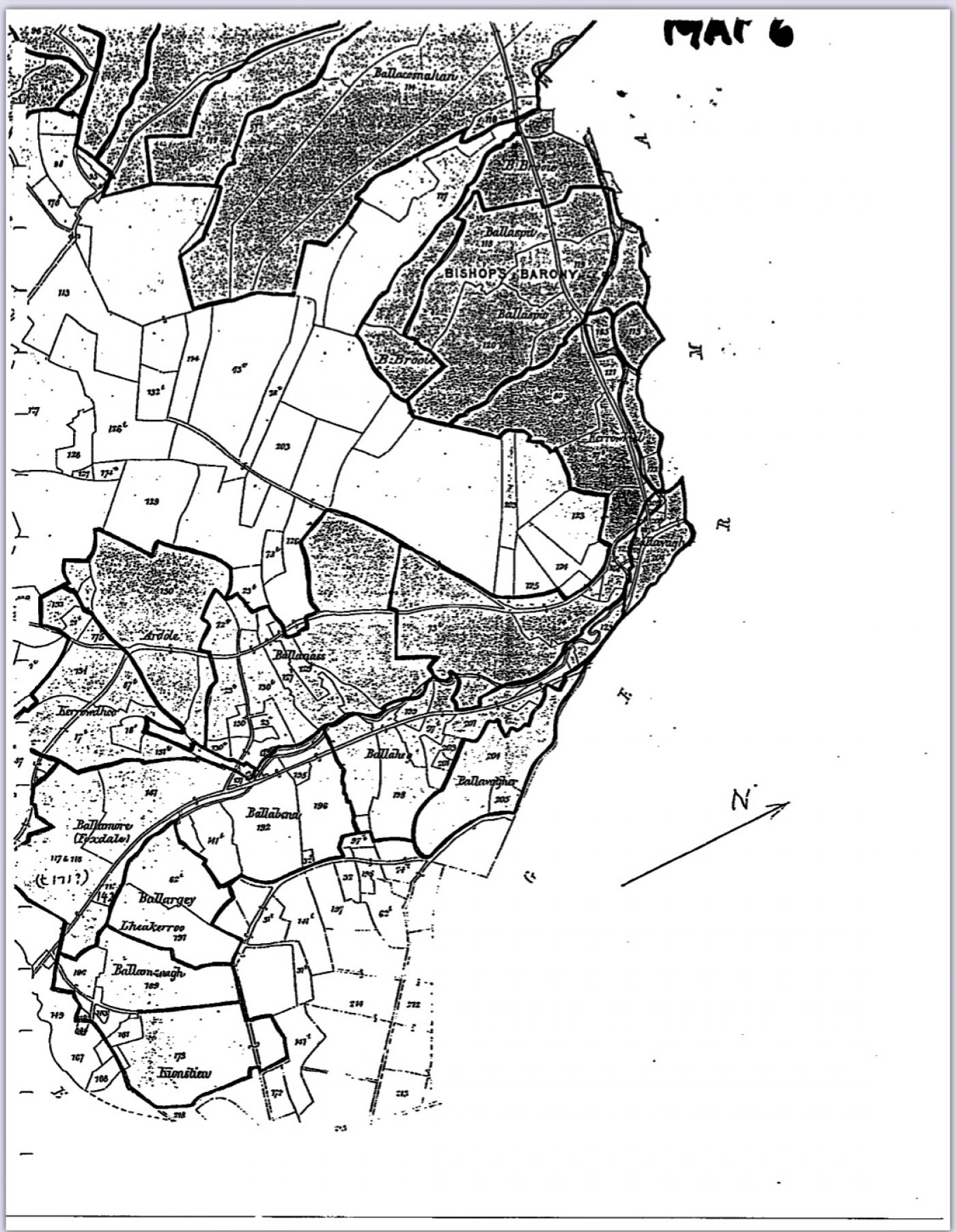
So where should I start, Kionslieu (Kon Sloo) is Manx for ‘Mountain’s End’, the farm is just a short walk from the village of Foxdale, once a thriving lead and silver mining village dating back to 1723
R Clucas 1850
As you approach the farmhouse a name & year is carved into the gable:
RC Clucas
AD MDCCCL
We had always understood the date AD MDCCCL (1850) to be the year that the house was built but after further research, it would appear that the house dates back much further & that this inscription was added when alterations were carried out by R Clucas in 1850.
My research so far tells me that the ‘R Clucas’ inscribed on the farmhouse gable was Richard Clucas, born at Kionslieu in 1816. He was the son of John Clucas about whom we’ll hopefully know more as my research progresses.
Richard Clucas married Christian Corkhill (1824 – 1889) from Peel.
Christian was just 16 years old when they married and they went on to have 16 children: Richard Pinder Clucas, Mary Kermode (born Clucas) and 14 other children!
living at Kionslieu at that time were: Richard Clucas (35), Christian Clucas ( 27), Mary Clucas aged 9, Elinor Clucas aged 8, Charlotte Clucas aged 6, Catherine Clucas aged 4, Lage Clucas aged 3. Also living at Kionslieu were Richard Pender Clara aged 1, Elizabeth Fayle aged 19, John Corlet aged 24 and William Corkish aged 16.
Richard and Christian Clucas’s eldest daughter, Mary Ann Clucas was born on 22 January 1842, she was just 17 when she married John Kermode from St Marks.
Mary Ann (Clucas) Kermode & John Kermode were the next generation to reside at Kionslieu.
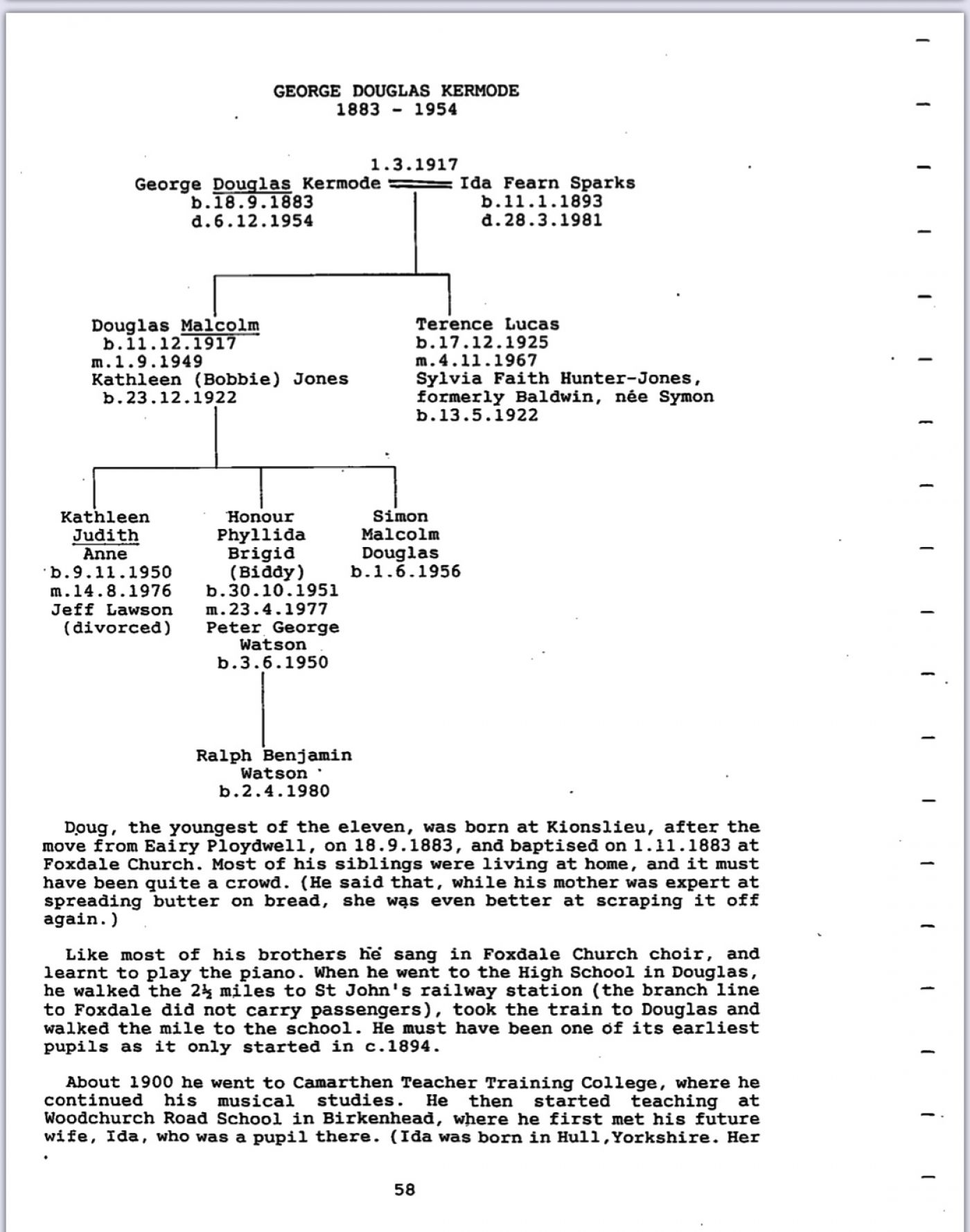
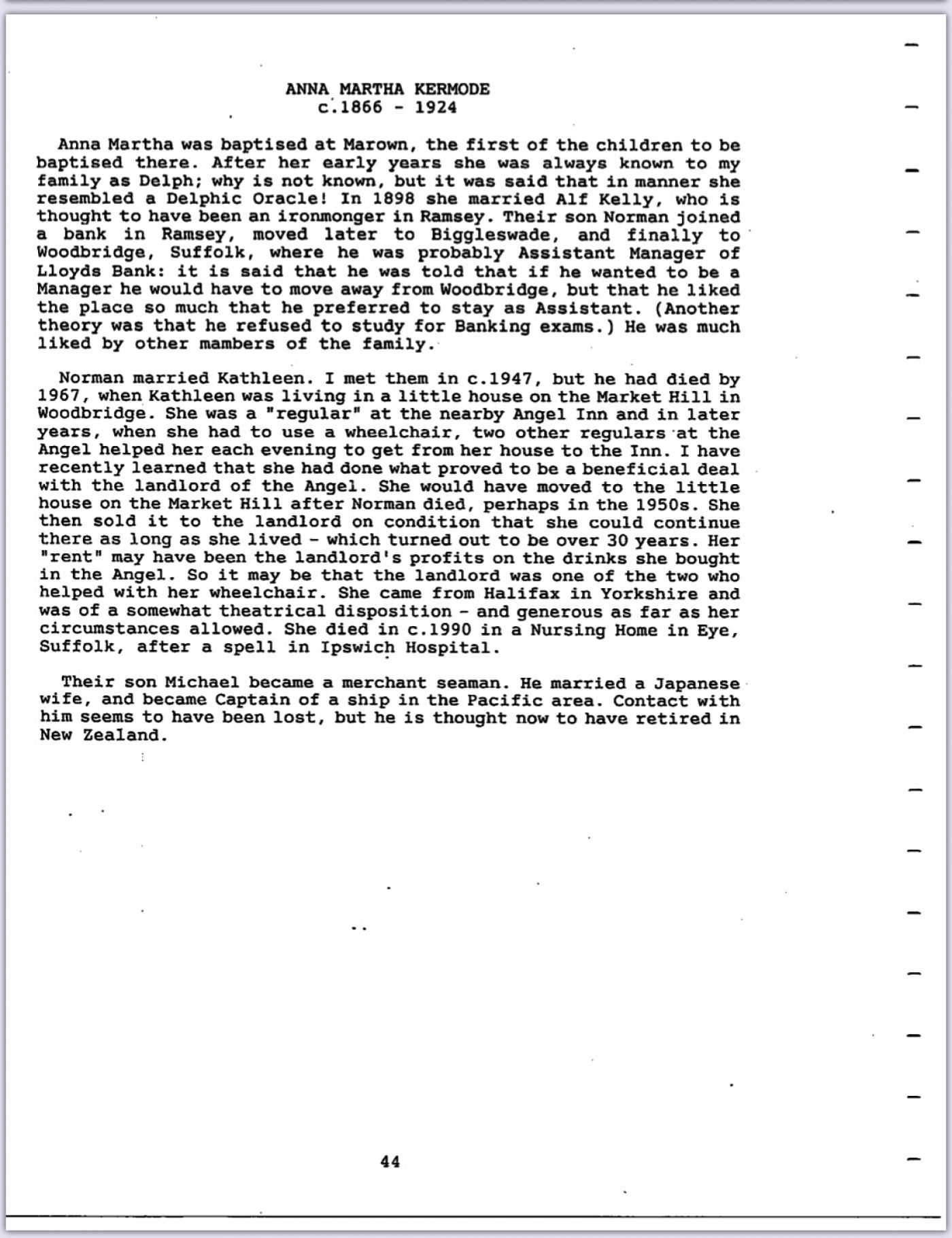
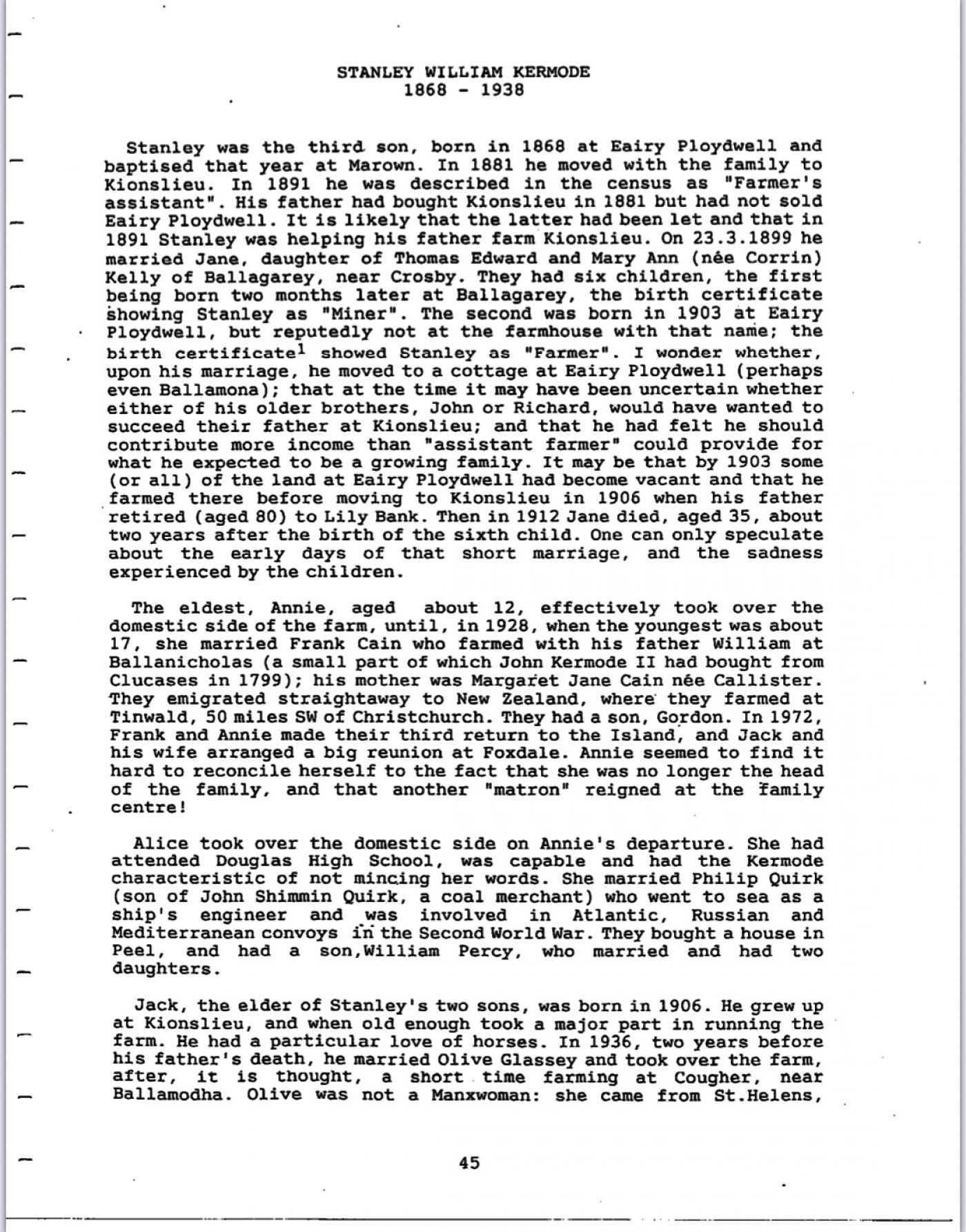
Mary Ann & John had eleven children, three daughters and eight sons, with four of the brothers emigrating to the U.S.A. as young men.
The Kermode family, pictured in front of Kionslieu Farmhouse
Their children were:
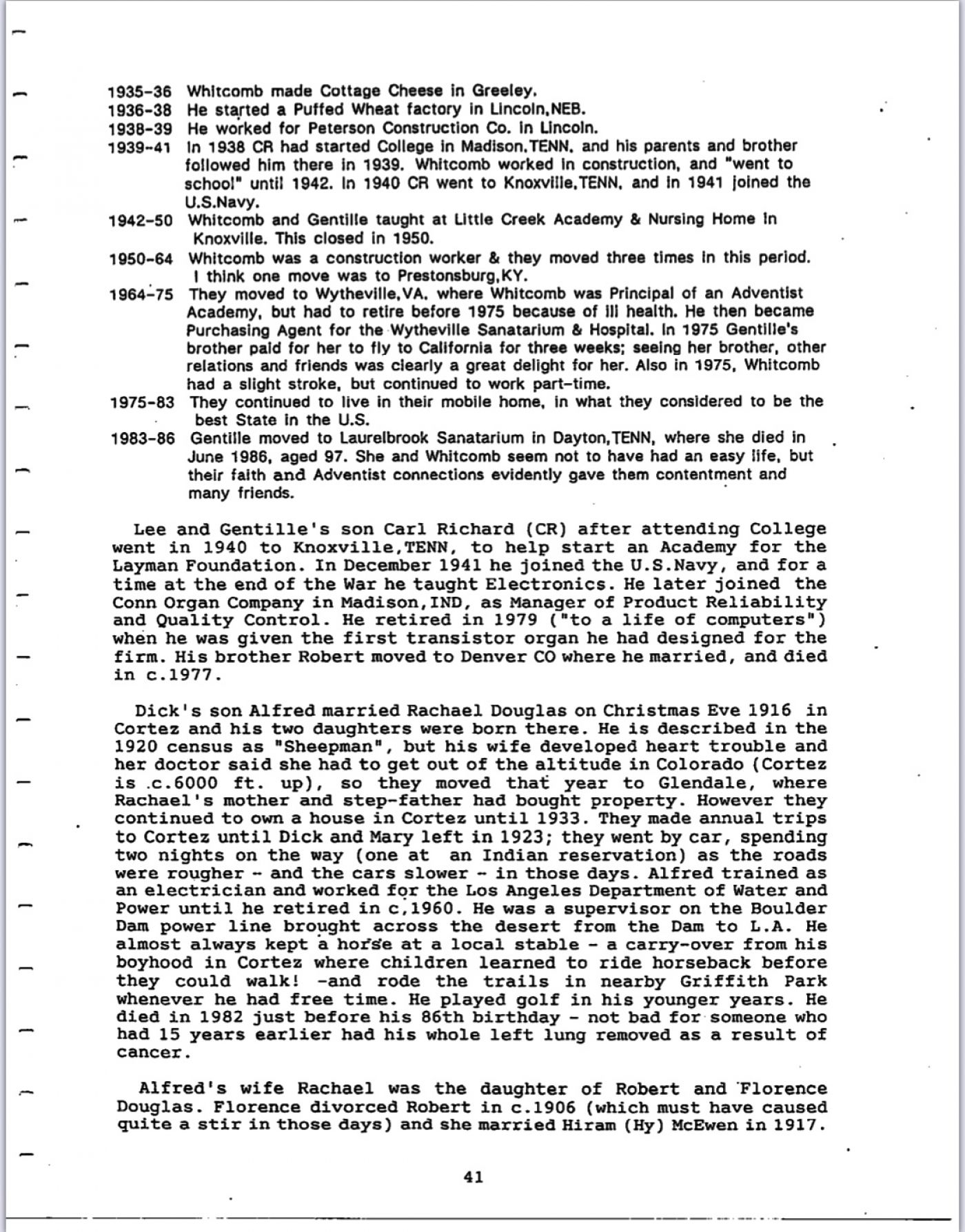
Stanley William Kermode 1868 – 1938
Julia Kermode 1863 – 1947
Richard Clucas Kermode 1861 – 1929
Arnold Francis Kermode 1878 – 1948
Frederick Allan Kermode 1880 – 1973
Frank Ridgway Kermode 1874 – 1958
Anna Martha Kermode 1866 – 1924
John V Kermode 1860 – 1946
Marianne Kermode 1858 – 1928
George Douglas Kermode 1883 – 1954
Alfred Walter Kermode 1870 – 1937
Mary Ann (Clucas) Kermode
John passed away on 31 Oct 1910, followed by Mary Ann on 10th Jul 1918, both at Kionslieu.
Planning to visit the island to research family history?
If your looking for a place to stay on the Isle of Man while you research your family history, look no further than Kionslieu. During our time here we have welcomed Clucas’s, Kermodes, Kelly’s, Quayle’s, Clagues, Maddrell’s & Wattersons from all over the world and you can be sure of a true Manx welcome when you come to stay.
Useful websites to help you with genealogy research
We had always planned to gather historical information to help people to track down their ancestors and I’m delighted to have made a start but I will also share a little history of our own time at Kionslieu, which began in December 1985. Tony and I had been married for just over two years when we moved from Braddan to Foxdale & to Kionslieu farmhouse, pictured below.
Soon after moving into Kionslieu we began operating a small b&b in the farmhouse but when we had children the house wasn’t really ideal and so we looked to convert some of the farm buildings into holiday accommodation.
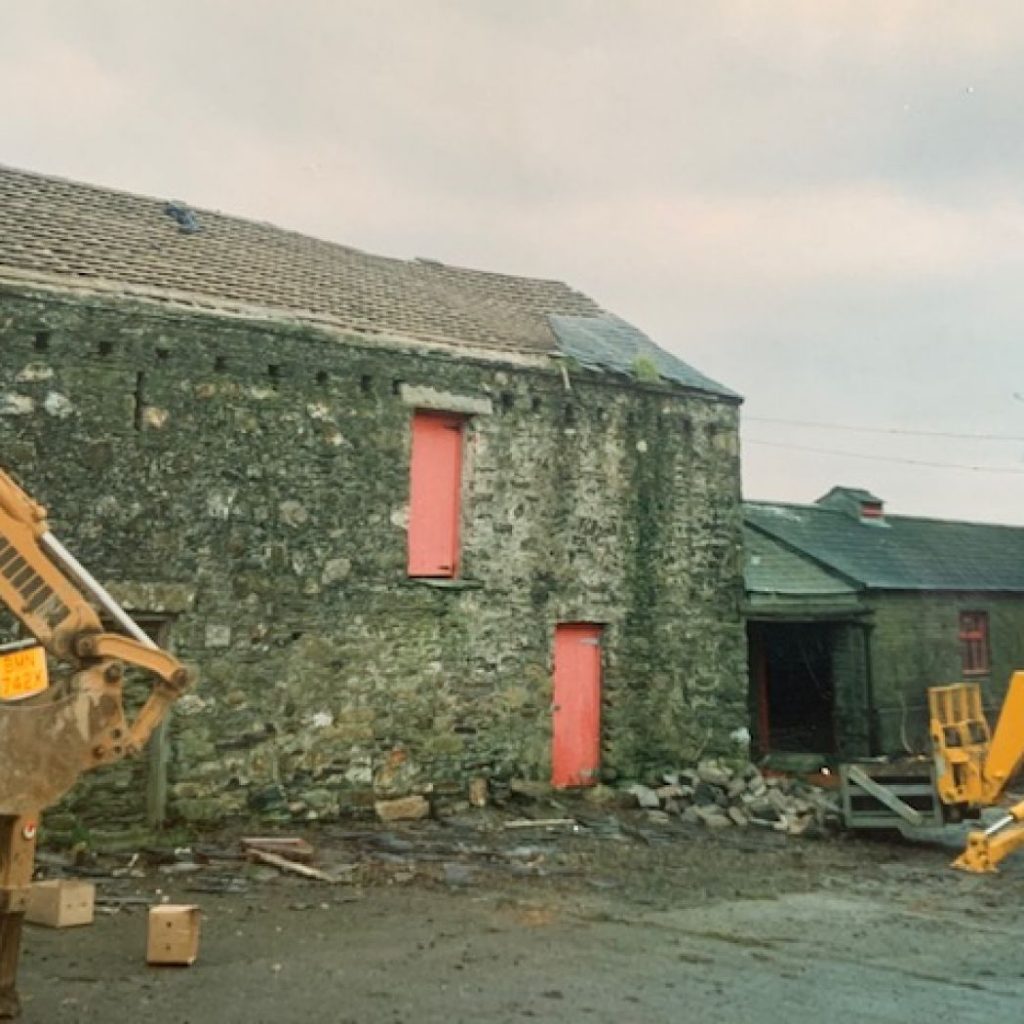
The main barn on the original farmyard was quite literally falling down. At some stage the first floor had been removed leaving the front wall in a quite a precarious state with tiles from the roof periodically falling onto the yard.
Our free range goat at that time, ‘Annie the Nanny’ found her way onto the tall barn roof one day, nimbly skipping along the slates while we watched in horror, terrified that she would fall but she was fine.
Tony with ‘Annie the Nanny’, our first ‘kid’!
Annie led quite an interesting life including visiting our neighbours, the Glens at the Old Vicarage when we weren’t at home and on occasions tap dancing on the bonnets of cars when no one was looking – amazingly causing very little damage.
Fiona & Josh 1987 (pregnant not overweight!)
For a few years we had used the adjoining cowhouse as a pig shed, with a midden in front but we felt our guests may prefer this to also become holiday accommodation and for us to move the pigs to the big agricultural shed we’d built in the adjoining field. Anyone who has visited a pig farm will know why!
The main barn was taken down completely, rebuilt and then faced in the original stone to become three cottages and the cow/pig shed was converted to become two single storey cottages.
For a while the cottages were identified by numbers as we wanted to wait and choose meaningful names for them, which eventually we did. that time we had a peacock called Percy, who like Annie the Nanny was free range. Anyone who has kept peacocks will know that it’s quite difficult to stop them from being free range & this, it transpired was a problem which at the time we were unaware of. Our very beautiful Percy was an early riser, this didn’t affect us in the farmhouse and so we thought that all was well at the cottages. That was until one day in the visitors book (after our guests had left!) we read ‘peacock’s and paying guests don’t mix’. I was horrified and got in touch with the guests straight away to hear that Percy had been tapping on their window early every morning and shouting loudly to wake them up! Needless to say we dealt with the problem immediately & from that day forward we provided evening entertainment for our guests as the only way to put him to bed in the chicken shed was to chase him over the roof into the chicken run & to lock him in for the night, this by squirting him with a hose pipe. And this is how Peacock’s Rest got its name! The next door cottage, Haybarn was named simply due to its use in the past and the third became Turkeytree Cottage. Turkeytree was named after the old (over one hundred years old) ash tree standing opposite the barn. For many years the tree was the roosting place for the turkeys from the farm where, no matter what the weather they would choose to spend the night.
The two single storey cottages also have names connected with the farm, Blackberry simply because of the abundance of blackberries found in the hedges around the farm each year and Redwheel due to the name of the adjoining field. The field to the east of the farmyard was known as the Redwheel field, which was named after the water wheel at the nearby Foxdale Mines. When the mines closed in 1911, the small washing floor wheel, which once powered the circular buddies & known as the redwheel, was transported to Silverdale Glen
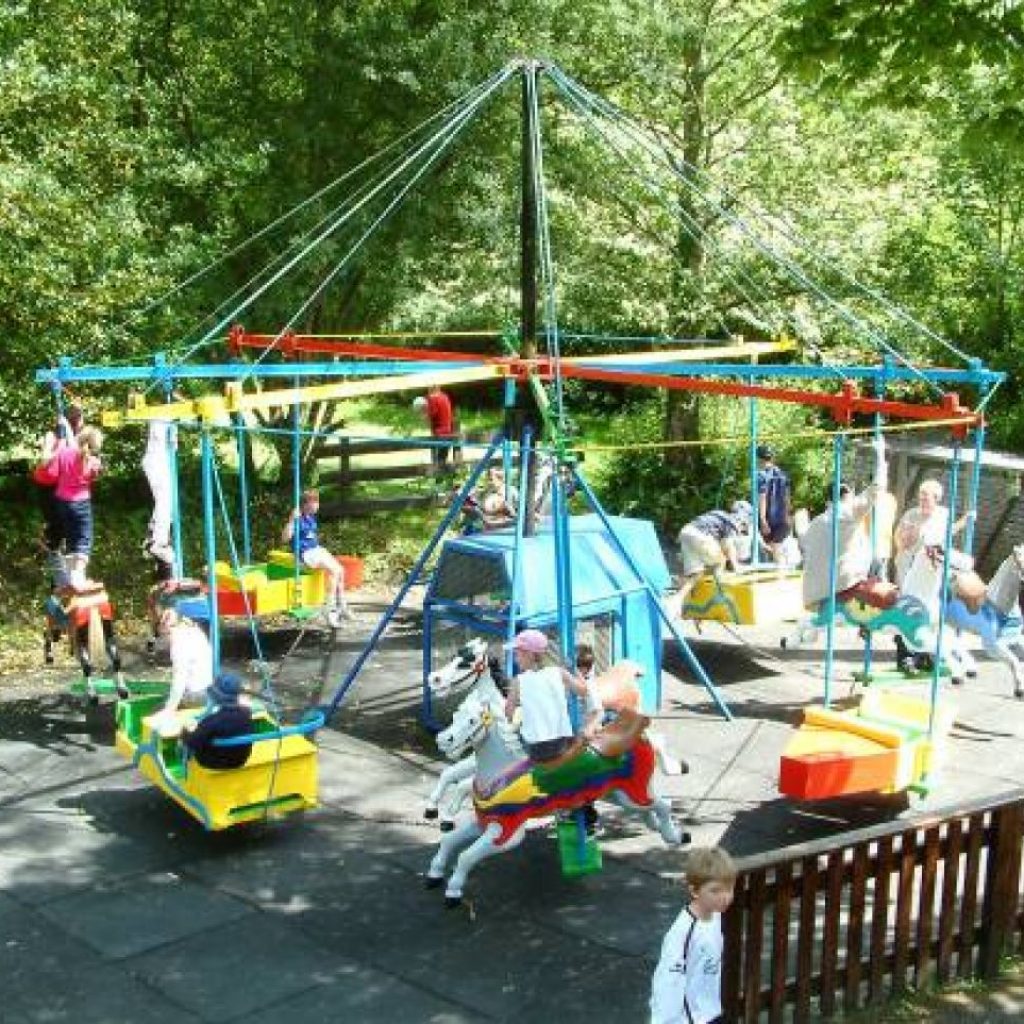
It was then re-erected to provide the power to drive the gilded wooden horses on the horse carousel at Silverdale. It seemed fitting to keep hold of this connection with Foxdale, hence the name Redwheel Cottage.
Family history research
So there we have a little of the history of Kionslieu, I hope to add more soon, both from recent times and also from past centuries.
If the‘Kionslieu Chronicles’ inspire you to visit Kionslieu Farm Cottages and you would like help in researching your Manx family history, we have links with specialists who can help you in your search, the following links may also help:
To make planning your holiday easier we can arrange travel inclusive breaks to the Isle of Man if you wish. While at certain times our bookings are weekly from a Saturday, at other times we can be more flexible, Contact us